Cowgirl. Lecturer. Movie-Producer. Press Agent. These are just a few of the words that could be used to describe Alberta Claire. She was born in Sheridan, Wyoming in the late-nineteenth century and lived a pretty extraordinary life.
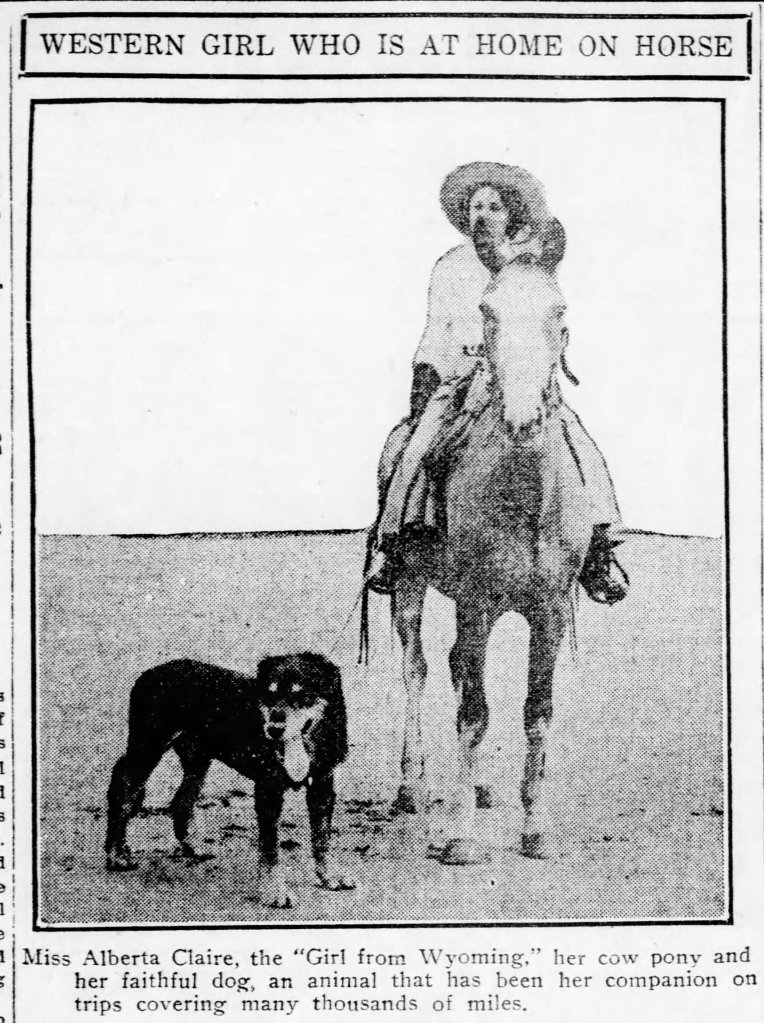
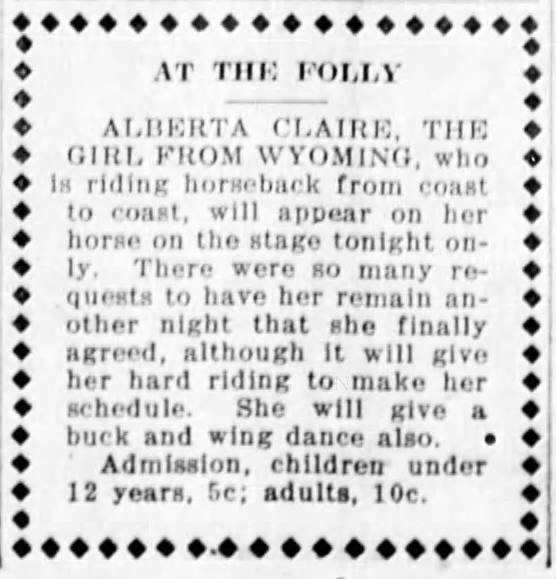
Alberta Claire entered the Vaudeville scene around 1909 and performed in the theaters for several years in varying capacities. At first, her performances included dancing and singing, but would later turn to lectures about her horseback journey across the United States or the film footage she captured in Mexico.
An Epic Journey
In 1910, a wealthy cattle rancher bet Alberta Claire that she couldn’t ride from Buffalo, Wyoming to Buffalo, New York by herself. She was only allowed to take her horse, Bud and her dog, Mickey.

She was a petite woman standing five feet tall and weighing right under a hundred pounds, but this wasn’t going to stop her! Initially, the bet was $100 and a 3800-acre farm near Buffalo, Wyoming. Over time, the bet changed from $1,000 to $10,000!

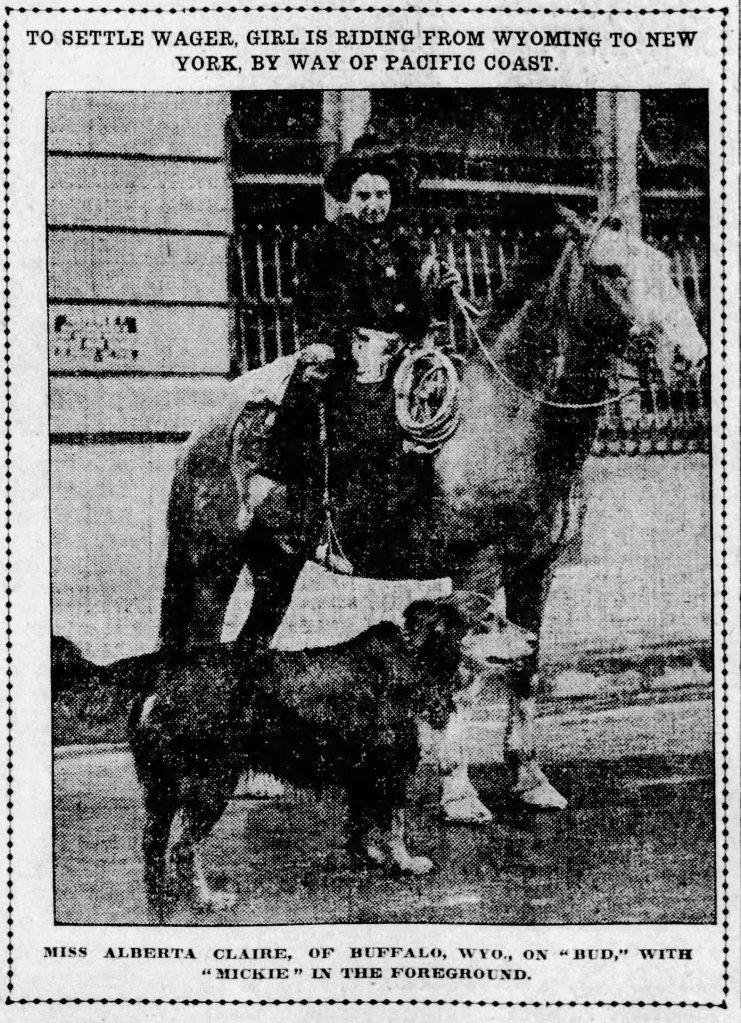
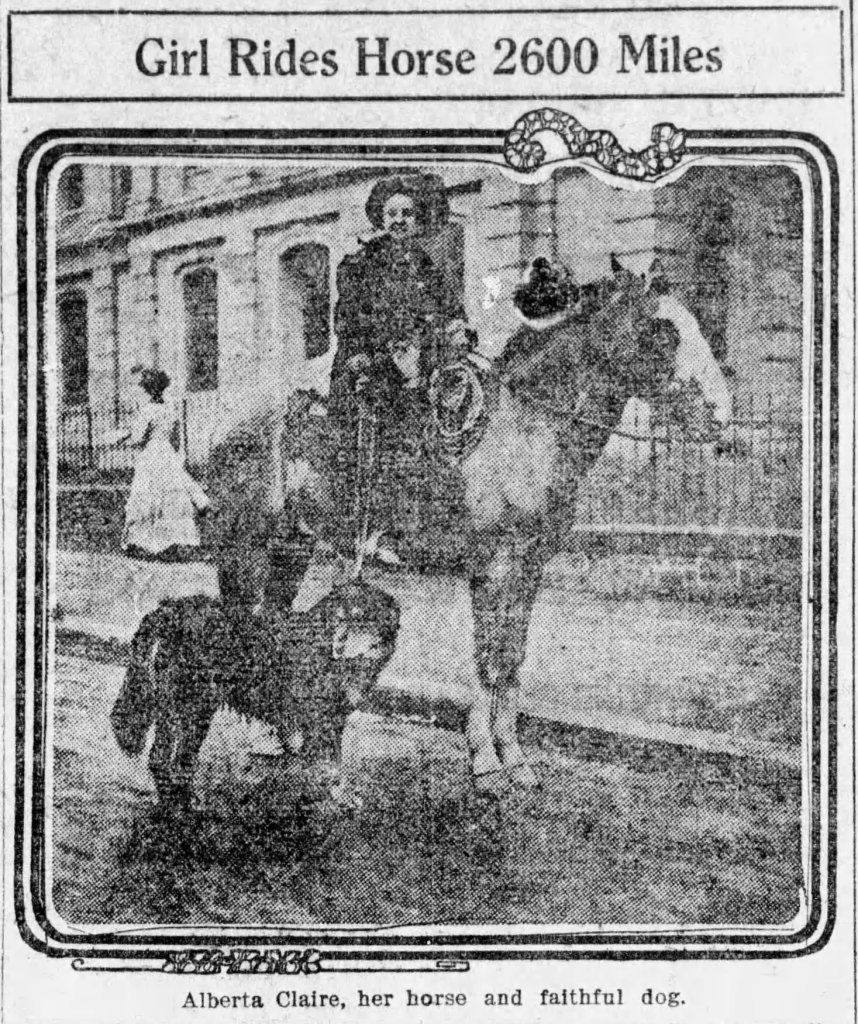
Alberta Claire set out on her trip and newspaper accounts change over the two-year time period it took to complete the journey. At one point, she was bet that she couldn’t ride astride rather than the typical side-saddle riding done by a majority of females at the time.
Additionally, newspapers reported different accounts of her route. At first, she was supposed to travel from Buffalo (Wyoming) on to Seattle (Washington), San Francisco (California), Los Angeles (California), New Orleans (Louisiana), Washington, D.C., and finish in Buffalo (New York).
Alberta Claire’s trip began on September 10, 1910. Her husband, J.H. Moore acted as her press and advertising agent. He traveled by train and would meet her in towns as she got further along her journey.
Alberta Claire was a savvy businesswoman who knew her audience. She traveled from Buffalo (Wyoming) to Seattle and on to San Francisco in only a handful of months. She decided to stay in California for a few months performing her Vaudeville show which allowed her to save money for the second leg of her trip.


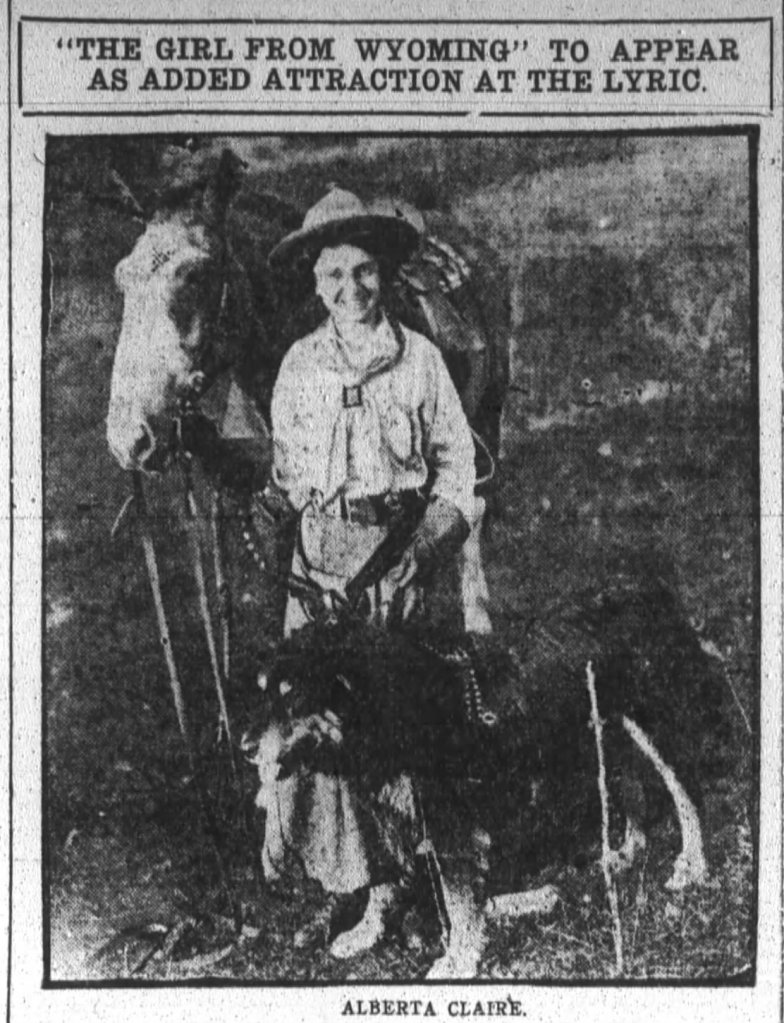
By November 1911, she was on the trail again and had made her way to Yuma, Arizona. Three months later she had made it to Illinois. By this time, she was considered a celebrity on a national scale across the United States. People were following her story across the newspapers wondering if the “Girl from Wyoming” would succeed in her journey.
She could totally be considered an early twentieth-century “influencer” if you will. I ran across newspaper ads where she was endorsing products.
Again, Alberta Claire was a smart businesswoman. She wrote ahead during her travels so the towns would know she was stopping through. Many people greeted her or saw her off onto the next stop.


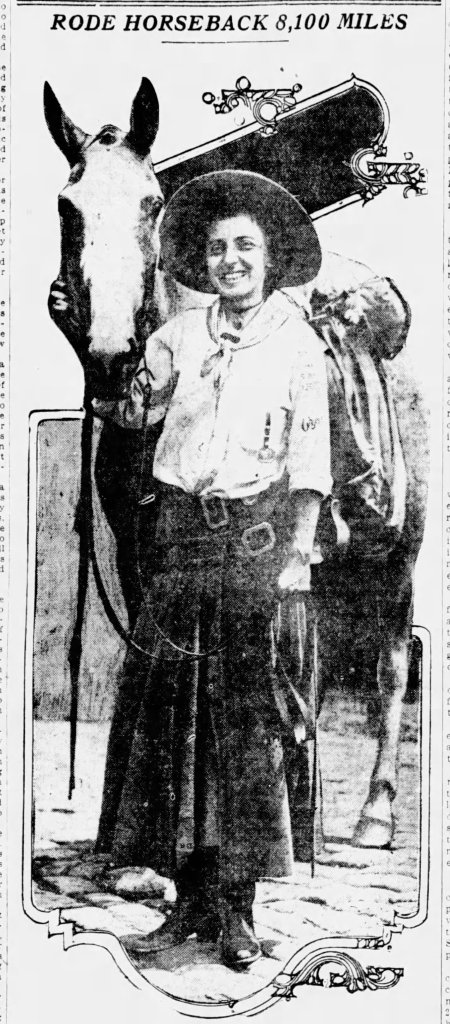


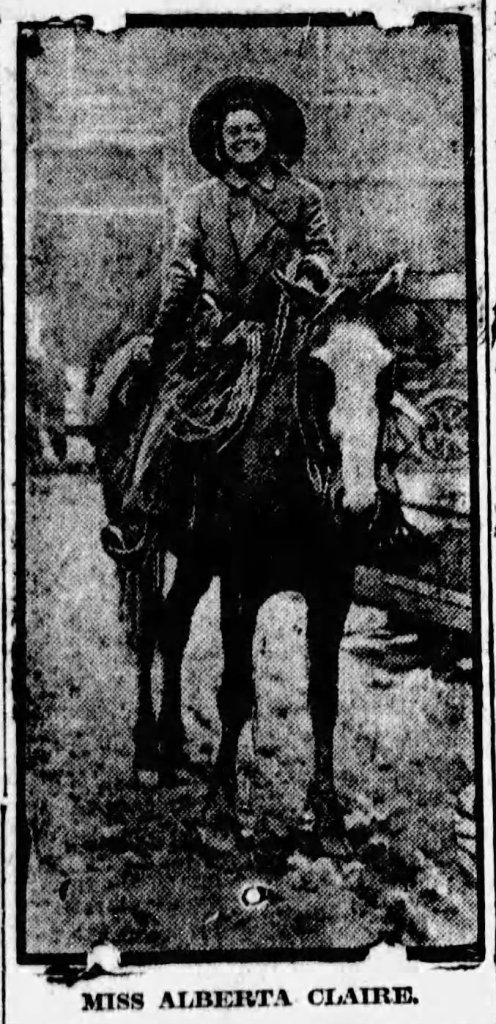
On April 6, 1912, Alberta Claire arrived in Buffalo, New York. Former United States President Theodore Roosevelt greeted her along with a huge crowd. She spent some time along the east coast upon completing her journey.
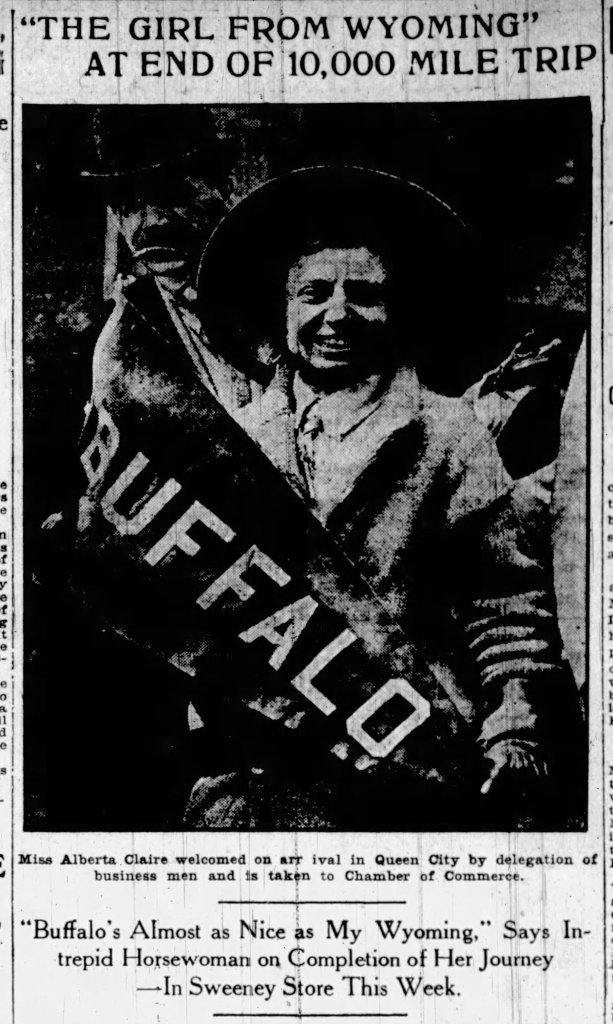

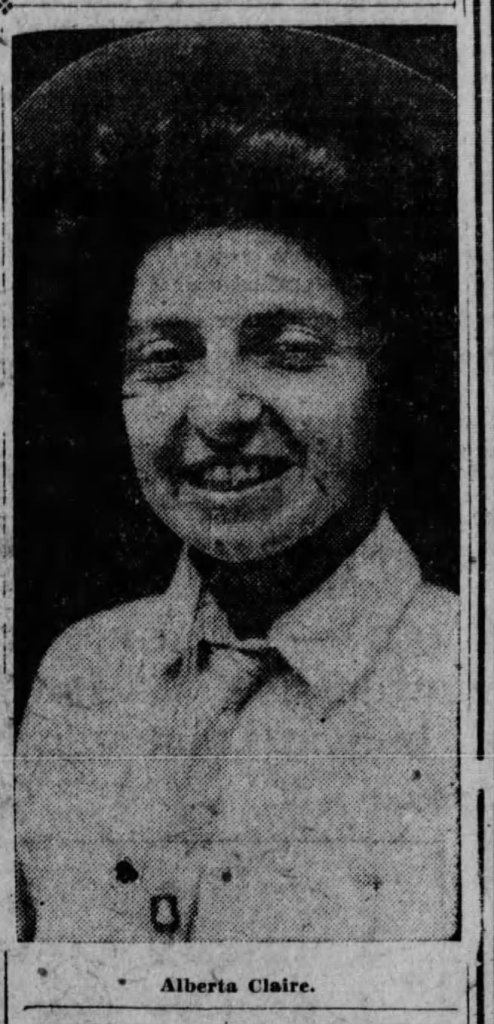

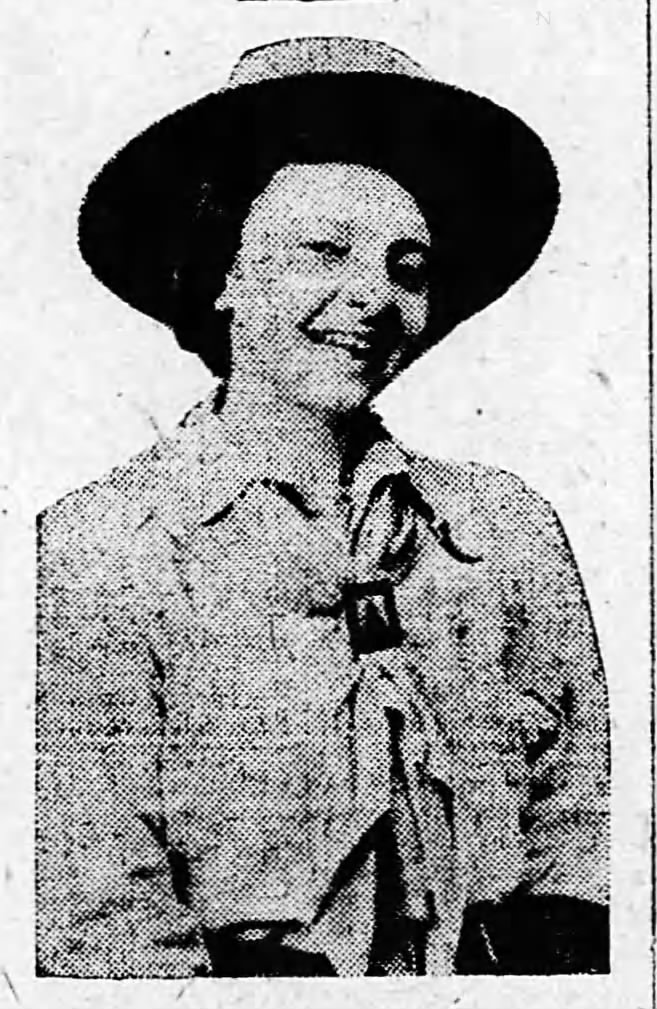
On July 10, 1912, Alberta was given another once-in-a-lifetime opportunity. She climbed to the top of the new Woolworth building in New York and drove the final rivet into the beam 48 stories above the ground.
She eventually decided to head back West. Again, she wrote the towns ahead of her so they knew she was coming through. She was making her way to back to Los Angeles. She arrived on the Pacific Coast and stayed there for a short time performing or lecturing in various theaters. Then she set off on her next adventure!

Film Producer
Newspapers claim Alberta Claire moved to El Paso, Texas in 1914 and began working with film. She made a trip to Mexico with cameramen she hired for her moving picture company. They traveled to Ojinaga and captured three reels worth of footage during the battle. The Battle of Ojinaga took place on January 11, 1914 in Mexico.
Alberta Claire described the trip to Ojinaga with her cameramen in an article published by the Austin American-Statesman on April 17, 914.
“… I was forming a company to make moving pictures there [El Paso, Texas]. The cameras and thousands of feet of film had arrived. On the afternoon of Dec. 30 I received word that Pancho Villa’s troops would attack the Federals at Ojinaga on the following day, so I said, ‘We’ll go and make “movies” of it.’ Whereupon every one began hurried preparations for the trip; so did I. And then came the hue and cry, ‘You can’t go; it’s no place for a girl;’ and they all tried to persuade me to stay in El Paso.
But when the 9 p.m. train pulled out of the depot it carried me as well as the men and the precious cameras.
Arriving at Marfa, the nearest railroad point to Presidio, we found that everyone who could get any kind of conveyance was going to the border town, sixty-seven miles away, and it was the highest bidder who got first choice. So by paying $25 each in advance we succeeded in getting an automobile.
Quickly we packed in our possessions, and away we went over the roughest, rockiest trail in all the State of Texas at a pace that meant ruin to both tires and disposition.
From time to time came the distant rattle of machine guns, and we knew the battle was on. Arriving at Presidio we hurried to the river bank, for all the inhabitants seemed to be there.
I urged the camera men to get horses and make an effort to get into the Federal lines, till one, more daring than the rest, agreed to go if I would promise not to follow. Steadily the refugees kept coming over the Presidio, and event then they had stories to tell of the suffering in Ojinaga and the horrors of the war…
…
… Early the next morning the men went back to Ojinaga, and this time I went too, but it took a lot of persuasion to get me by the guards. Truly they were right; it was no place for a woman. The ‘zing’ of the bullets was in the air. I went all over Ojinaga, and the number of women and children who faced the danger rather than desert husbands, fathers and brothers, was surprising.
When the camera men were ready, I quietly mounted the horse I had hired and rode back across the river, and I went back again. I will never forget the sight of sorrow and suffering caused by the war in that little Mexican town.”
“Girl Who Made Moving Pictures In Mexico To Show Them Here Today.” Austin American-Statesman (Austin, Texas), April 17, 1914.
[Not all of the events line up with the historical timeline as to what actually happened. Please note that the above quote has been shortened and you can read the entire quote on newspapers.com.]

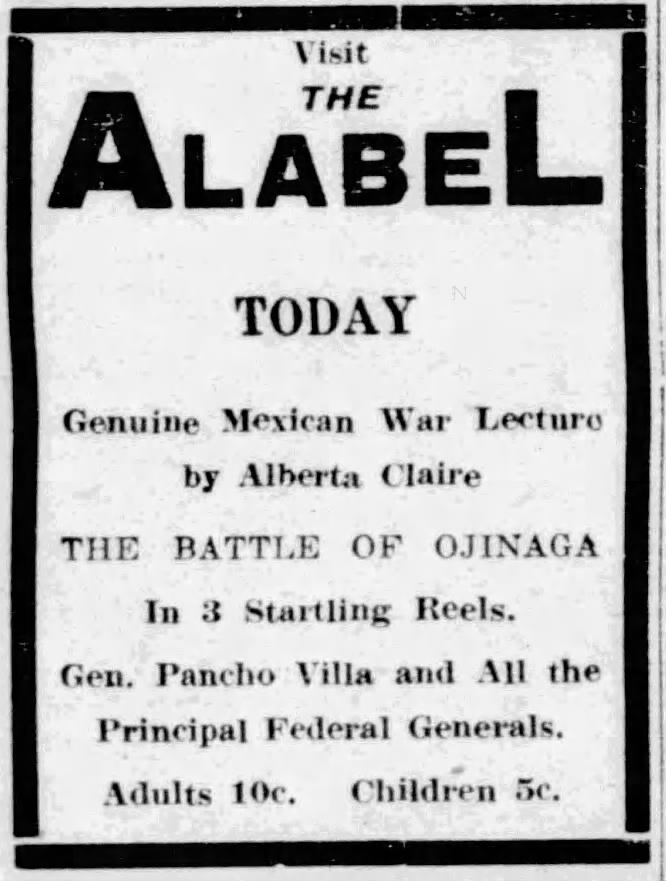
Alberta Claire and the cameramen all made it safely back to the United States. Upon returning home, Alberta Claire began lecturing about the war and showing the films to audiences in the theaters.
Press Agent
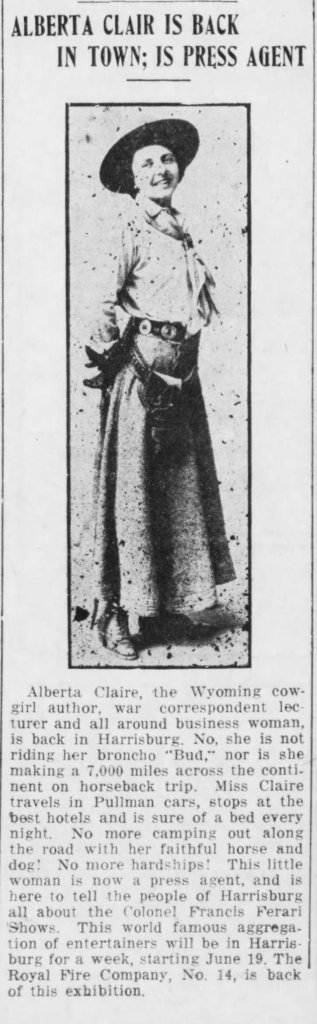
By 1915, Alberta Claire was acting as a press agent for the Great American Shows carnival in various states as they toured. She also acted as press agent for other smaller shows and was a partial owner of the Col. Ferari Carnival Company. She acted as a press agent for several years according to the newspapers.

Concluding Thoughts
I hope you enjoyed reading about the life of Alberta Claire, her horse, beloved dog, and her many adventures. I encourage you to check out your local history and see what interesting stories come from your town. You never know what you mind find!
That’s all for today. I hope you’ll join me again soon as we continue ‘breaking trail’ and finding the lesser-known stories of the American West!
Sources
Secondary Sources
Websites
Tom Kuipers. “Alberta Claire: The Girl from Wyoming.” Blog. The Urbana Free Library.
Primary Sources
Newspapers
“Girl Rides Horse 2600 Miles.” The Oregon Daily Journal (Portland, Oregon), January 1, 1911.
“To Settle Wager, Girl Is Riding From Wyoming To New York, By Way Of Pacific Coast.” The Oregonian (Portland, Oregon), January 2, 1911.
“Girl on a Long Ride.” Bartley Inter-Ocean (Bartley, Nebraska), January 5, 1911.
“The Girl From Wyoming.” Albany Democrat-Herald (Albany, Oregon), January 13, 1911.
“At The Folly.” The Eugene Guard (Eugene, Oregon), January 19, 1911.
“Alberta Claire’s Horseback Trip.” Albany Democrat (Albany, Oregon), January 20, 1911.
“This Cowgirl Will Startle New York.” The San Francisco Call and Post (San Francisco, California), February 12, 1911.
“Girl Riding Horse 8,000 Miles On Bet.” The San Francisco Examiner (San Francisco, California), March 27, 1911.
“Daring Horsewoman Is Out To Win A Prize of $1000.” Tonopah Daily Bonanza (Tonopah, Nevada), March 28, 1911.
“Cowboy Girl” Is Motor Enthusiast.” Oakland Enquirer (Oakland, California), April 8, 1911.
“She’ll Win That Ranch.” Oakland Enquirer (Oakland, California), April 13, 1911.
“White Theater. Alberta Claire.” The Californian (Salinas, California), May 3, 1911.
“White Theater. Alberta Claire.” The Californian (Salinas, California), May 4, 1911.
“Girl From Wyoming Here Again.” The Tribune (San Luis Obispo, California), July 12, 1911.
“Alberta Claire.” Bakersfield Morning Echo (Bakersfield, California), August 25, 1911.
“Alberta Claire, Wyoming Cow Girl.” The Fort Worth Record and Register (Fort Worth, Texas), November 26, 1911.
“Gem Theater.” The Daily Republican (Poplar Bluff, Missouri), January 27, 1912.
“Girl From Wyoming Rides In Zero Wave.” The St. Louis Star and Times (St. Louis, Missouri), February 4, 1912.
“Horsewoman in St. Louis on Journey of 6800 Miles.” St. Louis Globe-Democrat (St. Louis, Missouri), February 4, 1912.
“Girl Who Is Riding From Wyoming Town To Buffalo, N.Y.” The Oregonian (Portland, Oregon), February 23, 1912.
“Came Horseback From Her Home In Sheridan, Wyo.” The Buffalo News (Buffalo, New York), April 5, 1912.
“The Girl From Wyoming” At End of 10,000 Mile Trip.” Buffalo Courier (Buffalo, New York), April 7, 1912.
“Western Girl Who Is At Home On Horse.” The Pittsburgh Post (Pittsburgh, Pennsylvania), May 23, 1912.
“Alberta Claire Departing For Atlantic City And Her Escort.” The Pittsburgh Post (Pittsburgh, Pennsylvania), May 26, 1912.
“Coast To Coast On Back Of A Horse.” The Patriot-News (Harrisburg, Pennsylvania), May 30, 1912.
Alberta Claire Ends Long Ride.” The Daily Review (Decatur, Illinois), June 14, 1912.
“Rode Horseback 8,100 Miles.” The Evansville Journal (Evansville, Indiana), July 8, 1912.
“Alberta Claire Ascends World’s Highest Building.” The Pittsburgh Post (Pittsburgh, Pennsylvania), July 11, 1912.
“Cowgirl Tells Thrilling Story of 10,000-Mile Ride.” The Star-Ledger (Newark, New Jersey), July 25, 1912.
“My Trip Across the Country Alone on Horseback.” The Cleveland Leader (Cleveland, Ohio), March 23, 1913.
“The Girl From Wyoming” To Appear As Added Attraction At The Lyric.” The Fort Wayne News and Sentinel (Fort Wayne, Indiana), May 10, 1913.
“Alberta Claire Cominc [Sic] Back.” Herald and Review (Decatur, Illinois), May 28, 1913.
“Famous Girl Rider Fort Worth Visitor.” Fort Worth Record-Telegram (Fort Worth, Texas), October 3, 1913.
“Girl Who Made Moving Pictures In Mexico To Show Them Here Today.” Austin American-Statesman (Austin, Texas), April 17, 1914.
“Visit The Alabel.” The Waco Times-Herald (Waco, Texas), March 2, 1914.
“Girl Sees Battle In Old Mexico.” The Courier-Gazette (McKinney, Texas), March 6, 1914.
“Carnival Company Starts Next Week.” The Times (Hammond, Indiana), May 28, 1915.
“Alberta Claire Now In Ohio.” Hot Springs New Era (Hot Springs, Arkansas), August 6, 1915.
“Cowgirl Is Here For Moose Shows.” The Herald-Palladium (Benton Harbor, Michigan), May 27, 1915.
“Alberta Claire Is Back In Town; Is Press Agent.” The Courier (Harrisburg, Pennsylvania), June 11, 1916.
“Leaves for El Paso.” The Patriot-News ((Harrisburg, Pennsylvania), June 21, 1916.
“Press Agent Is A Girl.” The Gastonia Gazette (Gastonia, North Carolina), September 19, 1916.
“Alberta Claire Praises Advertising Campaign of Gaston County Fair.” The Gastonia Gazette (Gastonia, North Carolina), November 21, 1916.
“Paper Carriers See Great American Shows.” News-Democrat (Paducah, Kentucky), September 19, 1917.
*All newspaper clippings in this blog post were pulled from newspapers.com. All digitized primary sources were found on ancestry.com unless stated otherwise. I am not affiliated with either website. I just wanted to let you know where I found my digitized sources.
 The Active Historian
Leave a comment