
Hey, friends! Welcome back to another post. Today, I want to show you the historic markers I found in the Historic Fort Worth Stockyards. I’ve attached the map I used from the Texas Historical Commission at the end of this blog post. I’ll also add a link to the interactive map in the sources section at the end so you can use it when you’re in Texas too!
Let’s go find some historic markers in Fort Worth!
Fort Worth Stockyards Horse and Mule Barns


“The Fort Worth Stock Yard Company’s Wooden Horse and Mule Barns on this site were destroyed by fire on March 14, 1911, opening day of the Feeders and Breeders Show (later Southwestern Exposition & Fat Stock Show). The Show opened as planned, with former President Theodore Roosevelt giving the opening address. The company announced plans to replace the destroyed barns immediately with new concrete and steel fireproof buildings. Construction was completed in March 1912, and the new barns, measuring 540’x350′ had a capacity for 3000 animals. With a price tag of $300,000, the buildings were described as among the finest stables in the world.
Activity here increased considerably in 1914, at the outbreak of World War I. Horses and mules were needed in great supply by European armies, and agents were sent in droves to Fort Worth to buy stock, spending an estimated $11 million. During that time, Fort Worth was designated the largest horse and mule market in the world.
The wide space between the buildings has over the years spawned the nickname “Mule Alley”. In recent years, the barns have been used for various cultural activities and annual events.”
Fort Worth Stockyards Entrance
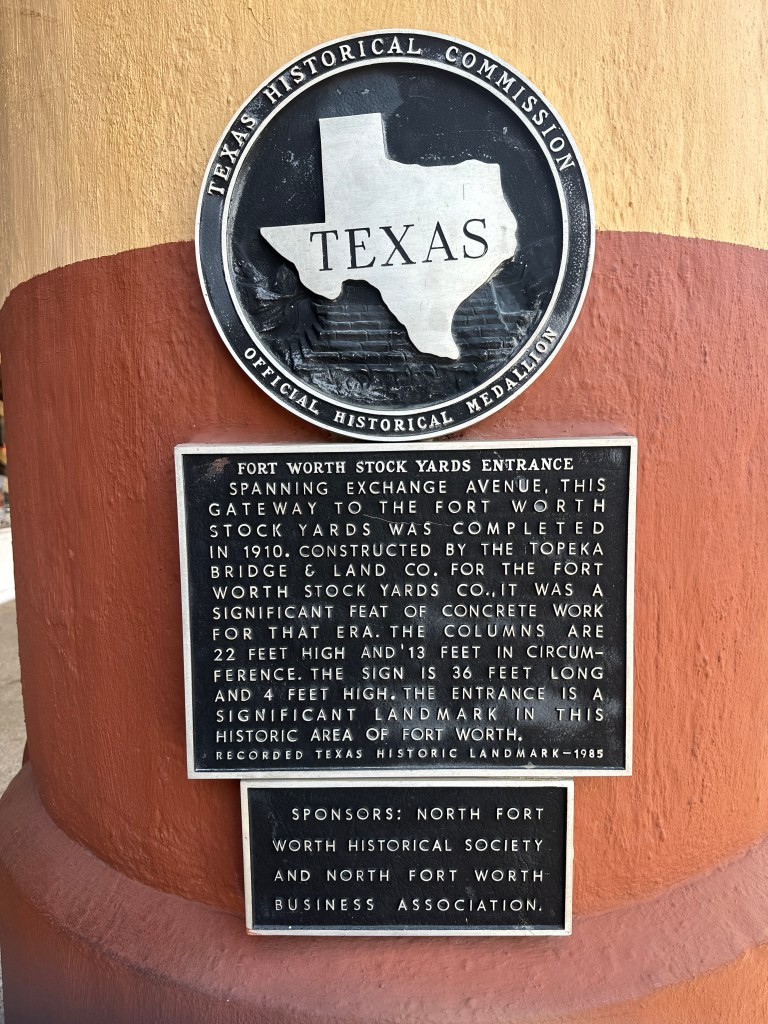
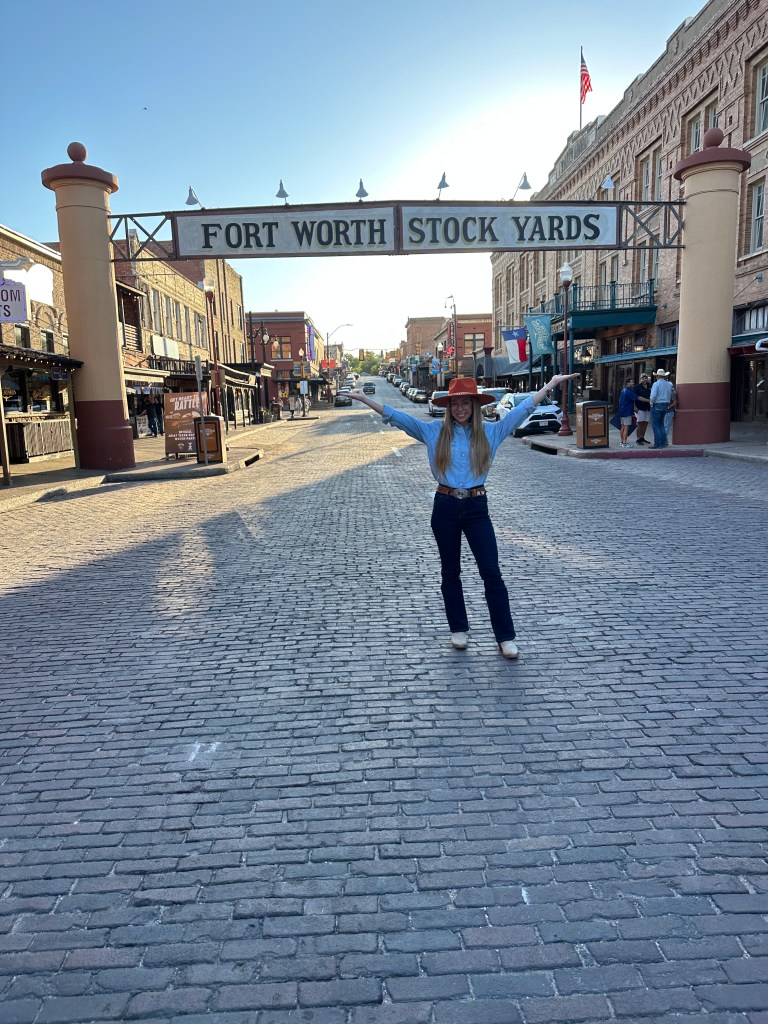
“Spanning Exchange Avenue, this gateway to the Fort Worth Stock Yards was completed in 1910. Constructed by the Topeka Bridge & Land Co. For the Fort Worth Stock Yards Co., it was a significant feat of concrete work for that era. The columns are 22 feet high and 13 feet in circumference. The sign is 36 feet long and 4 feet high. The entrance is a significant landmark in this historic area of Fort Worth.”
Thannisch Block Building

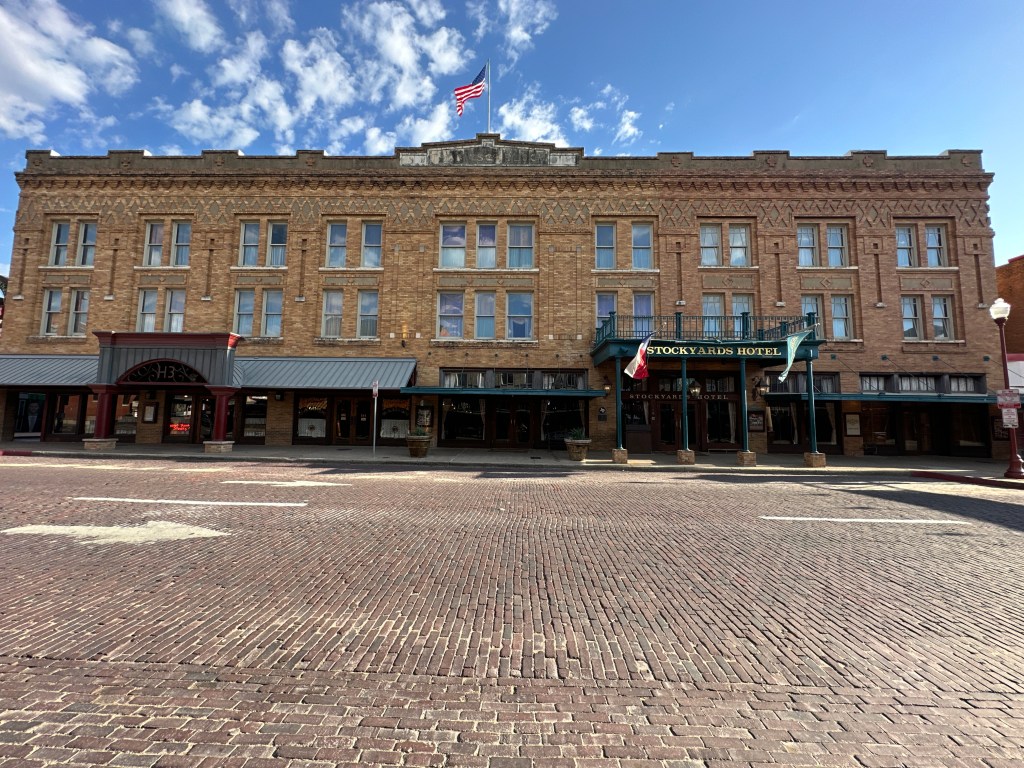
“The Eastern portion of this structure was built in 1906-07 by Col. Thomas Marion Thannisch (1853-1935), one of North Fort Worth’s early developers. Designed for use as a hotel and office space to serve the Stockyards Community and trade, the building was expanded in 1913. The three story commercial structure features decorative brickwork, chevron designs in the upper story, and a corbeled parapet.”
Fort Worth Livestock Exchange

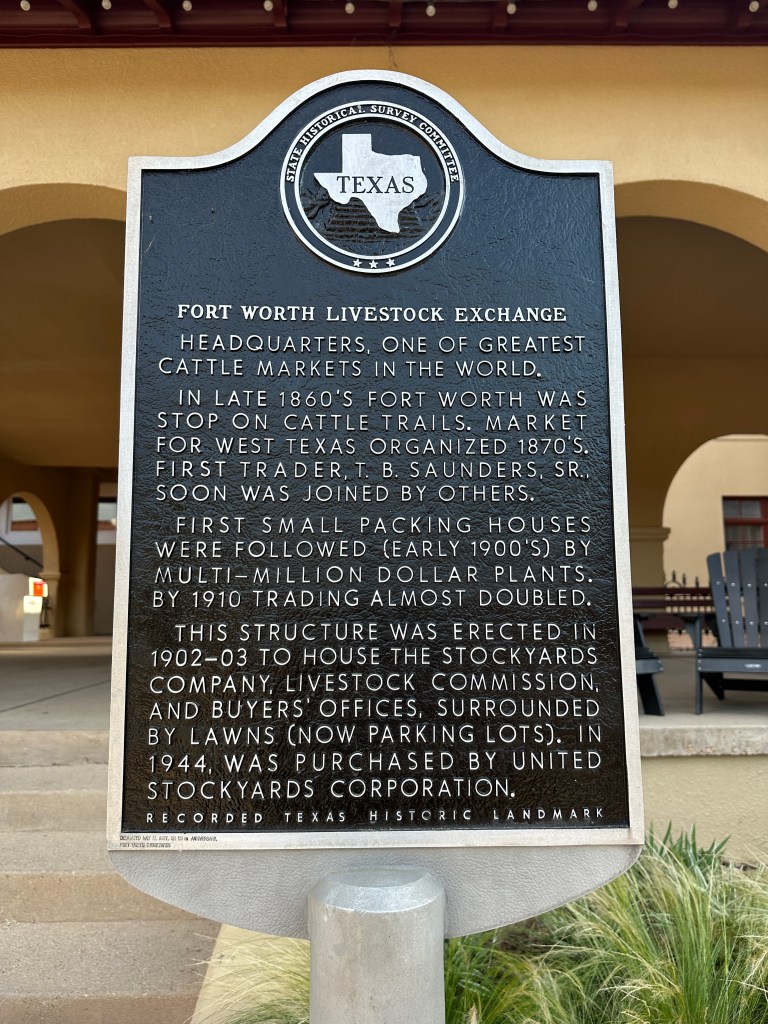
“Headquarters, one of greatest cattle markets in the world.
In late 1860’s Fort Worth was stop on cattle trails. Market for West Texas organized 1870’s. First trader, T.B. Saunders, Sr., soon was joined by others.
First small baking houses were followed (early 1900’s) by multi-million dollar plants. By 1910 trading almost doubled.
This structure was erected in 1902-03 to house the Stockyards Company, Livestock Commission, and Buyers’ Offices, surrounded by lawns (now parking lots). In 1944, was purchased by United Stockyards Corporation.”
The Fort Worth Stock Yards Company

“The Fort Worth Stock Yards Company was created in 1893, when Boston Capitalist Greenlief W. Simpson led a group of investors in purchasing the Fort Worth Union Stock Yards. Under Simpson’s leadership, the Company earned the support of the Texas Cattle Raisers Association and lured the prominent meatpacking companies of Armour and Swift to open plants here. Publicity through the Company’s market newspaper and annual Fat Stock Show, both begun in 1896, resulted in a significant increase in the number of animals brought to market. The Stock Yards Co. built the area’s livestock-related facilities and had controlling interest in many North Fort Worth businesses and properties.
The first five decades of the 20th century were the most successful for the Fort Worth Stock Yards Co. During World War I, foreign governments purchased draft animal, making Fort Worth the largest horse and mule market in the world. In 1917, overall livestock market receipts reached 3,500,000 and in 1944, sales exceeded 5,000,000 head of livestock. However, by the 1950s, local auctions were drawing sellers away from this central market. Today the Fort Worth Stock Yards Co. continues as a significant part of the city’s unique heritage.”
The Coliseum
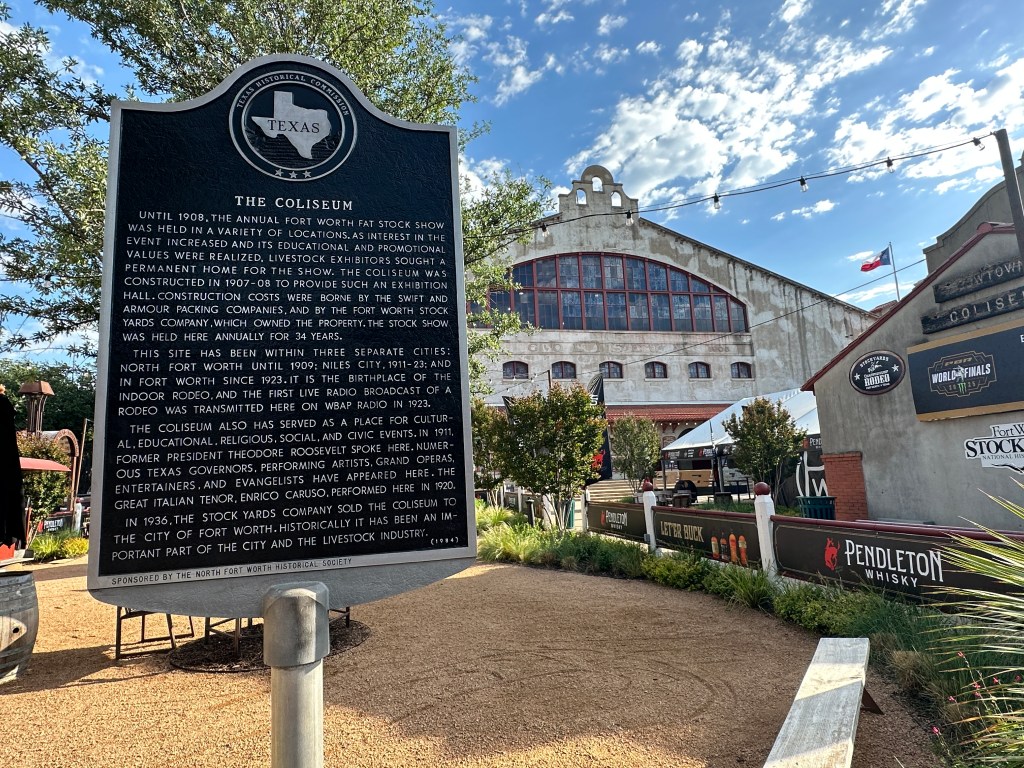


“Until 1908, the Annual Fort Worth Fat Stock Show was held in a variety of locations. As interest in the event increased and its educational and promotional values were realized, livestock exhibitors sought a permanent home for the show. The Coliseum was constructed in 1907-08 to provide such an exhibition hall. Construction costs were borne by the Swift and Yards Company, which owned the property. The Stock Show was held here annually for 34 years.
This site has been within three separate cities: North Fort Worth until 1909; Niles City, 1911-23; and in Fort Worth since 1923. It is the birthplace of the indoor rodeo, and the first live radio broadcast of a rodeo was transmitted here on WBAP Radio in 1923.
The Coliseum also has served as a place for cultural, educational, religious. Social, and civic events. In 1911, former President Theodore Roosevelt spoke here. Numerous Texas Governors, performing artists, grand operas, entertainers, and evangelists have appeared here. The great Italian tenor, Enrico Caruso, performed here in 1920.
In 1936, the Stock Yards Company sold the Coliseum to the City of Fort Worth. Historically it has been an important part of the city and the livestock industry.”
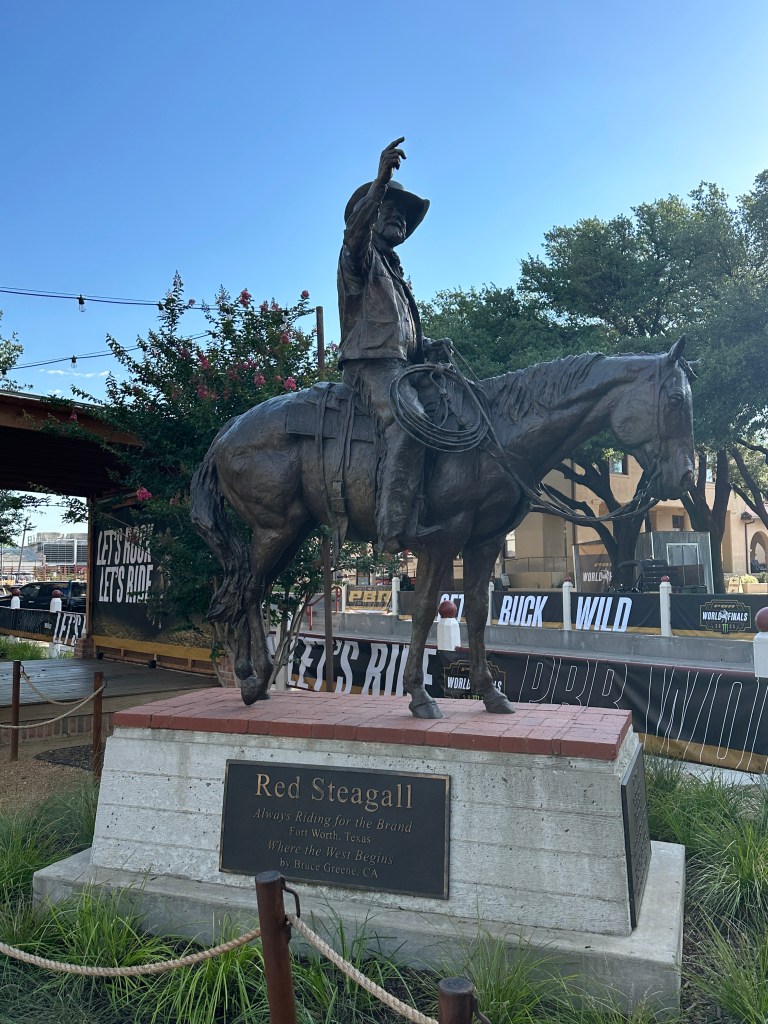
Red Steagall

The First Bulldogger
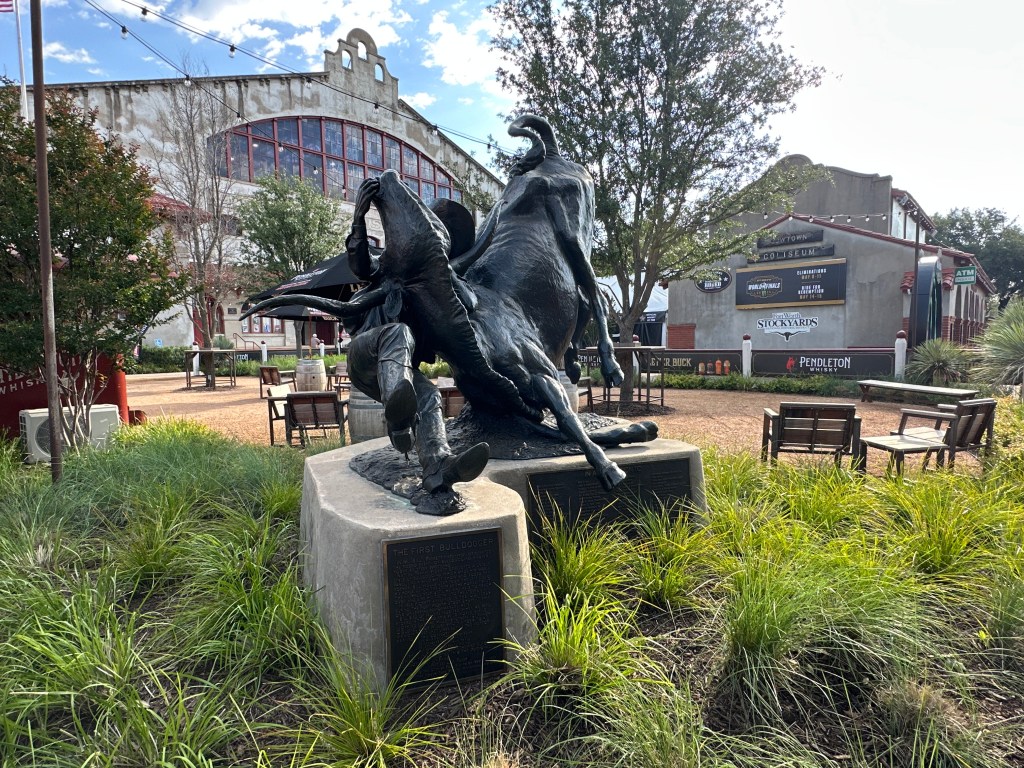
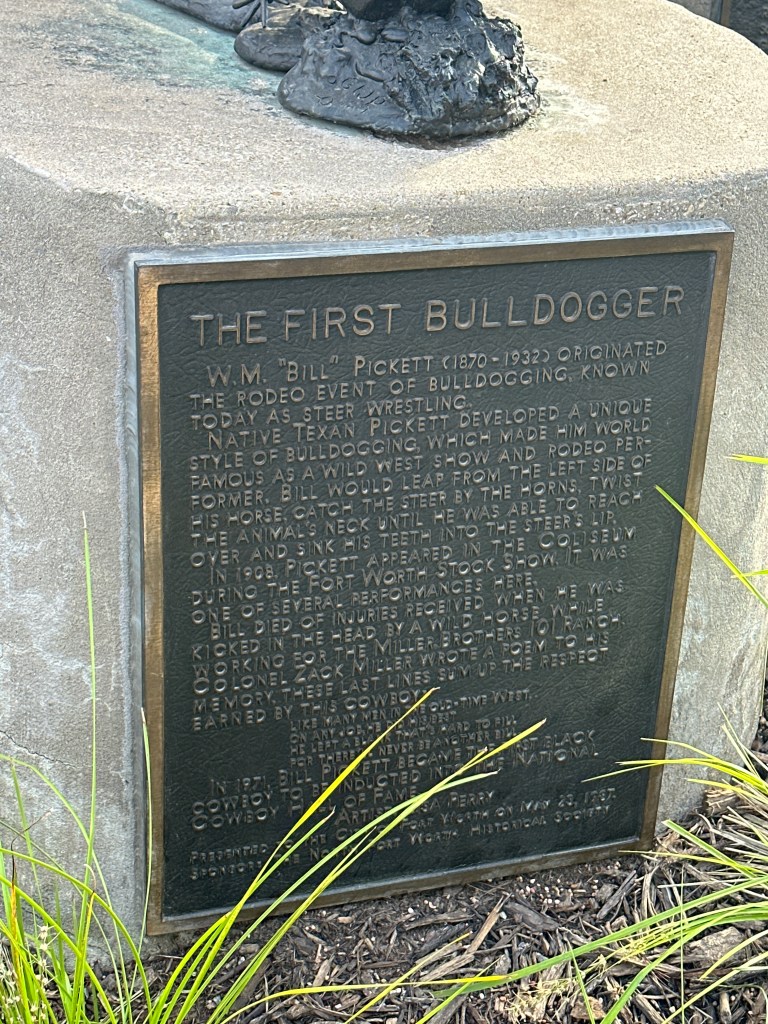
“W.M. “Bill” Pickett (1870-1932) originated the rodeo event of bulldogging, known today as steer wrestling.
Native Texan Bill Pickett developed a unique style of bulldogging, which made him world famous as a Wild West Show and Rodeo performer. Bill would leap from the left side of his horse, catch the steer by horns, twist the animals neck until he was able to reach over and sink his teeth into the steer’s lip.
In 1908, Pickett appeared in the Coliseum during the Fort Worth Stock Show. It was one of several performances here.
Bill died of injuries received when he was kicked in the head by a wild horse while working for the Miller Brothers 101 Ranch. Colonel Zack Miller wrote a poem to his memory, these last lines sum up the respect earned by this cowboy:
Like many men in the old-time West.
On any job, he did his best
He left a blank that’s hard to fill
For there’ll never be another Bill.
In 1971, Bill Pickett became the first Black cowboy to be inducted into the National Cowboy Hall of Fame.”
Woody-Kutch Livestock Commission Company
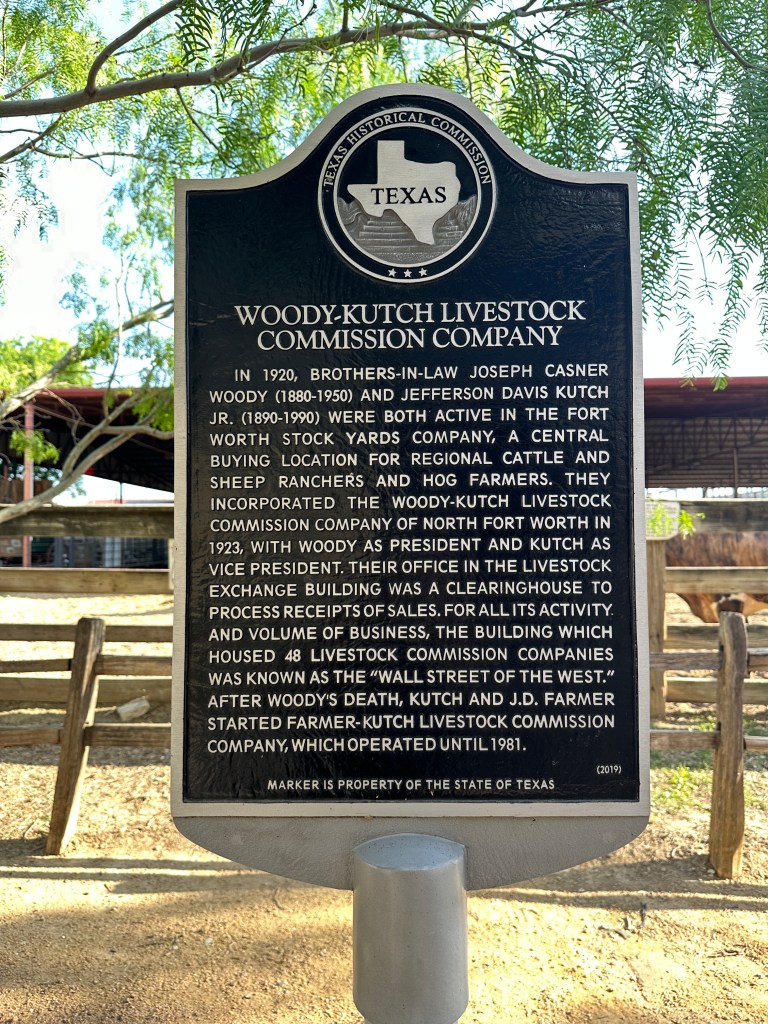

“In 1920, Brothers-In-Law Joseph Caster Woody (1880-1950) and Jefferson Davis Kutch Jr. (1890-1990) were both active in the Fort Worth Stock Yards Company, a central buying location for regional cattle and sheep ranchers and hog farmers. They incorporated the Woody-Kutch Livestock Commission Company of North Fort Worth in 1923, with Woody as President and Kutch as Vice President. Their office in the Livestock Exchange Building was a clearinghouse to process receipts of sales. For all its activity and volumes of business, the building which housed 48 livestock commission companies was known as the “Wall Street of the West.” After Woody’s death, Kutch and J.D. Farmer started Farmer-Kutch Livestock Company, which operated until 1981.”
Chisholm Trail


“This trail post commemorates and marks the location of the great Eastern cattle road, known commonly as the Old Chisholm trail, as it left Ft. Worth and headed North toward Red River Station and Indian Territory, it is identical to 400 Chisholm Trail posts placed across Oklahoma (Indian Territory) from 1990 to 1997 by Robert L. (Bob) Klemme of Enid, OK, to mark the exact trail from Red River Station to Kansas. Set during the Chisholm Trail Roundup, 16 June, 2000.”
(Courtesy of Robert L. (Bob) Klemme. Enid, OK, and the Chisholm Trail Heritage Center, Duncan, OK.)
Quanah Parker
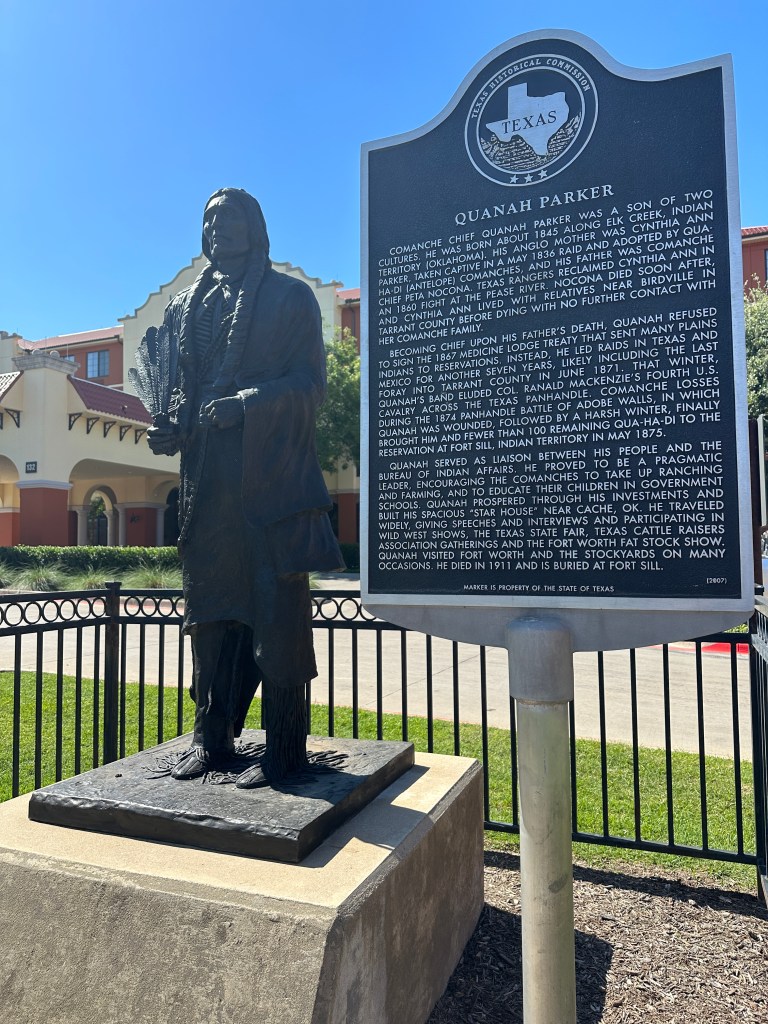
“Comanche Chief Quanah Parker was a son of two cultures. He was born about 1845 along Elk Creek, Indian Territory (Oklahoma). His Anglo mother was Cynthia Ann Parker, taken captive in a May 1836 raid and adopted by Qua-ha-di (Antelope) Comanches, and his father was Comanche Chief Peta Nocona. Texas Rangers reclaimed Cynthia Ann in an 1860 fight at the Pease River. Nocona died soon after, and Cynthia Ann lived with relatives near Birdville in Tarrant County before dying with no further contact with her Comanche family.
Becoming Chief upon his father’s death, Quanah refused to sign the 1867 Medicine Lodge Treaty that sent many Plains Indians to reservations. Instead, he led raids in Texas and Mexico for another seven years, likely including the last foray into Tarrant County in June 1871. That winter, Quanah’s band eluded Col. Ranald Mackenzie’s Fourth U.S. Cavalry across the Texas Panhandle. Comanche losses during the 1874 Panhandle Battle of Adobe Walls, in which Quanah was wounded, followed by a harsh winter, finally brought him and fewer than 100 remaining Qua-ha-di to the reservation at Fort Sill, Indian Territory in May 1875.
Quanah served as liaison between his people and the Bureau of Indian Affairs. He proved to be a pragmatic leader, encouraging the Comanches to take up ranching and farming, and to educate their children in government schools. Quanah prospered through his investments and built his spacious ‘star house’ near Cache, OK. He traveled widely, giving speeches and interviews and participating in Wild West shows, the Texas State Fair, Texas Cattle Raisers Association gatherings and the Fort Worth Fat Stock Show. Quanah visited Fort Worth and the Stockyards on many occasions. He died in 1911 and is buried at Fort Sill.”
Link to a blog post with more photos!
Niles Company
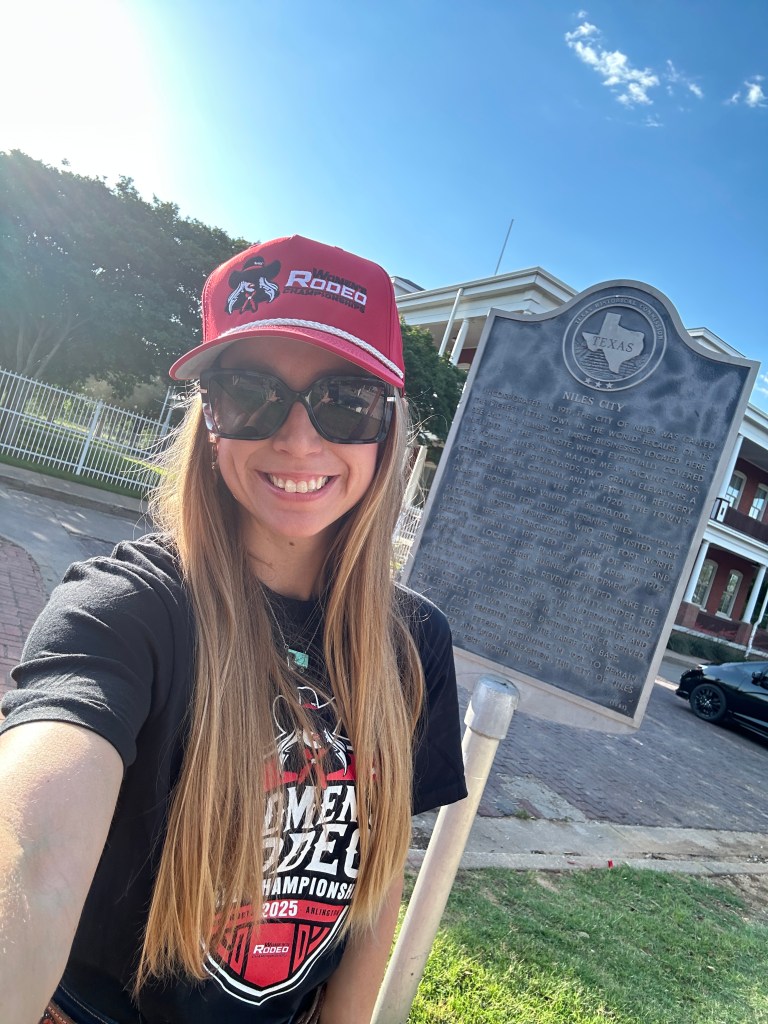


“Incorporated in 1911, the city of Niles was called the “richest little town in the world” because of its size and the number of large businesses located here. Included in the townsite, which eventually covered 1.5 square miles, were major meat packing firms, the Fort Worth Stockyards, two grain elevators, a cotton seed oil company, and a petroleum refinery and pipeline plant. By the early 1920s the town’s taxable property was valued at $30,000,000.
Niles was named for Louville Veranus Niles (1839-1928), a successful Boston businessman who first visited Fort Worth in 1893. His reorganization of the Fort Worth Packing Company in 1899 led the firms of Swift and Armour to locate their plants in this area in 1902, rapidly increasing nearby business development.
Substantial municipal tax revenues helped make the city of Niles a progressive community, under the supervision of a mayor and five aldermen, funds were used for improvements in roads, utilities, and city services. The two school districts which served the town also benefited from the large tax base.
Despite legal efforts beginning in 1921 to remain incorporated and avoid annexation, the city of Niles became part of Fort Worth in 1923.”
Swift & Company

“A leading national meatpacking firm by the 1880s, Swift & Co. adopted a practice of opening branch plants nearer the source of supply, attracted to Texas by the state’s vast livestock herds, the company chose this site for a new operation as the result of efforts by the Fort Worth Stock Yards Company. The plant opened in 1903 and soon had a dramatic impact on the economy of the city and the state. It also spawned several support businesses, including a railway company and publishing firm. The Swift Plant remained in operation until 1971.”
Armour and Swift Plaza

“Designated as a state archaeological landmark in 1987, this plaza honors the meatpacking industry which helped make Fort Worth the livestock center of the Southwest.
In 1901, both meatpackers signed identical contracts with the Fort Worth Stock Yards Company giving the packers equal capital shares in the livestock company. Together, they established the town sites of North Fort Worth (1902-1909) and later, Niles City (1911-1923).
This plaza is a tribute to the people many of whom emigrated from foreign countries, and worked for the meatpackers. They settled in North Fort Worth communities, providing the foundation of our unique ethnic heritage.”
Armour & Company

“In 1901, local business leaders G.W. Simpson and L.V. Niles began negotiating with Armour & Co., one of the nation’s four largest meatpacking firms, to encourage establishment of a branch plant in Fort Worth. The Fort Worth Stock Yards Co. offered land and other incentives and by 1902, construction of a plant just North of this site was underway. The new operation was instrumental in the city’s development as the livestock center of the Southwest, creating a number of support businesses. It remained in operation for over 50 years, closing in 1962.”

Early Site of Southwestern Exposition and Livestock Show
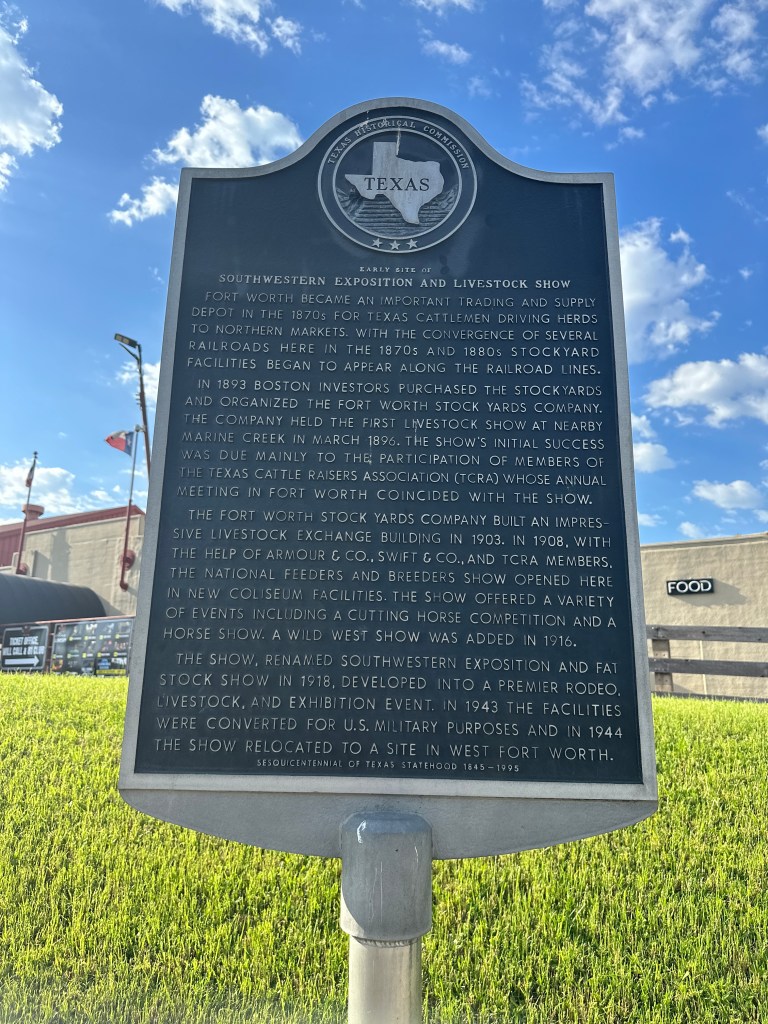
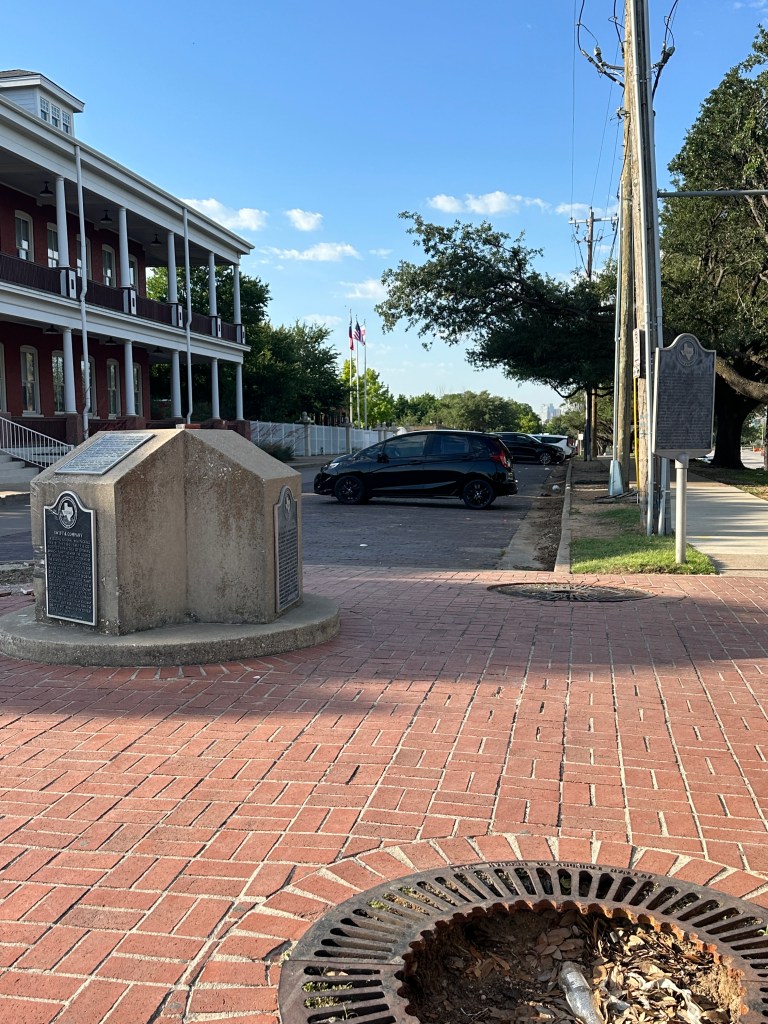
“Fort Worth became an important trading and supply depot in the 1870s for Texas Cattlemen driving herds to Northern Markets. With the convergence of several railroads here in the 1870s and 1880s Stockyard facilities began to appear along the railroad lines.
In 1893 Boston investors purchased the Stockyards and organized the Fort Worth Stock Yards Company. The Company held the first Livestock Show at nearby Marine Creek in March 1896. The Show’s initial success was due mainly to the participation of members of the Texas Cattle Raisers Association (TCRA) whose annual meeting in Fort Worth coincided with the show.
The Fort Worth Stock Yards Company built an impressive livestock exchange building in 1903. In 1908, with the help of Armour & Co., Swift & Co., and TCRA members, the National Feeders and Breeders Show opened here in new coliseum facilities. The show offered a variety of events including a cutting horse competition and a horse show. A Wild West Show was added in 1916.
The show, renamed Southwestern Exposition and Fat Stock Show in 1918, developed into a premier rodeo, livestock, and exhibition event. In 1943 the facilities were converted for U.S. Military purposes and in 1944 the show relocated to a site in West Fort Worth.”
Dedicated to Phil Oley O’Neal
Oilman, Rancher (8/26/20 – 6/30/86)


Sources
The Screenshot below is from the Texas Historical Commission Texas Historic Sites Atlas.

This is such a neat resource that lists all of the historic markers all over the state of Texas. I will definitely be using this map every time I go to Texas now to make sure I learn more about the local history!
 The Active Historian
Leave a comment