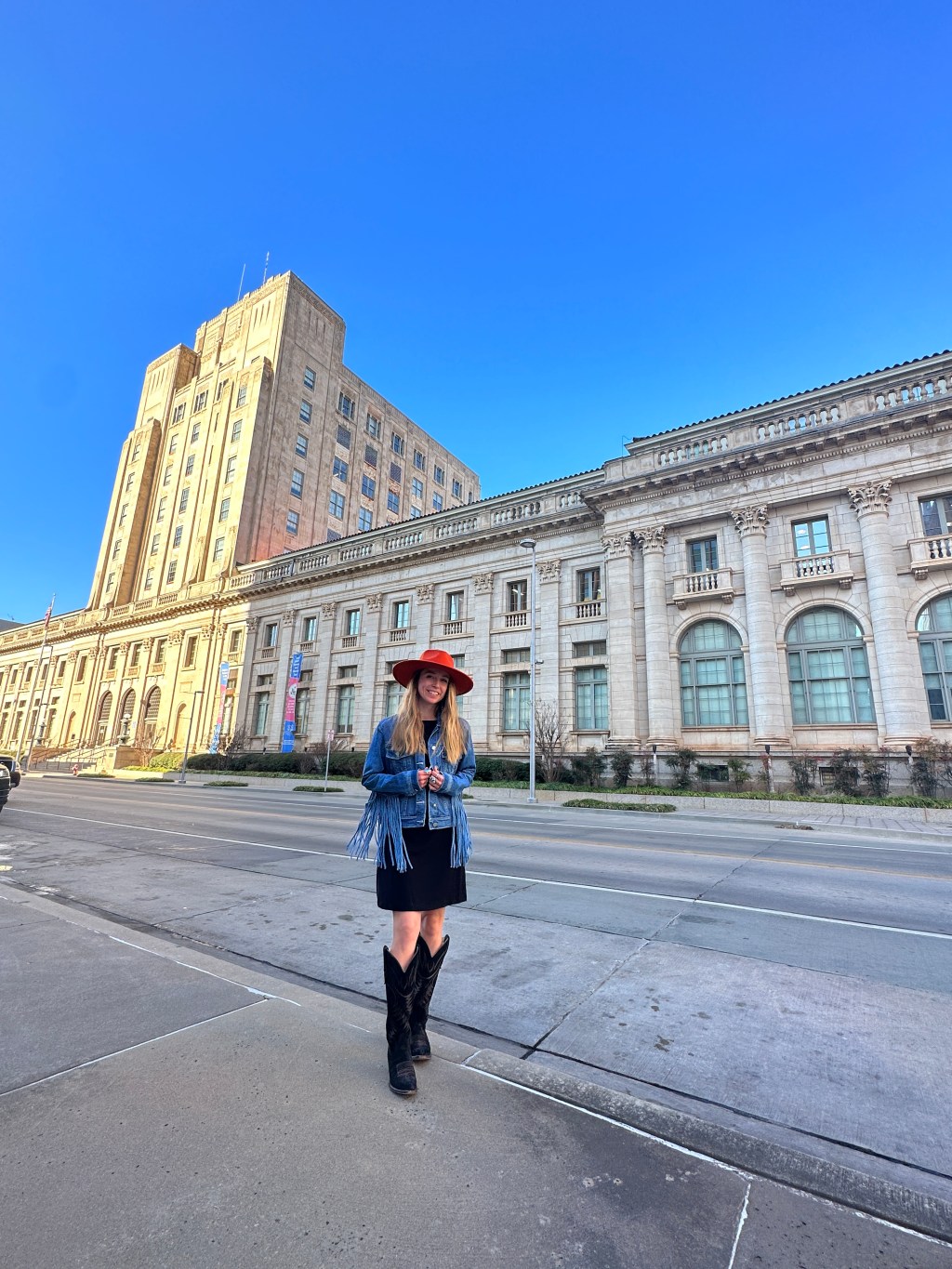
Hey, Friend! Welcome back to another post. Today, I want to tell you about the Federal Judicial Learning Center and Museum in Oklahoma City. Let’s get started!
The Historical Society of the United States District Court for the Western District of Oklahoma operates the Federal Judicial Learning Center and Museum. Their displays include panels with information and photos, artifacts, documents, a replica of Machine Gun Kelly’s Tommy gun, and interactive kiosks. The two main exhibits on the first floor are Machine Gun Kelly’s Case and The Osage Reign of Terror: The Untold Legal History.
History of the Building
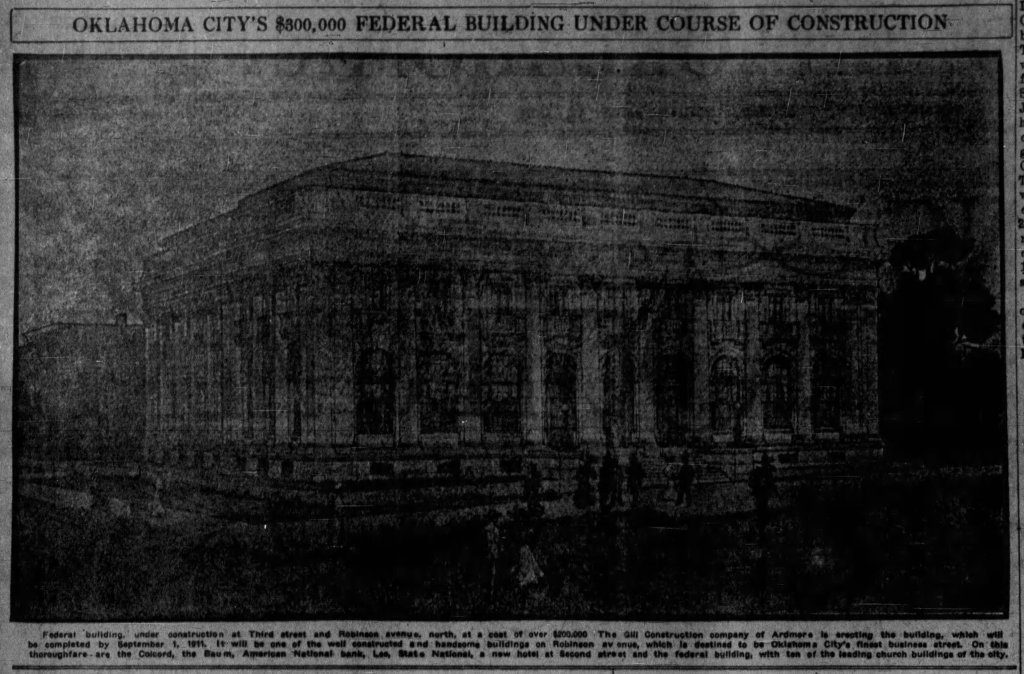
This building is the historic U.S. Post Office, Courthouse, and Federal Building which was completed in 1912. It was designed by James Knox Taylor in the Beaux Arts design. It was originally three stories tall prior to later additions. The Post Office was on the first floor and the Federal Courts were on the second floor.
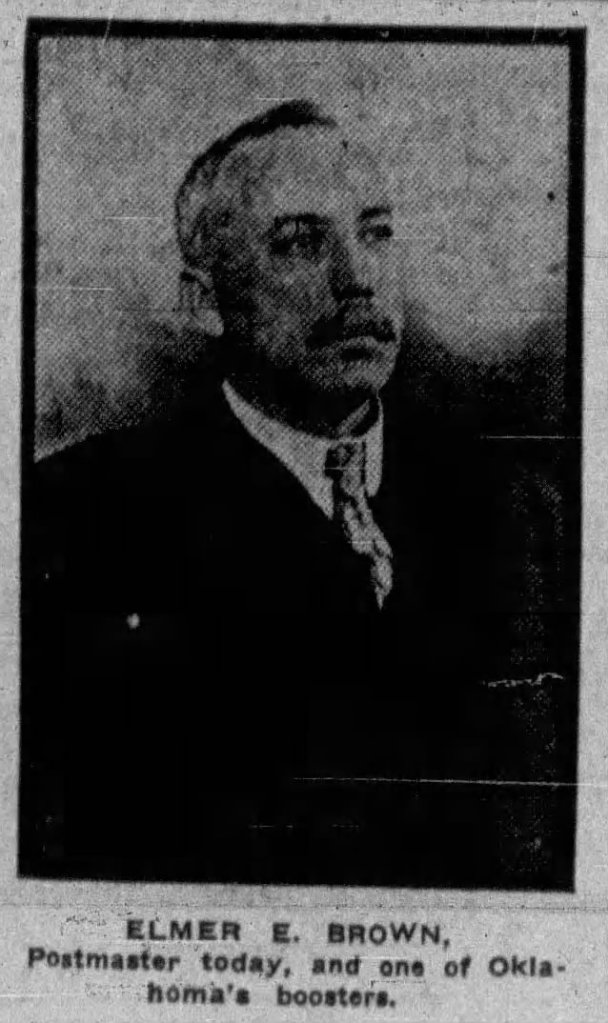
There was a formal groundbreaking ceremony on February 28. Postmaster Elmer E. Brows dug the first shovel full of dirt, followed by W.H. Moore who was the business agent of the building trade unions. Approximately fifty people gathered to watch the ceremonial groundbreaking.
Excavation work began immediately following the groundbreaking ceremony led by the William McMichael Company. Federal Inspector, Edward P. Boyd traveled from Washington, D.C. to Oklahoma City to oversee the project through completion. The building was to be three stories tall made of stone and brick. The cost appropriated was $290,196. The steel skeleton of the building was nearly completed by December 1910 according to the newspaper. The contract stated that the building had to be completed by April 1912.
The building was supposed to be completed by the end of April 1912, but this did not happen. The building was completed and opened later in July 1912.
From 1916-1918, an addition was added to the building. There was a lot of back and forth negotiating for appropriations, contracts, and bids. Algernon Blair was named the contractor and L.R. Samford was named the foreman.
“I am always glad to be in Oklahoma City, which I think is one of the most progressive in the south… and I only regret that my visits here are necessarily so short.”
– Algernon Blair
“Federal Building Contractor Pleased By Progress Made.” The Oklahoman, December 14, 1917.
In 1919, the building was doubled in size by James A. Wetmore. The original design was kept throughout the expansion. This expansion was to cost roughly $400,000. The entire building was estimated to be worth $750,000 in 1919 according to The Daily Oklahoman.

Work began on the next addition in 1931 and was estimated to cost over a million dollars. In 1932, Louis A. Simon led an expansion which created a three-story addition and a nine-story tower over the center of the building. The tower was a popular style in the 1930s. Upon the completion of the tower, the Federal Building was the tallest building in Oklahoma City at the time.
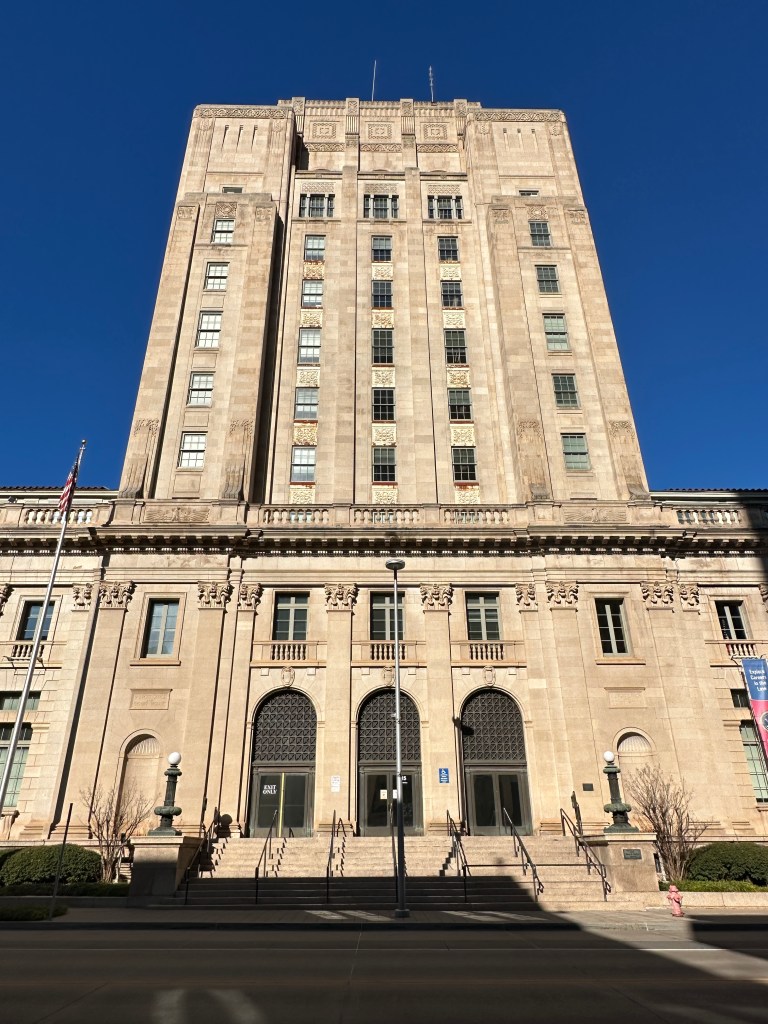
Today, the building is the U.S. Bankruptcy Court for the Western District of Oklahoma and offices for other federal agencies.
Exhibitions on the First Floor
Throughout the building’s tenure, many important cases were tried here. There are a couple of exhibits on the first floor which educate the public on the trials and the roles the courts play in Oklahoma.
FYI: You aren’t allowed to take any photos inside of the building at all. So there won’t be any exhibition photos like usual. You are required to put your phone in a locker while you look around. You might take a pen and notebook if you want to take notes – I wish I had known because I would have loved to take notes!
Machine Gun Kelly Trial
George “Machine Gun” Kelly’s kidnapping case took place in this building in 1933. It was the first time kidnapping was tried as a federal crime after the passage of the Lindbergh Law.
Machine Gun Kelly and Albert Bates had kidnapped a wealthy oil man named, Charles Urschel and his friend Walter R. Jarrett on July 22, 1933. Their wives were told to not call for help and could do nothing to stop the kidnapping. Jarrett was released hours later on July 23 after they figured out who he was and took the $50 from his wallet. He was left on the side of the road on the outskirts of Oklahoma City.
Urschel’s wife was advised to contact J. Edgar Hoover with the FBI. He immediately took the case and made it a priority.
Kelly collected a $200,000 ransom and released Urschel over a week later. Urschel arrived back home on July 31. Kelly was eventually caught in Memphis, Tennessee with his wife, Kathryn. They were taken back to Oklahoma City to stand trial.
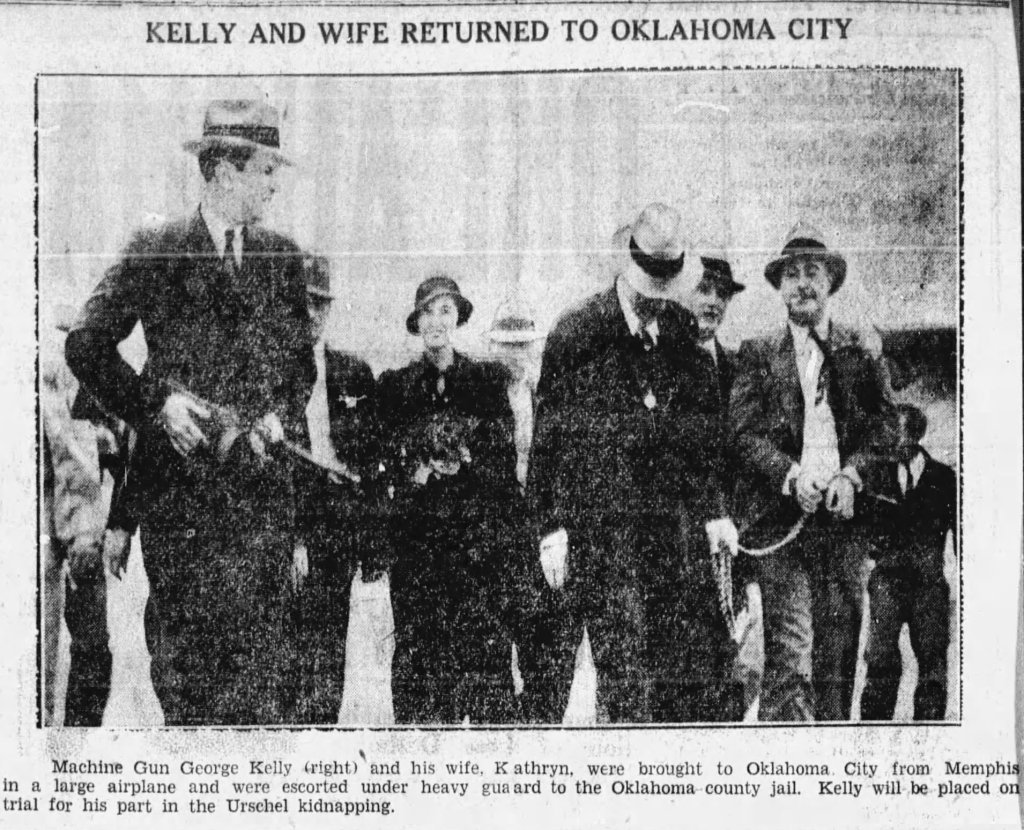
Many of their accomplices had already been caught and tried receiving life sentences. Machine Gun Kelly and Kathryn Kelly both pleaded not guilty, but were given life sentences.
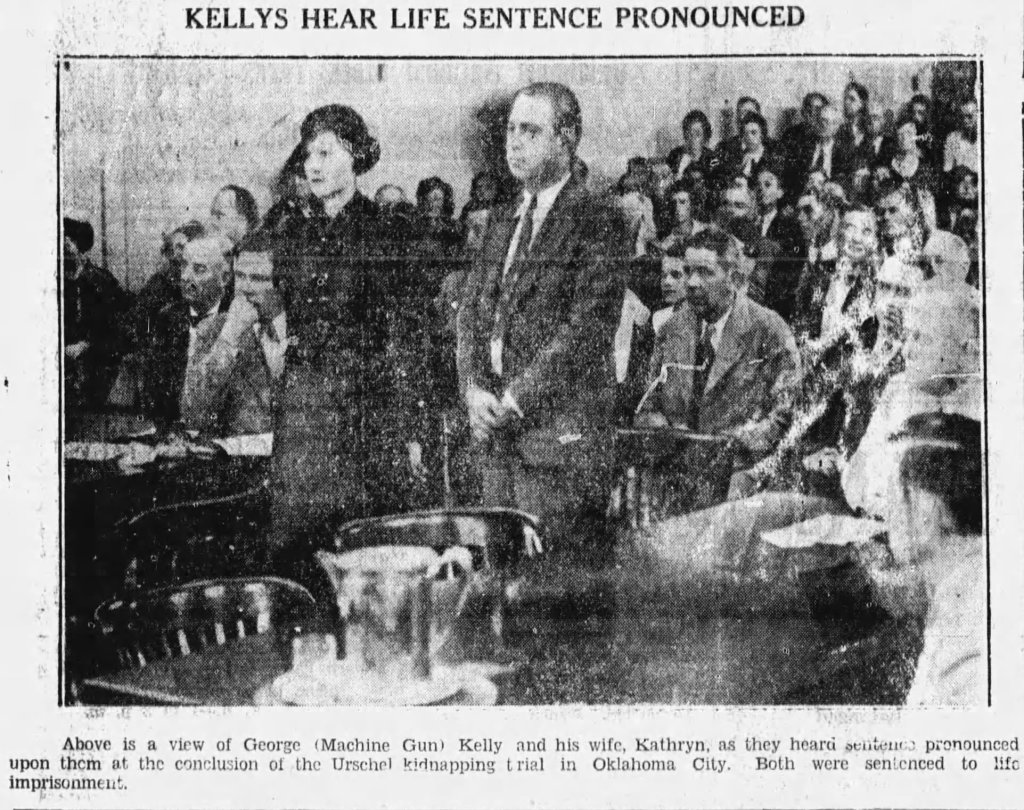
This trial was the first criminal trial to be captured on film making it a major media event. Some days you are able to tour the historic courtroom where Machine Gun Kelly’s trial took place on the ninth floor of the building. Unfortunately, it was locked on the day I visited so I wasn’t able to go inside the courtroom. The details on the exterior of the door and the walls was beautiful in the hallways though! It was also neat to be able to look out the windows that high up in that part of OKC.
Osage Reign of Terror Trials
There is also an exhibition on the Osage Reign of Terror Trials. There are documents, photos, and pieces of Osage culture. Reading the panels is absolutely heartbreaking. There were three federal trials and a state trial which ultimately convicted William Hale of murdering several people. The book and movie, “Killers of the Flower Moon” documents the history of what happened in these cases.
Concluding Thoughts
I enjoyed stopping in the Federal Judicial Learning Center & Museum to learn more about the federal cases and how the courts work. They offer field trips and I think they would be so fun for kids! Go check out this center and explore the story of this historic building in Oklahoma City.
Happy Traveling! I’ll talk to ya soon 🙂
Visit
215 Dean A McGee Ave.
Oklahoma City, OK 73102
*NOTE BEFORE YOU VISIT: The Federal Judicial Learning Center and Museum does not allow any photos inside of the building. You will have to go through a metal detector to enter the building and remove your shoes. You are not allowed to have water bottles or drinks on the side of your bag. You are required to turn your phone off and put it in a locker while you are inside the building.
Sources
Secondary Sources
“About Us.” Federal Judicial Learning Center and Museum. Historical Society of the United States District Court. Western District of Oklahoma.
“Courthouse History.” United States Bankruptcy Court Western District of Oklahoma.
“Federal Judicial Learning Center and Museum.” Visit OKC.
“Federal Judicial Learning Center & Museum.” TravelOK.
Perrin Clore Duncan. “Federal Judicial Learning Center and Museum Promotes Civic Education in OKC; Machine Gun Kelly Exhibit to Soon Open.” May 19, 2021. Velocity Blog. Greater Oklahoma City Chamber.
Larry O’Dell. “Urschel Kidnapping.” The Encyclopedia of Oklahoma History and Culture. Oklahoma Historical Society.
“George “Machine Gun” Kelly.” FBI website.
“Osage Murders Case.” FBI website.
“A new Oklahoma City exhibit about the Osage murders reveals new legal history.” KOSU. NPR. December 14, 2023.
Primary Sources
Newspapers
“Local G.O.P Is Angry At Dick Morgan.” Oklahoma City Daily Pointer (Oklahoma City, OK), February 11, 1910.
“Federal Building Work Next Week.” The Daily Oklahoman (Oklahoma City, OK), February 16, 1910.
“Early Day Post-Office Shack Evolves Federal Building Made Of Granite.” The Daily Oklahoman (Oklahoma City, OK), February 20, 1910.
“With Spade He Shovels First Dirt.” Oklahoma City Daily Pointer (Oklahoma City, OK), February 28, 1910.
“Work On Federal Building Today.” The Daily Oklahoman (Oklahoma City, OK), February 28, 1910.
“Boosters Knock Two Home Runs In Single Day.” The Oklahoman (Oklahoma City, OK), March 1, 1910.
“Federal Inspector Arrives.” Oklahoma City Daily Pointer (Oklahoma City, OK), March 1, 1910.
“Senator Gore Is Kept In Capital.” Weekly Oklahoman (Oklahoma City, OK), March 3, 1910.
“Oklahoma City’s $500,000 Federal Building Under Course of Construction.” The Daily Oklahoman (Oklahoma City, OK), April 22, 1910.
“Steel Skeleton of Federal Building is Near Complete.” The Oklahoman (Oklahoma City, OK), December 6, 1910.
“Federal Building Complete July 1.” The Daily Oklahoman (Oklahoma City, OK), August 18, 1911.
“Outgrowing Our Public Buildings.” The Daily Oklahoman (Oklahoma City, OK), November 12, 1911.
“Federal Building Complete June 15.” The Daily Oklahoman (Oklahoma City, OK), January 28, 1912.
“More Room Now The Appeal For Federal Building.” The Oklahoma News (Oklahoma City, OK), November 12, 1912.
“Indicates Early Work On Edifice.” The Oklahoman (Oklahoma City, OK), January 21, 1916.
“No P.O. Addition Now; U.S. Thinks Bid Too Costly.” The Oklahoma City Times (Oklahoma City, OK), March 31, 1916.
“Postoffice Delay May Be Lessened.” The Daily Oklahoman (Oklahoma City, OK), April 12, 1916.
“To Open Bids For P.O. Addition June 1.” The Oklahoma News (Oklahoma City, OK), May 8, 1916.
“News of the State Capital.” Capitol Hill Beacon (Oklahoma City, OK), May 13, 1916.
“Federal Building Plans Cut Down.” Oklahoma Federationist (Oklahoma City, OK), December 2, 1916.
“Postoffice Bid Is Within Range.” The Daily Oklahoman (Oklahoma City, OK), January 10, 1917.
“Federal Building Addition Work To Start Tomorrow.” The Oklahoman (Oklahoma City, OK), February 26, 1917.
“To Start Postoffice Excavating.” The Daily Oklahoman (Oklahoma City, OK), March 1, 1917.
“Federal Building Contractor Pleased By Progress Made.” The Oklahoman (Oklahoma City, OK), December 14, 1917.
“P.O. Moving Is Delayed.” The Oklahoma News (Oklahoma City, OK), October 9, 1918.
“Federal Building Addition Delayed.” The Oklahoman (Oklahoma City, OK), October 23, 1918.
“Plans Are Made For Addition To City Postoffice.” The Oklahoman (Oklahoma City, OK), December 23, 1918.
“Some Facts Concerning Oklahoma City.” The Daily Oklahoman (Oklahoma City, OK), September 21, 1919.
“P.O. Bids Due Soon.” The Oklahoma News (Oklahoma City, OK), April 7, 1930.
“New Buildings Planned for Public And Industrial Uses.” Harlow’s Weekly (Oklahoma City, OK), March 14, 1931.
“Kellys Hear Life Sentence Pronounced.” Oklahoma Live Stock News (Oklahoma City, OK), October 16, 1933.
“Kelly and Wife Returned to Oklahoma City.” Oklahoma Live Stock News (Oklahoma City, OK), October 4, 1933.
 The Active Historian
Leave a comment