Hey, friend! Welcome back to another post. Today, we’re talking about the life of Kate Barnard – a woman who changed the course of Oklahoma history. Let’s get started!
Who was Kate Barnard?
Catherine Ann “Kate” Barnard was born on May 23, 1875 in Geneva, Nebraska to John P. and Rachel Sheill Barnard. The family moved to Kansas after she was born. Her mother passed away in Kansas and her father moved to Oklahoma City to stake a claim. Kate joined her father on his claim in Newalla, Oklahoma in 1891.
Kate moved to Oklahoma City in 1895 to earn her teacher’s license. She was granted her territorial teaching certificate and taught in many one-room schoolhouses around the Oklahoma City Metro area.
She later enrolled in a secretarial course so she could take on clerical positions within the Oklahoma Territorial Government.
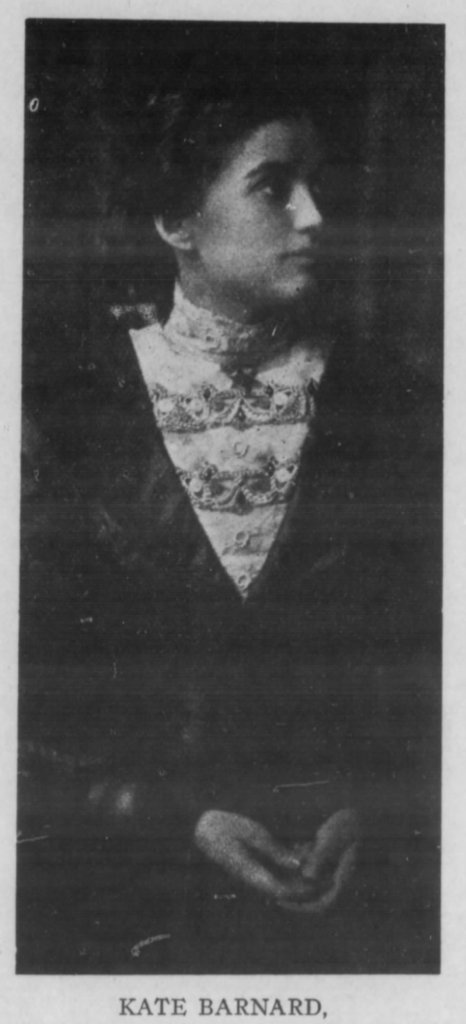
She was a hostess at the 1904 St. Louis World’s Fair for the Oklahoma exhibit and attended talks while there on urban poverty and social reforms. Upon returning to Oklahoma City, she noticed many things had the potential for reform. She began implementing many of the things she had learned and became known for her career in charity work.
In 1906, she entered the political arena even though women in Oklahoma did not yet have the right to vote. She was able to convince delegates in the Oklahoma Constitutional Convention to pass two measures – the prohibition of child labor and the establishment of the Commissioner of Charities and Corrections.
Kate Barnard was elected the first Commissioner of Charities and Corrections by a wide margin. Again, women weren’t allowed to vote in this election. Winning this position was a BIG deal because it made her the first woman elected to a major Oklahoma state office. As if that wasn’t big enough, Kate was the first woman to win a statewide elected office in the United States.
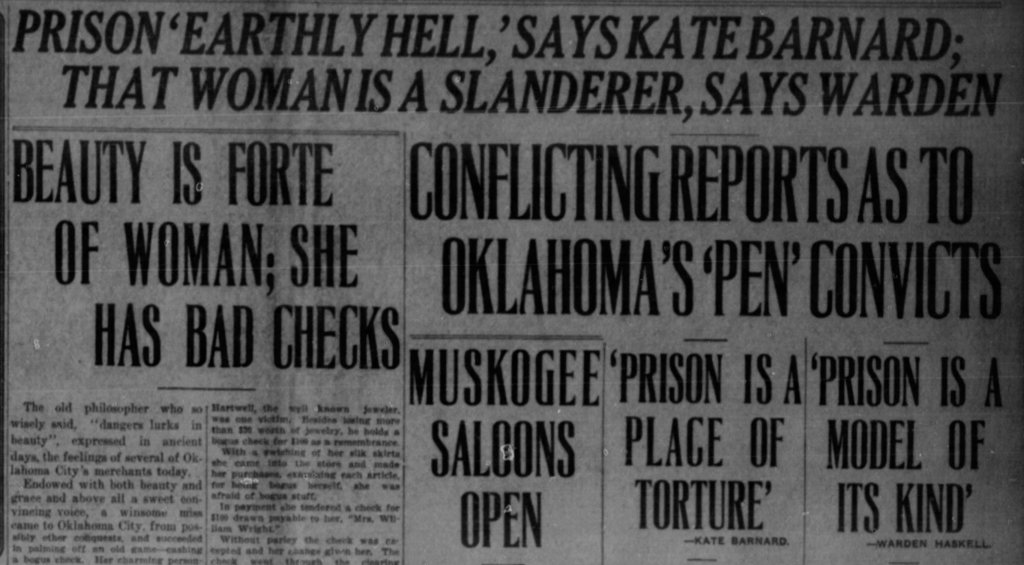
Her first term in office was very successful. Laws were adopted that regulated child labor, required compulsory education, and established a juvenile justice system. She was responsible for the repatriation of Oklahoma prisoners from Kansas prisons back to Oklahoma. The 1908 investigation garnered national headlines in the newspapers as shown in the newspaper example below.
She helped establish a three-tier state prison system: the penitentiary, the reformatory, and a boys’ training school. She also oversaw the orphanages and insane asylums.
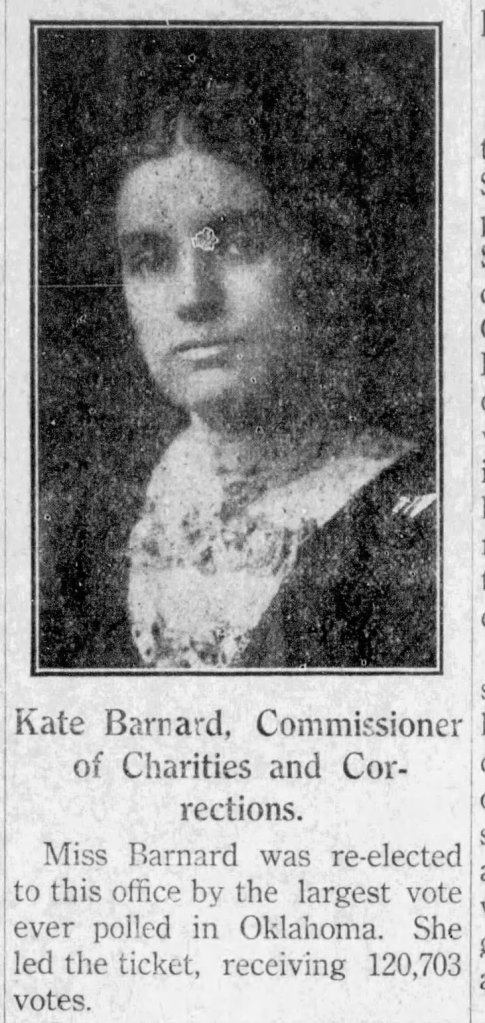
Kate Barnard was re-elected in 1910 after running against four other candidates: Kate M. Biggers (Marlow, president of the Oklahoma Woman Suffrage Association, Republican), Mrs. Winnie Branstetter (Socialist), W.F. Baker (Holdenville), R.W. Taylor (Wynnewood, Farmer).
“[Kate Barnard’s] wide connection in charitable, eleemosynary and reformatory organizations, and especially in connection with activities for the welfare of the Indians, make her undoubtedly the most powerful single influence upon public opinion in the east, even including Washington and departments, that Oklahoma has today.”
“Kate Barnard Charges Conspiracy to Rob Exists.” Harlow’s Weekly (Oklahoma City, Oklahoma), March 27, 1915.
She launched a campaign to protect Native American orphans’ property rights during her second term. Many people attacked her verbally for this and her department budget was slashed by the legislature. She left office in 1915.
During her time in office, Kate Barnard had 30 statutory laws passed and three of her articles were included in the Oklahoma State Constitution. Her work laid the foundation for the current Department of Corrections, Department of Human Services, and Department of Mental Health and Substance Abuse Services.
She later lived a secluded life due to health reasons. She passed away on February 23, 1930 in Oklahoma City at the age of 54.
In 1982, Kate Barnard was inducted in the Oklahoma Women’s Hall of Fame.
In 1999, the Kate Barnard Award was established by the Oklahoma Commission On the Status of Women to honor women in public service roles.
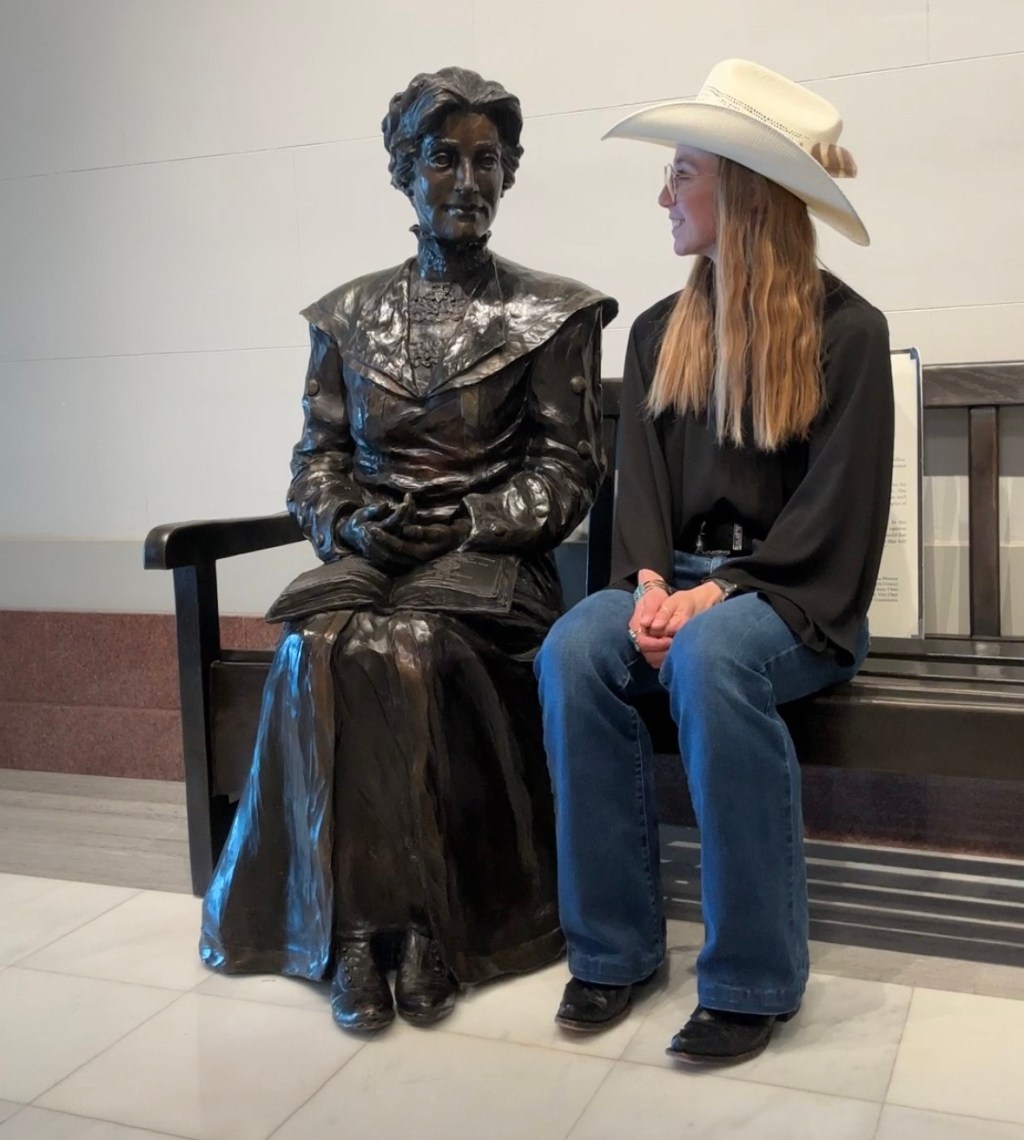
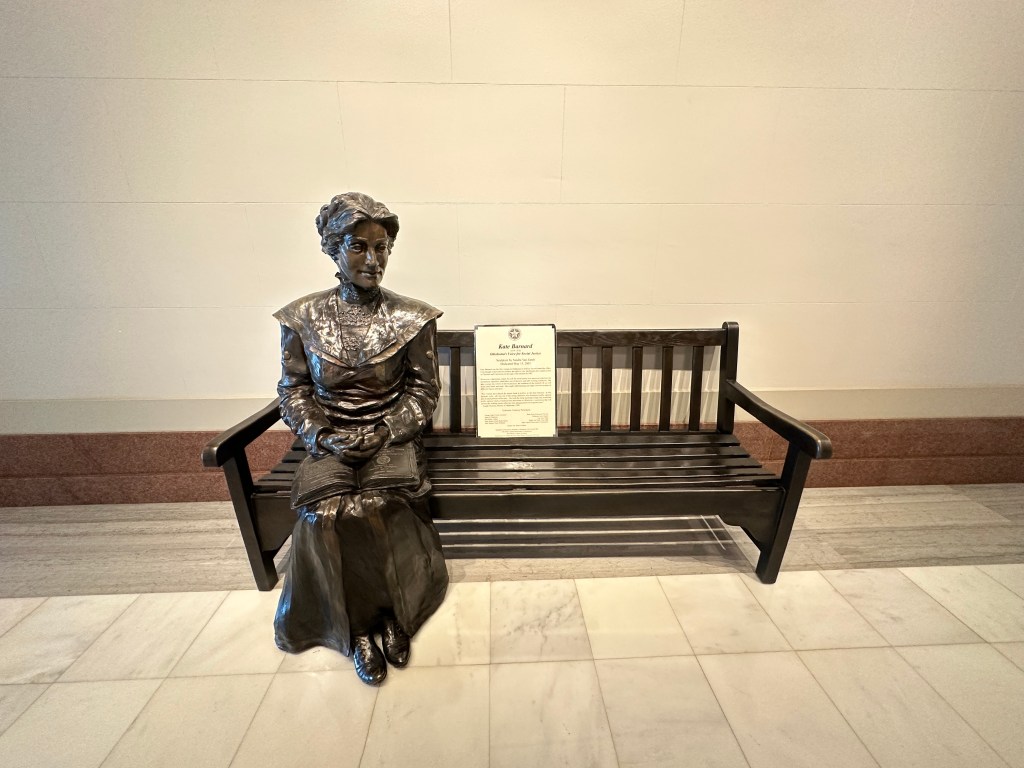
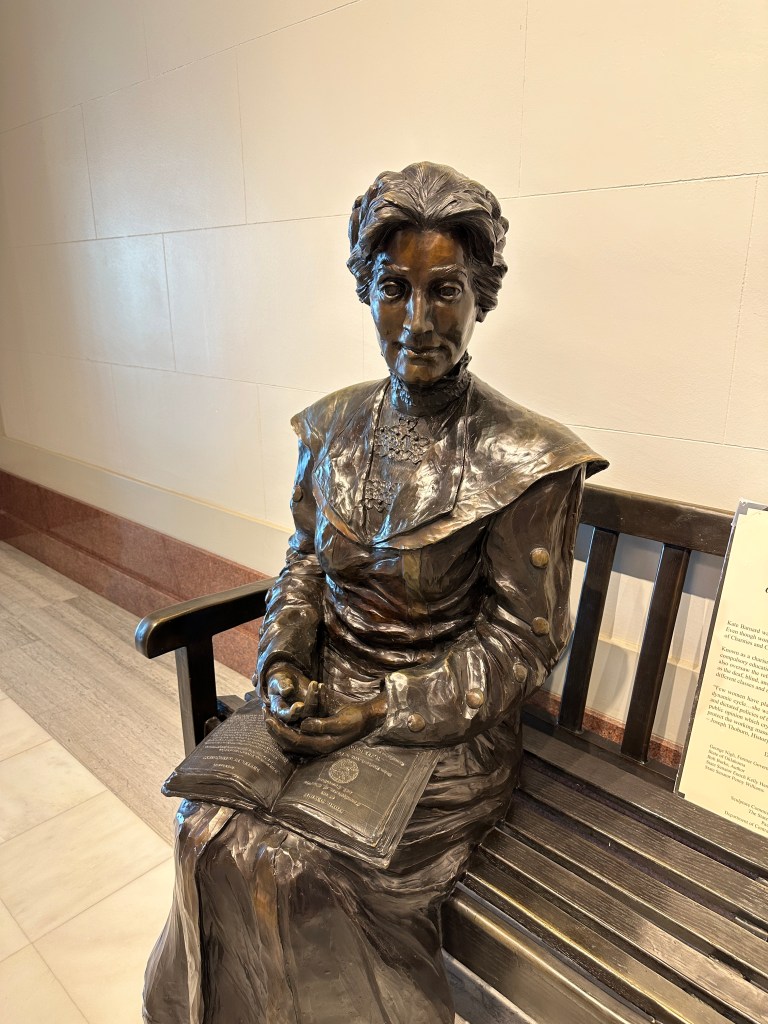
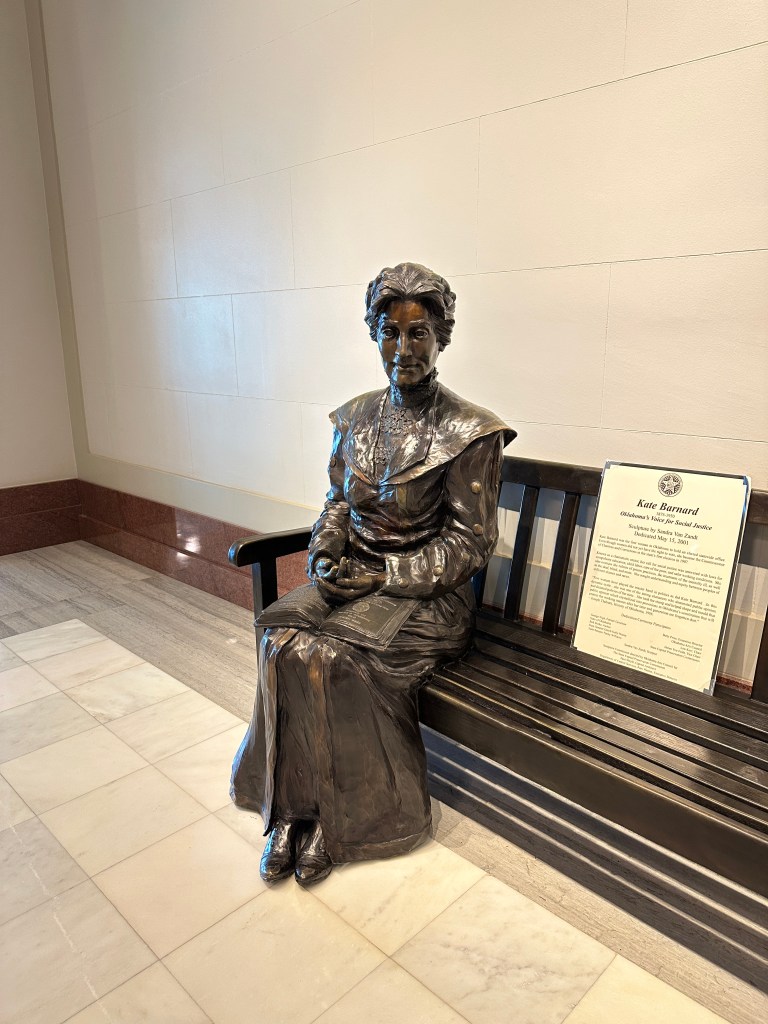
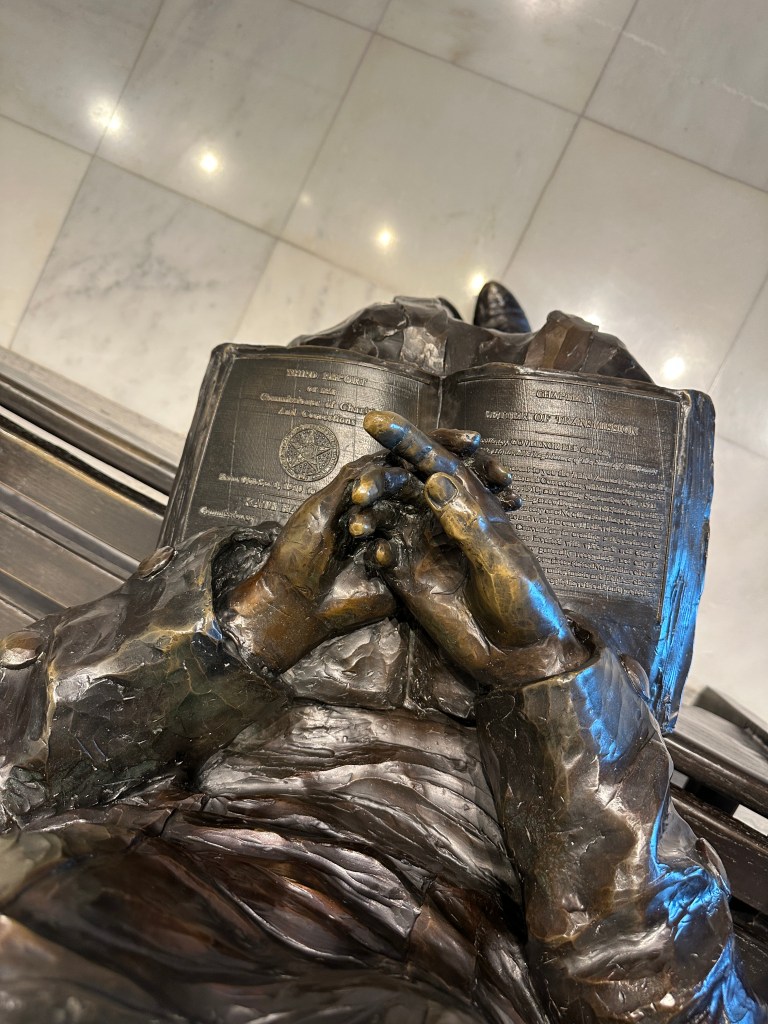
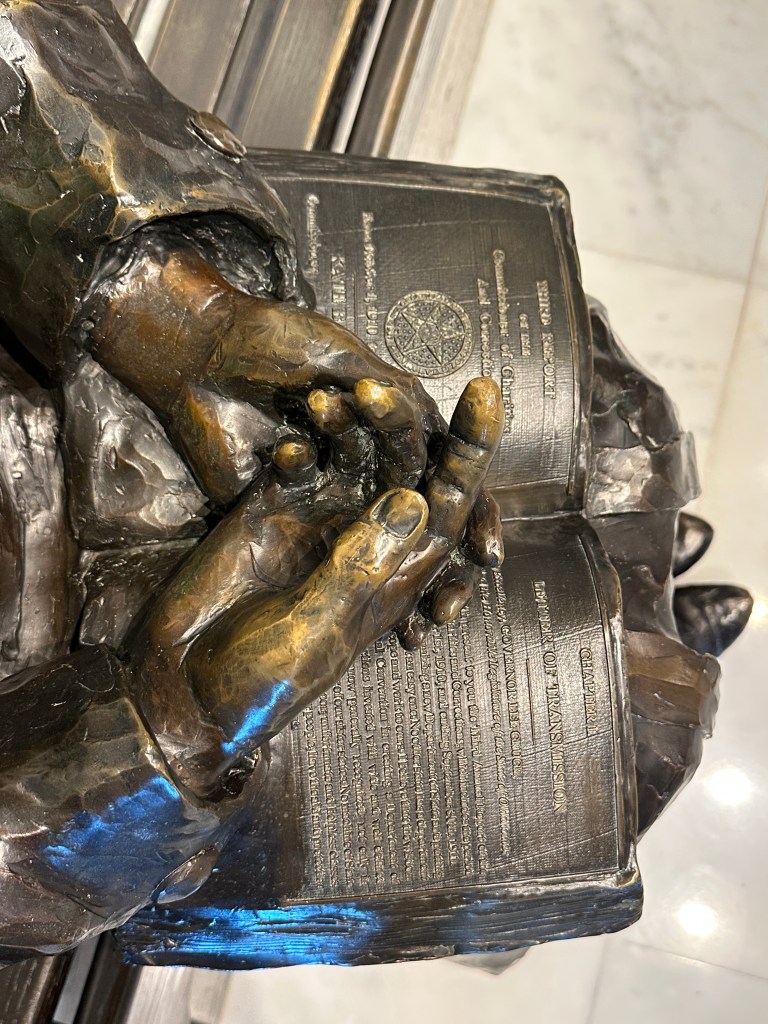
In 2001, a statue of Kate Barnard created by Sandra Van Zandt was dedicated inside the Oklahoma State Capitol building. You can see photos below.

Transcription of the Sign with the Statue
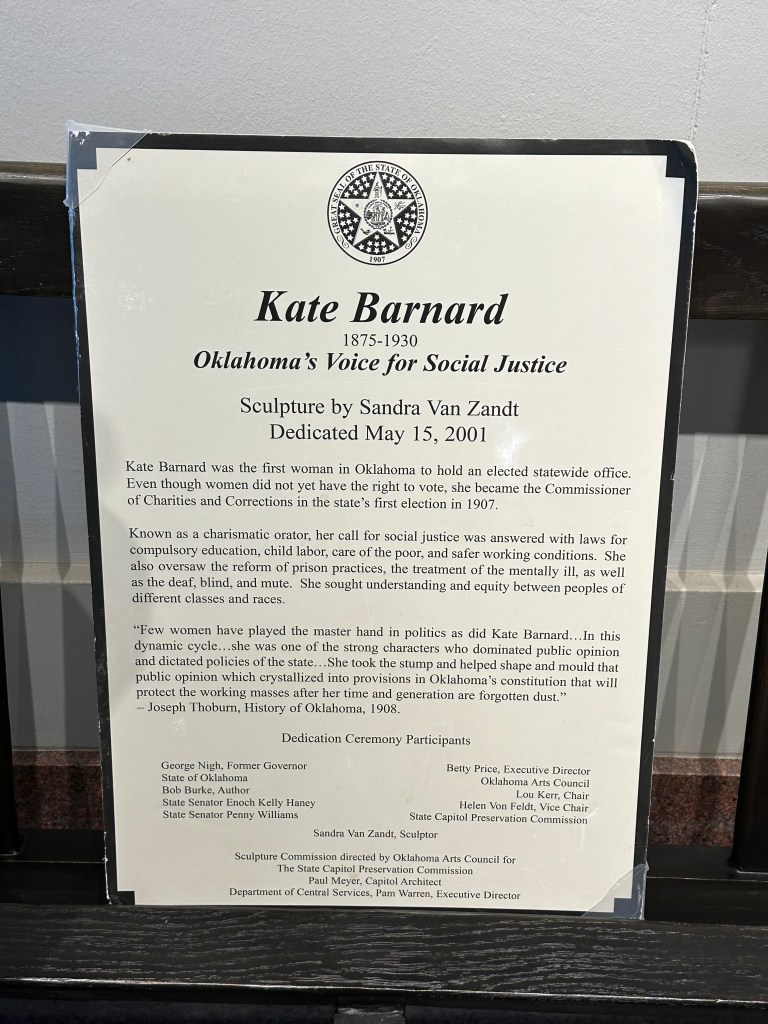
“Kate Barnard was the first woman in Oklahoma to hold an elected statewide office. Even though women did not yet have the right to vote, she became the Commissioner of Charities and Corrections in the state’s first election in 1907.
Known as a charismatic orator, her call for social justice was answered with laws for compulsory education, child labor, care of the poor, and safer working conditions. She also oversaw the reform of prison practices, the treatment of the mentally ill, as well as the deaf, blind, and mute. She sought understanding and equity between peoples of different classes and races.”
“Few women have played the master hand in politics as did Kate Barnard… In this dynamic cycle… she was one of the strong characters who dominated public opinion and dictated policies of the state… She took the stump and helped shape and mould that public opinion which crystallized into provisions in Oklahoma’s constitution that will protect the working masses after her time and generation are forgotten dust.”
-Joseph Thorn, History of Oklahoma, 1908
Dedication Ceremony Participants:
George Nigh, Former Governor State of Oklahoma
Bob Burke, Author
State Senator Enoch Kelly Haney
State Senator Penny Williams
Betty Price, Executive Director Oklahoma Arts Council
Lou Kerr, Chair
Helen Von Feldt, Vice Chair State Capitol Preservation Commission
Sandra Van Zandt, Sculptor
Sources
Secondary Sources
“A Life on Fire: Oklahoma’s Kate Barnard” by Connie Cronley.
“Our Good Angel, Kate” – A Very OK Podcast from the Oklahoma Historical Society.
Dana Attocknie. “History of Kate Barnard.” Oklahoma Commission On the Status of Women. September 9, 2022.
Lynn Musslewhite and Suzanne Jones Crawford, “Barnard, Catherine Ann,” The Encyclopedia of Oklahoma History and Culture, January 15, 2010.
“Catherine Ann “Kate” Barnard* (1875-1930).” National Association of Social Workers Foundation.
Primary Sources
Newspapers
“Prison ‘Earthly Hell,’ Says Kate Barnard; That Woman Is A Slanderer, Says Warden.” The Oklahoman (Oklahoma City, Oklahoma), December 11, 1908.
“Kate Barnard Tells of Prison Horror.” The Daily Oklahoman (Oklahoma City, Oklahoma), January 8, 1909.
“4 Candidates After Job of Kate Barnard.” Oklahoma City Daily Pointer (Oklahoma City, Oklahoma), June 22, 1910.
“Indian Orphans Fraud Victims?” The Daily Oklahoman (Oklahoma City, Oklahoma), November 19, 1910.
“Kate Barnard, Commissioner of Charities and Corrections.” Beacon-Times (Idabel, Oklahoma) October 20, 1911.
“Kate Barnard Charges Conspiracy to Rob Exists.” Harlow’s Weekly (Oklahoma City, Oklahoma), March 27, 1915.
*All newspaper clippings in this blog post were pulled from newspapers.com. I am not affiliated with this website. I just wanted to let you know where I found my digitized sources.
 The Active Historian
Leave a comment