Ikua Purdy was born on December 24, 1872, at Waimea, Hawaii. He was a descendent of John Palmer Parker and Kipikane (granddaughter of King Kameameha The Great). Purdy grew up on the Parker Ranch learning to rope and ride. Many considered him a “master of the rope” by age 20.
He began competing in roping events against other paniolos (Hawaiian cowboys) on the Big Island, Oahu, and Maui. Through reading contemporary newspapers, I was able to track a handful of the competitions that Ikua Purdy competed in on the Hawaiian islands.
First ‘Cowboy Carnival’
On October 21, 1905, the first ‘Cowboy Carnival’ was held at Kapiolani Park in Honolulu with several of the Hawaiian ranches represented. The order of events for the carnival were as follows: Watermelon Race, Bucking Pony Contest, Roping and Tying Contest, Egg Race, Straight-Away Roping Contest, Emergency Roping Contest, Riding Wild Steer, Handkerchief-Picking Contest, and a Broncho-Busting Contest. Several businesses donated money or gear for the prizes.
Ikua Purdy was set to compete in the Roping and Tying Contest (green and gold), Straight-Away Roping Contest, and Emergency Roping Contest. He won the Roping and Tying Contest in 38 3-4 seconds and was awarded a $65.00 Mexican hand-carved saddle.
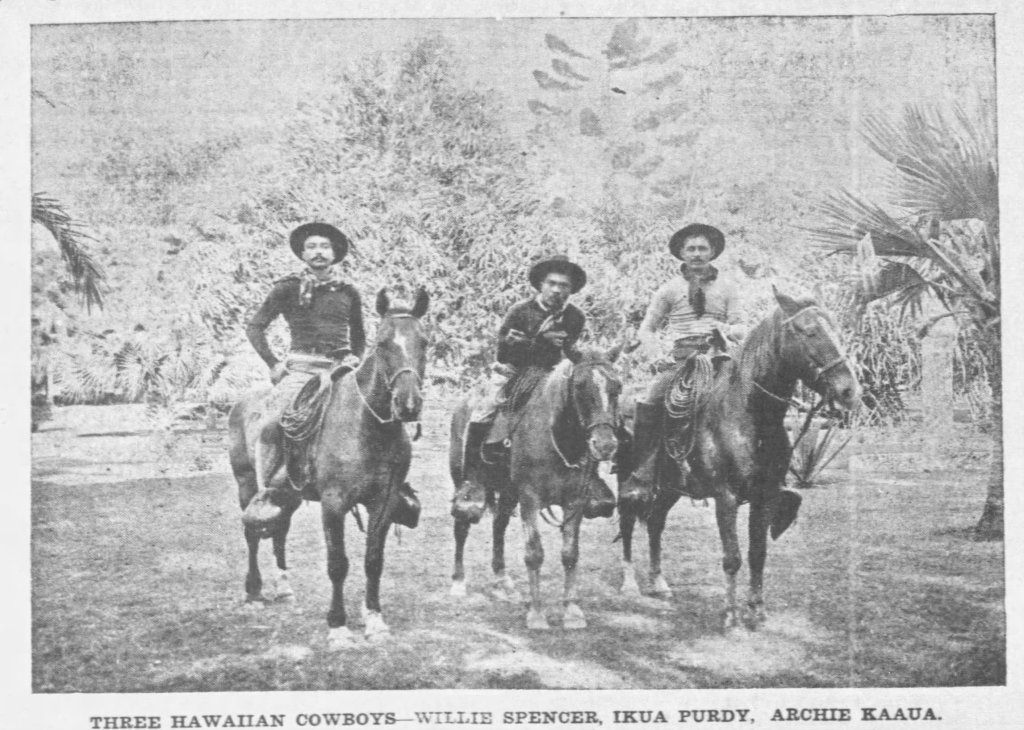
The Parker Ranch swept the Straight-Away Roping Contest. Ikua Purdy took first place winning a $30.00 Mexican saddle, Archie Kaaua took second place winning a Winchester Carbine, and Willie Spencer took third place winning a Stetson cowboy hat.
The Parker Ranch was represented by four paniolo and six horses in the mounted tug-of-war event. J. Lindsay’s horse was Red Jack. Ikua Purdy’s horse was Auwekahuna. Archie Kauai’s horse was Puuwaawaa. Will Spencer’s horse was Brown Jack. The two extra horses were Leihulu and Dynamite.
The Emergency Roping Contest was eliminated from the contest because “of the lateness of the hour and the jaded condition of the steers.” (“The Cowboys of Hawaii in Many Contests,” Honolulu Advertiser, October 22, 1905, Page 1)
So, ho, for the boys who sleep ‘neath the stars,
Where the great steers ghostly lie
The darned galoots of the spurs and boots,
With the devil in their eye;
Their life is rough and their speech is tough,
And they’re part of the wind-swept range,
But they’re stout of heart and they bear their part
And their friendship never change —
Boys of the o and xx brands —
Lads of the [ ] range.
“Cowboys at Play.” The Honolulu Advertiser (Honolulu, HI), October 17, 1905.
Cheyenne Frontier Days 1908
In February 1908, Eben Low reached out to the committee in Cheyenne, Wyoming to inquire about Hawaiian cowboys being represented at Cheyenne Frontier Days. Low received a letter back from the committee inviting two paniolos to compete. The letter was published in the Honolulu Adviser on May 26, 1908:
Cheyenne, Wyo., May 9, 1908:
Dear Sir: Replying to your favor of April 22 beg to state that the Frontier Committee will be willing to pay $300 in cash toward the expense of your two best riders and ropers, if they will come to Cheyenne and participate in our riding and roping contests on August 20, 21 and 22, 1908. We will also provide room and board for them during the days of the show. They will, of course, have the same opportunity to participate in the contests for prizes that any other contestants might have.
Will do our best to give the boys a good time, and assure them fair treatment in all contests. Let us know at once what we can depend upon and also give us the names of the bots and any facts concerning them that we could use in advertising them. If you have any bucking or roping pictures from which we could have cuts made to be used in our advertising matter, kindly send us same.
If the boys want this money advanced to them before they start, we are prepared to make the advance, or they can have it immediately upon their arrival here.
Thanking you for your interest in this matter, and trusting it may be convenient for you to be present with us at the show, I remain, very respectfully yours,
E.W. Stone, Secretary.
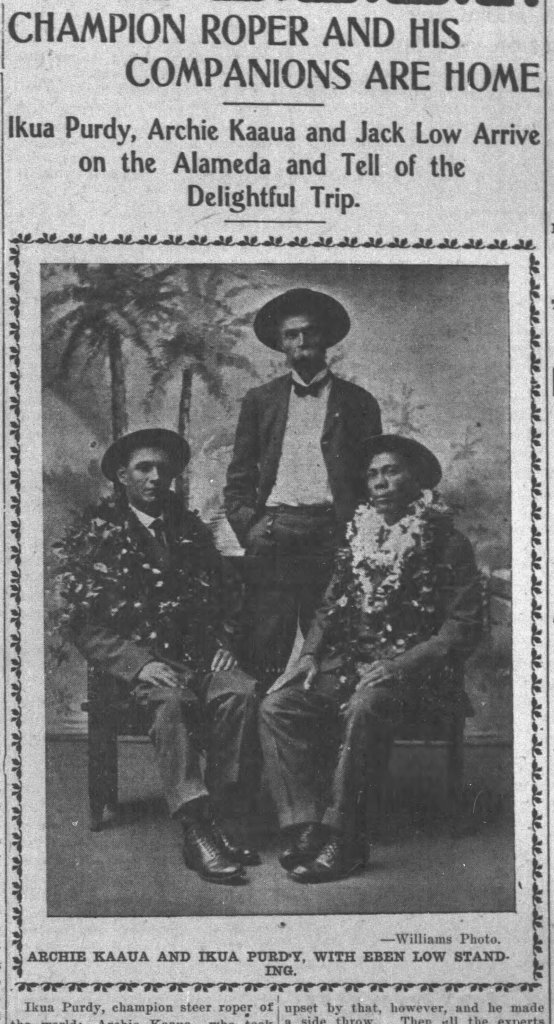
Eben Low chose Ikua Purdy and Archie Kaaua to go to Cheyenne. On Wednesday, August 5, 1908 at 10 a.m., Mr. and Mrs. Jack Low, Ikua Purdy, and Archie Kaaua departed Honolulu for the states aboard the Alameda. They were headed for San Francisco first.
They traveled to Cheyenne, Wyoming to compete from August 20-22.
The paniolos’ attire drew a lot of attention with slouched hats, colorful hat bands, bright clothes, and saddles. You could see the blending of Hawaiian and vaquero traditions.
The Roping Contest at Cheyenne Frontier’s Day took place over three days. It cost $10 to enter and the purse was $400. First place took $240, second took $90, third took $50, and fourth took $20.
“Steers to have 60 feet of rope. Riders to rope, throw and hog-tie the steer when time will be taken. If steer not roped, thrown and tied within three minutes rider to withdraw at signal from judges.” (Purdy and Kaaua Roping Today.” The Honolulu Adviser (Honolulu, HI), August 22, 1908.)
Half of the competitors competed on day one and the other half on day two. The top four would compete on the third day for the prizes and title.
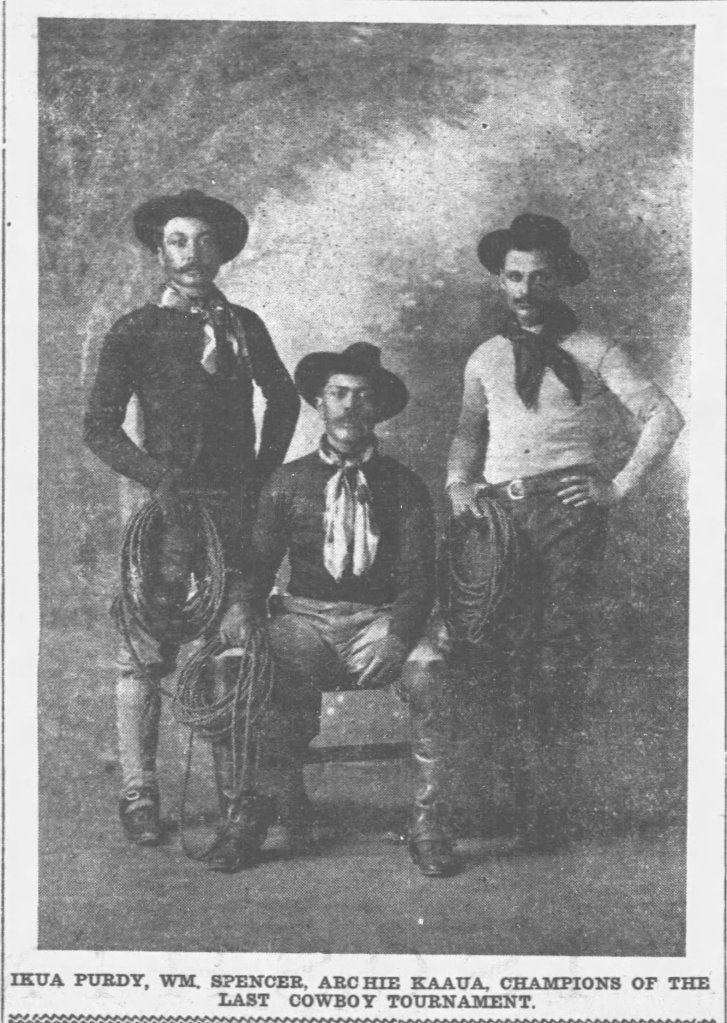
Ikua Purdy, Archie Kaaua, Hugh Clark (Wyoming), and Pete Dickson (Arizona) were the four competitors in the finals. The average time from both trials would determine the winner.
Ikua Purdy went on to win the Roping event tying his steer in a record-breaking 56 seconds flat. Archie Kaaua took third place and Jack Low took sixth.
“When told that the champion of the world lives in Hawaii he [the President of the United States] was astonished, remarking that he was not aware there was a cowboy in the territory.” (“Champion Steer Roper.” Hartford Courant (Hartford, CT), January 25, 1909.)
Ikua Purdy and Archie Kaaua were celebrated upon arriving home.
Ikua Purdy and the other paniolos continued competing in local competitions for the next several years and worked on the local ranches.
Purdy worked for the next 30 years on Maui’s Ulupalakua Ranch as the foreman.He married Kelea Benjamin on January 19, 1925 and they had several children together.
Ikua Purdy passed away on July 4, 1945 at his home on Maui at the age of 72.
In 1999, Ikua Purdy was inducted into the National Rodeo Hall of Fame at the National Cowboy & Western Heritage Museum in Oklahoma City, Oklahoma.
Paniolo History at the National Cowboy & Western Heritage Museum
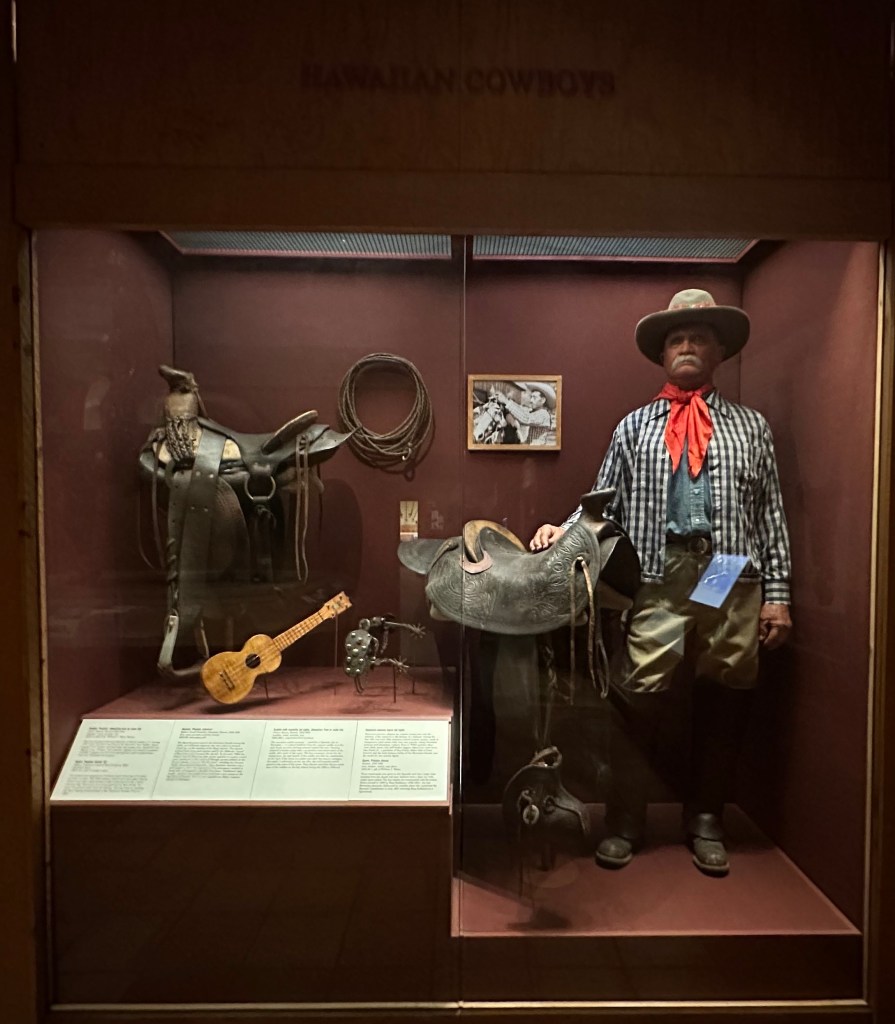
The National Cowboy & Western Heritage Museum in Oklahoma City has a really cool exhibition about paniolos in the American Cowboy Gallery.
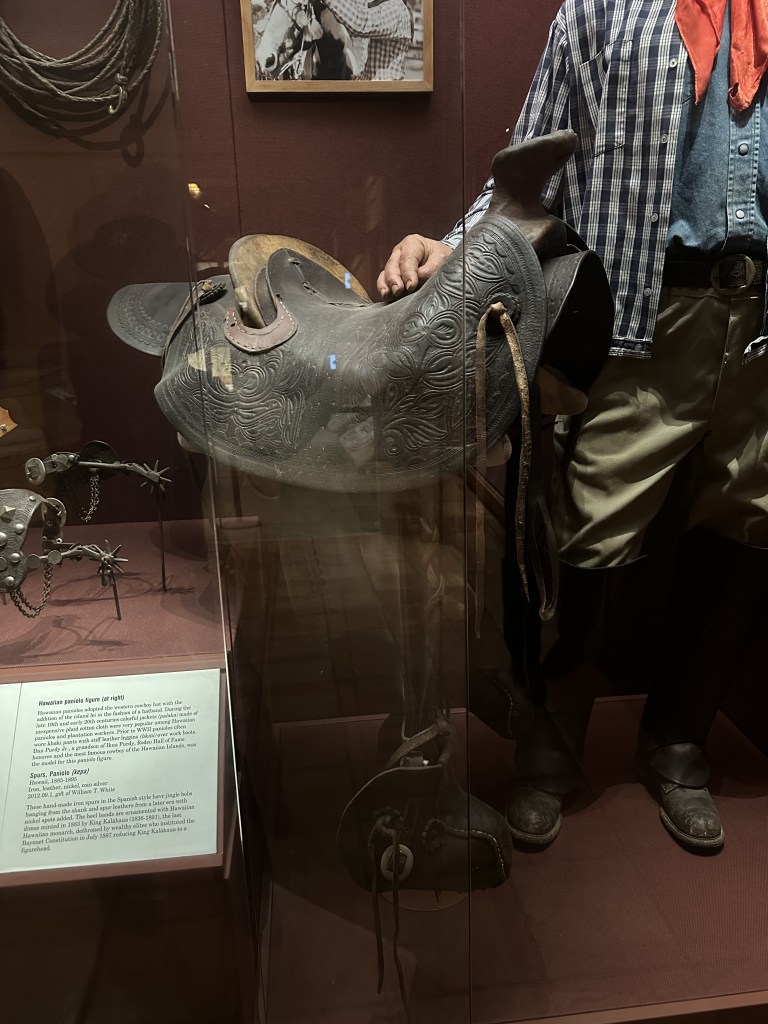
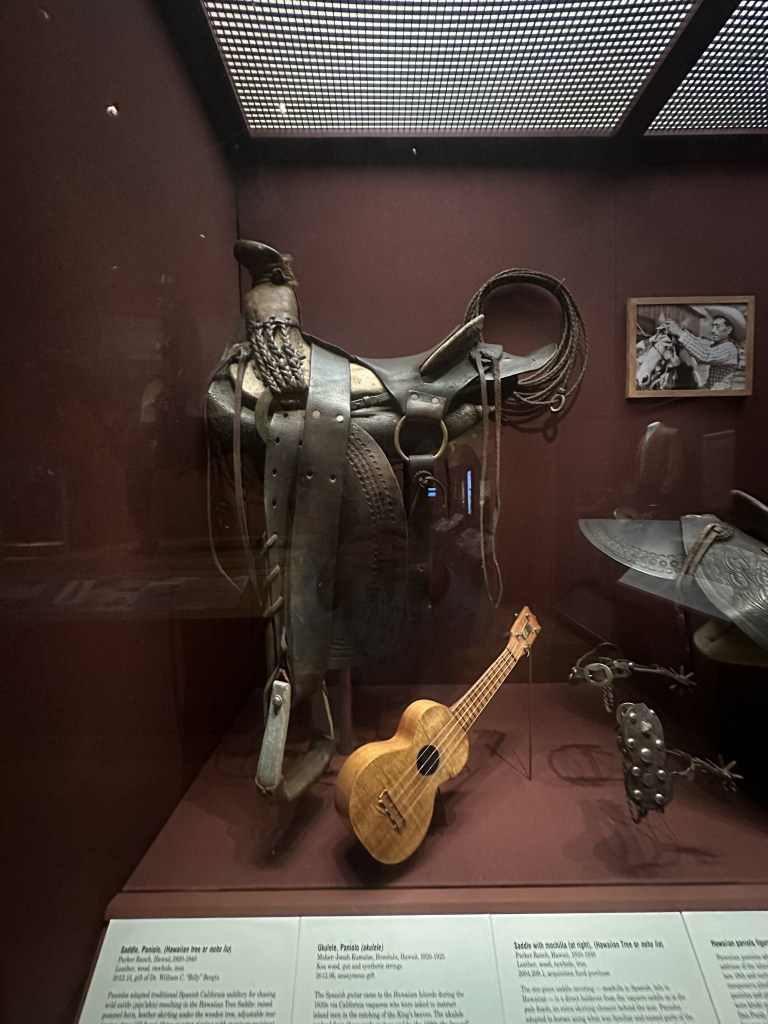
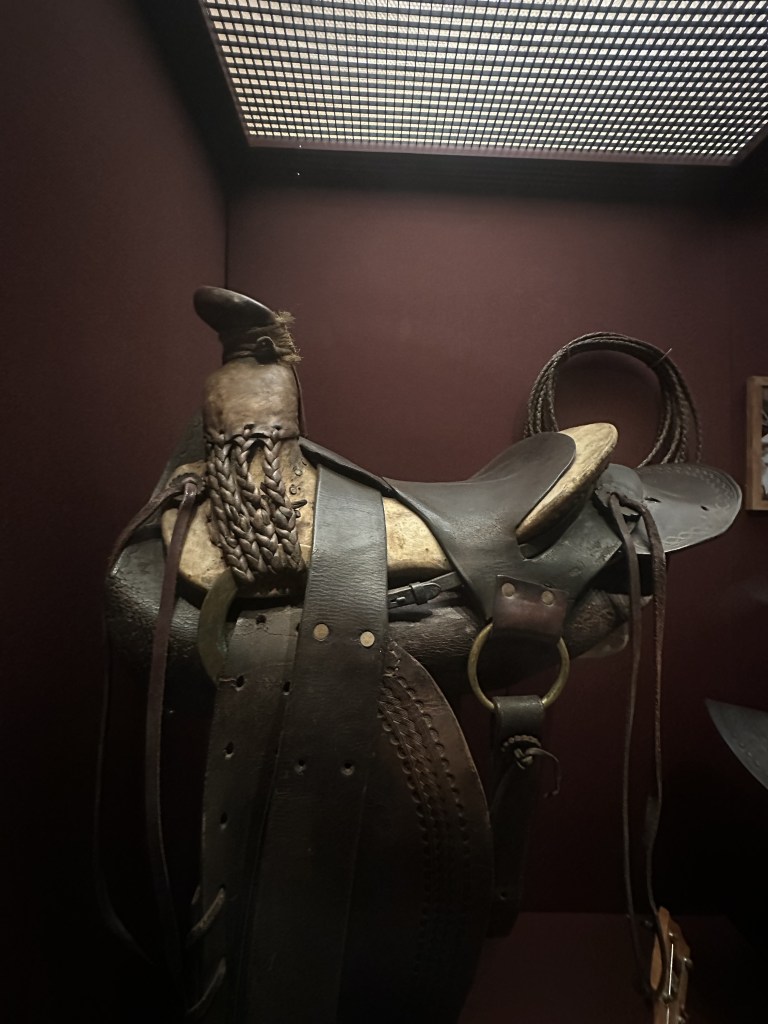
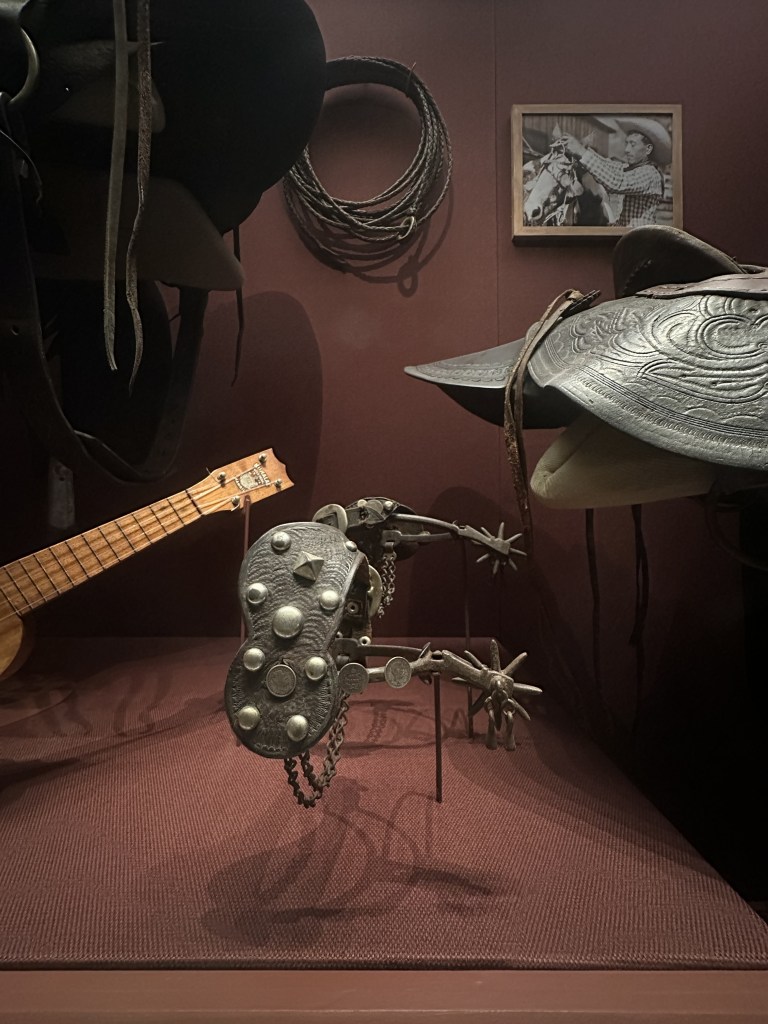
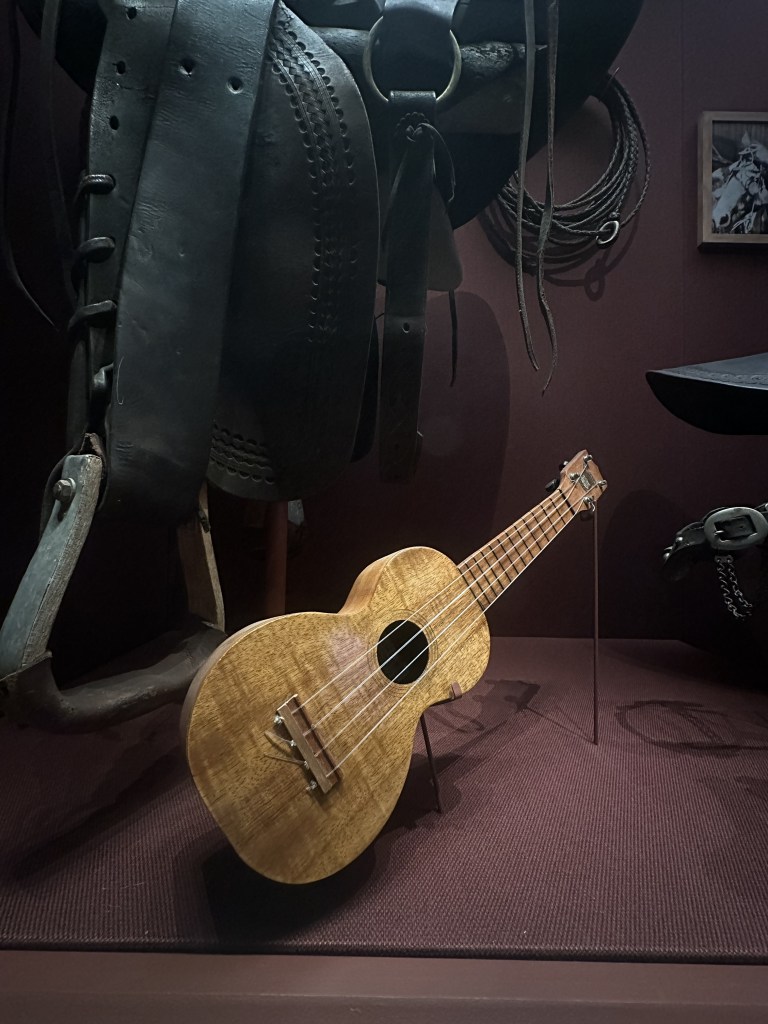
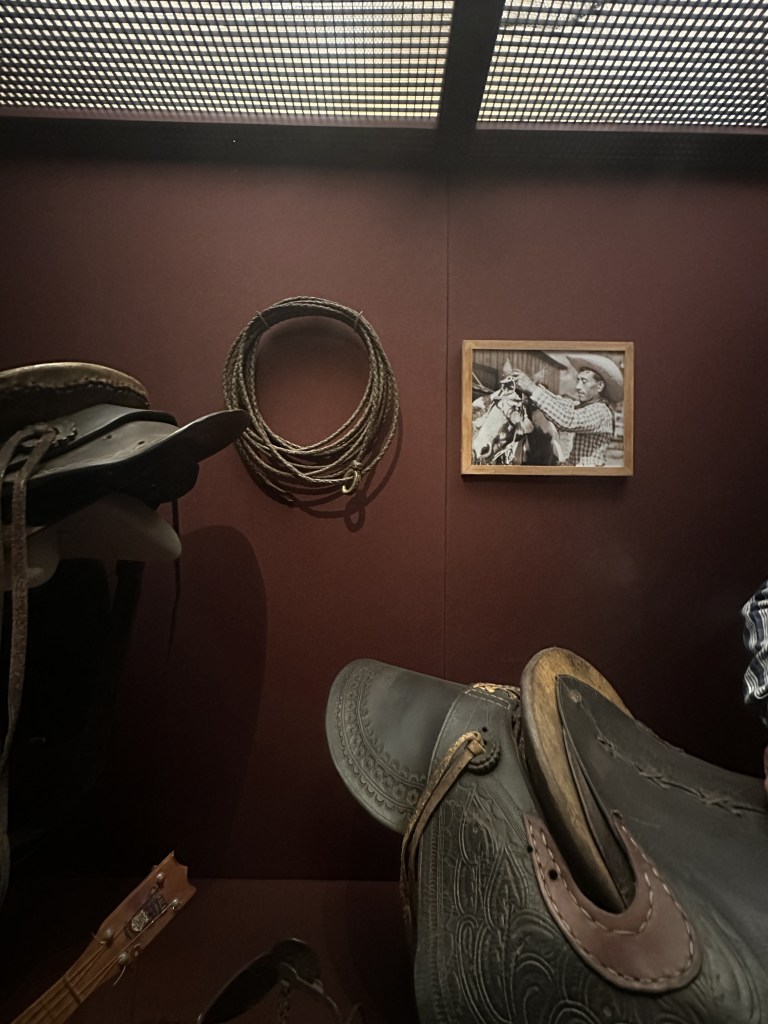
Here’s the post I wrote about Ikua Purdy for the National Cowboy & Western Heritage Museum’s social media accounts! Check out the postcard of Ikua Purdy tying his first steer at Cheyenne.
Concluding Thoughts
I hope you enjoyed reading about the history of cowboy culture in Hawaii. Paniolo culture was something I learned about while working at The Cowboy! I’m grateful that diverse histories are represented in the galleries at the Museum.
Ikua Purdy’s life is definitely inspiring and I hope more people begin to learn his story! If you want to read more about Purdy’s story, please see, “Aloha Rodeo” by David Wolman and Julian Smith.
I hope you’ll join me next time as we continue ‘breaking trail’ and discovering the stories that make up Western history.
Sources
David Wolman and Julian Smith. “Aloha Rodeo: Three Hawaiian Cowboys, the World’s Greatest Rodeo, and a Hidden History of the American West.”
Richard Rattenbury. “Arena Legacy: The Heritage of American Rodeo.” [Page 44]
Misc. Primary Sources
1900 Federal Census
1910 Federal Census
1920 Federal Census
1930 Federal Census
1940 Federal Census
“Ikua Purdy.” Hawaii State Archives; Honolulu, HI, USA; Marriage Certificates and Indexes.
“Akuwa Purdy.” United States, Selective Service System. World War I Selective Service System Draft Registration Cards, 1917-1918. Washington, D.C.: National Archives and Records Administration. M1509, 4,582 rolls. Imaged from Family History Library microfilm.
Newspapers
“Cowboys at Play.” The Honolulu Advertiser (Honolulu, HI), October 17, 1905.
“Cowboys Ride Today.” The Honolulu Advertiser (Honolulu, HI), October 21, 1905.
“The Cowboys of Hawaii in Many Contests.” The Honolulu Advertiser (Honolulu, HI), October 22, 1905. [Page 1 & 11]
“The Cowboy Tournament.” The Independent (Honolulu, HI), October 23, 1905.
“Three Hawaiian Cowboys.” The Honolulu Adviser (Honolulu, HI), November 5, 1905.
“Purdy’s Chance With M’Phee.” The Honolulu Advertiser (Honolulu, HI), December 12, 1907.
“May Rope at Cheyenne Show.” The Honolulu Adviser (Honolulu, HI), February 19, 1908.
“Cheyenne Wants Boys.” The Honolulu Adviser (Honolulu, HI), May 26, 1908.
“Alameda’s Big Cargo.” The Honolulu Adviser (Honolulu, HI), August 4, 1908.
“Port of Honolulu – Departed.” The Honolulu Adviser (Honolulu, HI), August 5, 1908.
“Purdy and Kaaua Roping Today.” The Honolulu Adviser (Honolulu, HI), August 22, 1908.
“Hawaiian Cowboys Win Honors at the Cheyenne Contest.” Purdy and Kaaua Roping Today.” The Honolulu Adviser (Honolulu, HI), August 23, 1908.
“Tells How Purdy Won the Finals.” The Honolulu Adviser (Honolulu, HI), September 5, 1908.
“Champion Roper and His Companions Are Home.” The Honolulu Adviser (Honolulu, HI), September 12, 1908.
“Ropers’ Return is Celebrated.” The Hawaiian Gazette (Honolulu, HI), September 15, 1908.
“Champion Steer Roper.” Hartford Courant (Hartford, CT), January 25, 1909.
“Star Ropers May Compete on Maui.” The Honolulu Advertiser (Honolulu, HI), December 19, 1915.
“Rodeo Star Dies.” The Eugene Guard (Eugene, OR), July 8, 1945.
*All newspaper clippings in this blog post were pulled from newspapers.com. Digitized primary sources were found on ancestry.com. I am not affiliated with either website. I just wanted to let you know where I found my digitized sources.


Leave a Reply