
Hey, friend! Welcome back to another post. Today, I want to show you some of the historic markers I’ve found on the University of Oklahoma (OU) campus in Norman, Oklahoma. Let’s get started!
*The words below each picture have been transcribed from the plaques. I will continue updating this list of historic markers at OU as I find them!
The Weitzenhoffer Family College of Fine Arts


“The Weitzenhoffer Family College of Fine Arts is the oldest and most comprehensive college of fine arts in the Great Plains states. The first courses in music were given in 1893. The addition of painting, drawing, and drama led to the establishment of the School of Fine Arts in 1903. The School was elevated to the College of Fine Arts in 1924. It includes the Schools of Music, Drama, Art and Dance and the Charles M. Russell Center for the Study of Art of the American West. In 2004, the College was named to honor the Weitzenhoffer family which has given such extraordinary support to the college.
The Weitzenhoffer family, including O.U. Regent A. Max Weitzenhoffer and his parents Clara and Aaron Weitzenhoffer, has made unparalleled contributions to the fine arts at the university. Max Weitzenhoffer earned his BFA degree in drama from O.U. in 1962. He went on to become a highly acclaimed producer in New York and London and received the Tony, Olivier, and NY Drama Critics Awards. He served for many years as an Adjunct Professor of Drama.
Aaron Weitzenhoffer and his wife Clara were known as pioneer civic leaders and philanthropists in Oklahoma City. Aaron Weitzenhoffer was born in 1895 in Lexington, Indian Territory where his family had settled in 1888 before the land run. Aaron was the founder of Davon Oil Company, a leader in the energy field. An Oklahoma City newspaper wrote of him that his “humility and concern for others have endeared him to all.” His wife, Clara, with a deep understanding of the fine arts established a major collection of French Impressionist Art in the 1950s and 1960s. In 2000, the collection was given by the family to the university. At that time it was the single most important gift of art ever given to a public university in the United States.
Clara Weitzenhoffer was also a founding member of the O.U. Associates and a member of the Board of Visitors of the Fred Jones Jr. Museum of Art. She along with her son Max helped provide funds for the renovation of the A. Max Weitzenhoffer Theater. He made the funding and endowing gift for the Musical Theatre Department named in his honor and also endowed a faculty chair in the program and a fellowship in art history in memory of his late wife, Dr. Frances R. Weitzenhoffer. The Weitzenhoffer family, including Max’s wife Ayako Takahashi Weitzenhoffer and their two children Nikki and Owen Weitzenhoffer, will always have a special place in the life of the College.”
Fred Jones Jr. Museum of Art


“This building honors the memory of Fred Jones, Jr., a University of Oklahoma student who died tragically in 1950. Jones was a Business Administration Senior in the Class of 1951. It was his love for flying that led to his untimely death when the small place he was piloting crashed on a trip to the Sugar Bowl.
Jones was the son of Mr. and Mrs. Fred Jones, pioneer Oklahoma City business and civic leaders. In order to enhance the cultural life of the campus and to give students an opportunity to view outstanding works of art, Mr. and Mrs. Jones decided to honor their son by contributing funds to build the art museum and the new School of Art building. The University of Oklahoma Museum of Art was originally established in 1936 in what is now Jacobson Hall which honored the museum’s founding director Oscar B. Jacobson. The new museum opened in 1971 as the Fred Jones Jr. Memorial Art Center. Over a long period, Mrs. Fred Jones, Sr. played a leading role in expanding the museum’s collection.
The museum’s permanent collection contains extensive examples of American, Native American, European, and African art, as well as photography from the Sandor collection, sculpture, and ceramics. It also contains the Fleischaker, Thams, and Tate collections of works by Taos artists. The Weitzenhoffer collection of French Impressionist art was given to the museum as a gift of OU alumnus Max Weitzenhoffer and his parents, the late Clara and Aaron Weitzenhoffer. At the time of the gift, in the year 2000, it was the single most important gift of art ever given to a U.S. public university.
In early 2005, the new Mary and Howard Lester Wing of the museum was opened. It was made possible by generous gifts from friends and alumni including a lead gift of $2.5 million by Mary and Howard Lester. Durant, Oklahoma native and former OU student, Howard Lester is a nationally known philanthropist and business leader and was the founder of the Williams-Sonoma and Pottery Barn companies.
The museum is recognized as one of the most important university based art museums in the nation.”
You can read more about the museum in my blog post, “Fred Jones Jr. Museum of Art: Norman, OK.”
Donald W. Reynolds Performing Arts Center


“The Donald W. Reynolds Performing Arts Center was created through an $18 million project that renovated and restored OU’s historic Holmberg Hall and added a new stage house and a 20,000-square-foot facility for OU’s School of Dance. Holmberg Hall was named for Frederik Holmberg, the first dean of the College of Fine Arts, which is the oldest comprehensive college of fine arts in the Great Plains region. This project was a special highlight of the tenure of OU’s 13th president, David L. Borne. Holmberg Hall was the setting, in 1994, for his announcement that he would leave the U.S. Senate and accept the OU Presidency. He chose Holmberg Hall because of that facility’s special place in OU history and his own life. Built in 1918, Holmberg Hall was where distinguished visitors – from William Jennings Bryan to Louis Armstrong to William Butler Yeats – came when they visited Oklahoma. It was also the setting for many student productions and competitions, including the All State band and debate events that drew high school students from all over the state like David Boren, who was a Seminole High School student.
Unfortunately, over the years, the once-beautiful building began to show its age, both in its physical condition and capacity to stage modern productions. A plan was developed to restore the performance hall to its original grandeur; renovate the rest of the Holmberg building, including the wing of music practice studios; add a modern stage house that would facilitate modern productions, including opera; and create a new home for OU’s acclaimed School of Dance.
The University identified almost $6 million in OU funds for the $18 million project, which meant this: An extraordinarily generous private donor would be the key to realizing this dream. Such a benefactor was found in the Donald W. Reynolds Foundation of Las Vegas, Nevada – a philanthropic foundation created in 1954 by the late Mr. Reynolds – founder and principal owner of the Donrey Media Group. Raised in Oklahoma City, Mr. Reynolds, who began his successful media enterprise by “hawking” copies of the Oklahoma News as a young man, had a special love for Oklahoma.
The Foundation’s trustees were drawn to the unique history of the building and the meaningful way the project would impact both the University and the state. In August 2001, the Reynolds Foundation announced a $12.2 million grant to create the Donald W. Reynolds Performing Arts Center at the University of Oklahoma.
The new Center opened in 2005, booming one of the great facilities for University, community, and statewide events and productions, as well as an excellent training ground for Fine Arts students. A $2.5 million maintenance endowment created through the gifts of 50 generous donors ensures that the Center will remain beautiful for generations to come.”
Barrington Oval


“This part of the campus is named in honor of Vernon Louis Parrington (1871-1929). Born in Illinois, raised in Kansas, and educated at Harvard College, he came to the University of Oklahoma on September 8, 1897 to teach English. When he arrived the campus consisted of a single building on this oval which now bears his name. For the next eleven years he threw himself into every aspect of the life of the University. He edited and then served as advisor to the school newspaper; he was the University’s first football coach and he played on the baseball team; he assumed responsibility for publishing the University’s Catalogue; he literally built the Department of English from nothing; he even made a meticulous study of campus architecture in the United States and proposed a far reaching plan for the future development and layout of the University’s buildings.
Vernon Louis Parrington was a brilliant, magnetic, and beloved teacher. For eleven years, he introduced the youth of Oklahoma to the beauties and importance of literature. One of his students wrote: “People everywhere were charmed with him, with his appearance and with his manner. Among students he made disciples…”
In 1908 in a highly controversial move, the Board of Regents, not known for its tolerance, fired the pioneering President David Ross Boyd and six outstanding faculty members including Parrington. Six more faculty members resigned in protest.
Later in his illustrious career in 1927, Vernon Parrington won the Pulitzer Prize in History for the first two volumes of his masterful and pathbreaking study of the history of American literature Main Currents in American Thought.”
Monnet Hall
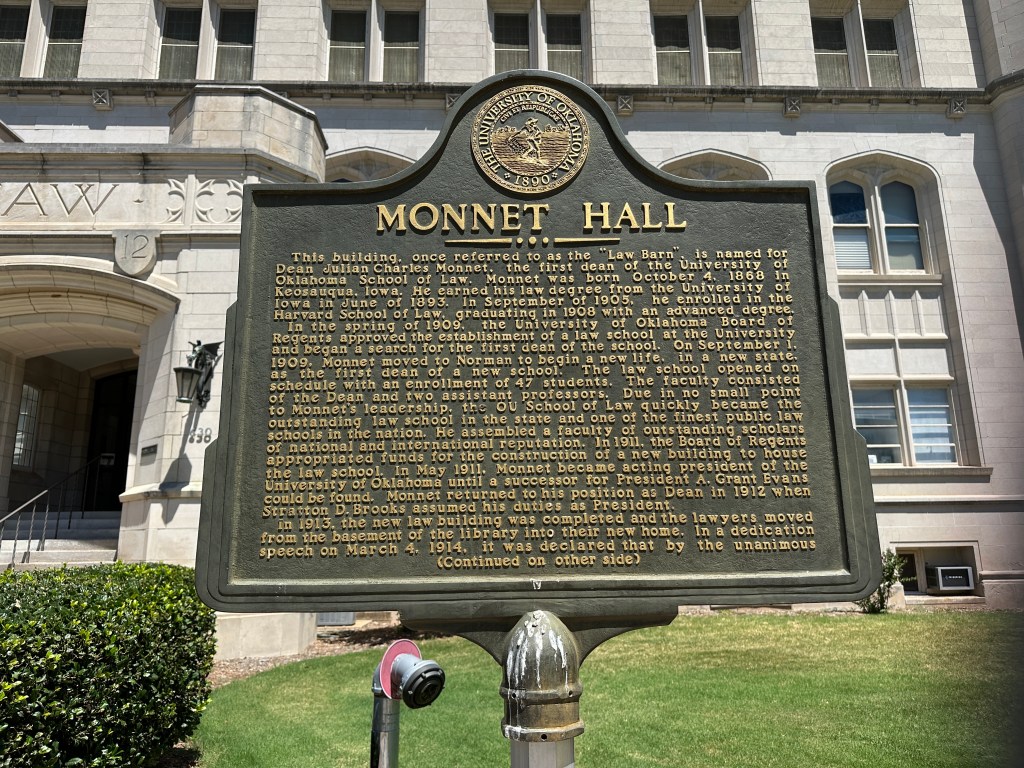


“This building, once referred to as the “Law Barn,” is named for Dean Julian Charles Monnet, the first dean of the University of Oklahoma School of Law. Monnet was born October 4, 1868 in Keosauqua, Iowa. He earned his law degree from the University of Iowa in June of 1893. In September of 1905, he enrolled in the Harvard School of Law, graduating in 1908 with an advanced degree.
In the spring of 1909, the University of Oklahoma Board of Regents approved the establishment of a law school at the University and began a search for the first dean of the school. On September 1, 1909, Monnet moved to Norman to begin a new life, in a new state, as the first Dean of a new school. The law school opened on schedule with an enrollment of 47 students. The faculty consisted of the Dean and two assistant professors. Due in no small point to Monnet’s leadership, the OU School of Law quickly became the outstanding law school in the state and one of the finest public law schools in the nation. He assembled a faculty of outstanding scholars of national and international reputation. In 1911, the Board of Regents appropriated funds for the construction of a new buildings to house the law school. In May 1911, Monnet became acting president of the University of Oklahoma until a successor for President A. Grant Evans could be found. Monnet returned to his position as Dean in 1912 when Stratton D. Brooks assumed his duties as President.
In 1913, the new law building was completed and the lawyers moved from the basement of the library into their new home. In a dedication speech on March 4, 1914, it was declared by the unanimous request of Law students that the new building would be named Monnet Hall. Monnet retired as the Dean in 1941 and took a leave of absence the following year. He returned to OU as a professor of Law and remained active in the School until his death in 1951.
Today Monnet Hall houses the Western History Collections, which is one of the largest collections in the world of photographs, documents, and writings on the history of the American West. It also houses the Carl Albert Congressional Research and Studies Center, and includes an archive containing papers of many prominent members of Congress.
Monnet Hall is also home of World Literature Today, one of the most highly regarded journals of comparative literature in the world. The Journal hosts the biennial Puterbaugh Conference for outstanding writers throughout the world. The Journal sponsors the Neustadt Prize, awarded every two years for international excellence in literature. Considered second in prestige only to the Nobel Prize, several Neustadt laureates and jurors have gone on to win the Nobel Prize. Monnet Hall in addition, houses a special program which brings outstanding leaders and scholars to campus for intensive seminars with students. It is known as the Oklahoma Scholar-Leadership Enrichment Program and was founded by Governor David L. Boren in 1975.
Dean Monnet would be pleased that while the Hall no longer houses the School of Law, it remains a place of great vitality and scholarship.”
Carnegie Building
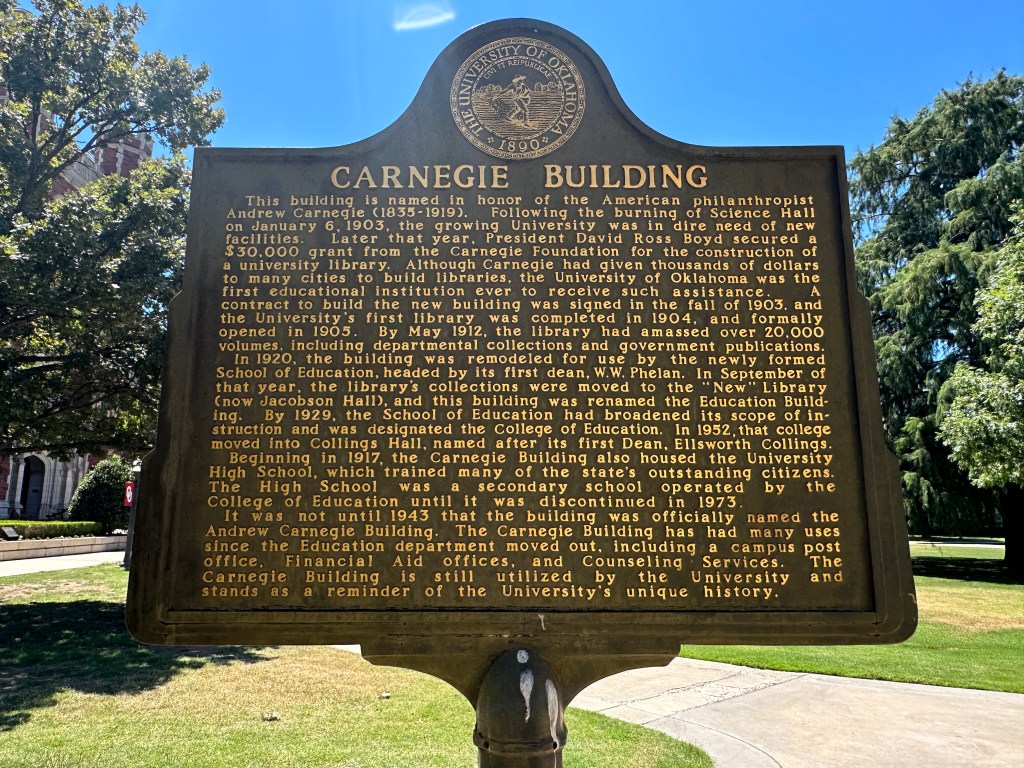
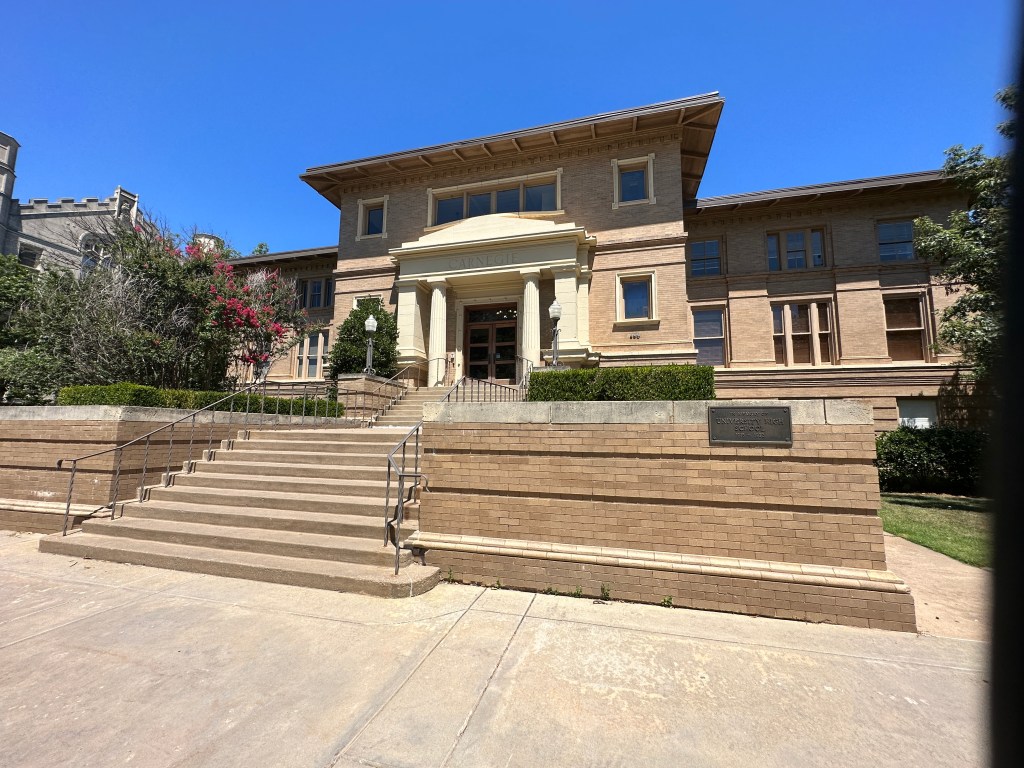
“This building is named in honor of the American philanthropist Andrew Carnegie (1835-1919). Following the burning of Science Hall on January 6, 1903, the growing University was in dire need of new facilities. Later that year, President David Ross Boyd secured a $30,000 grant from the Carnegie Foundation for the construction of a university library. Although Carnegie had given thousands of dollars to many cities to build libraries, the University of Oklahoma was the first educational institution ever to receive such assistance. A contract to build the new building was signed in the fall of 1903, and the University’s first library was completed in 1904, and formally opened in 1905. By May 1912, the library had amassed over 20,000 volumes, including departmental collections and government publications.
In 1920, the building was remodeled for use by the newly formed School of Education, headed by its first dean, W.W. Phelan. In September of that year, the library’s collections were moved to the “New” Library (now Jacobson Hall), and this building was renamed the Education Building. By 1929, the School of Education had broadened its scope of instruction and was designated the College of Education. In 1952, that college moved into Collings Hall, named after its first Dean, Ellsworth Collings.
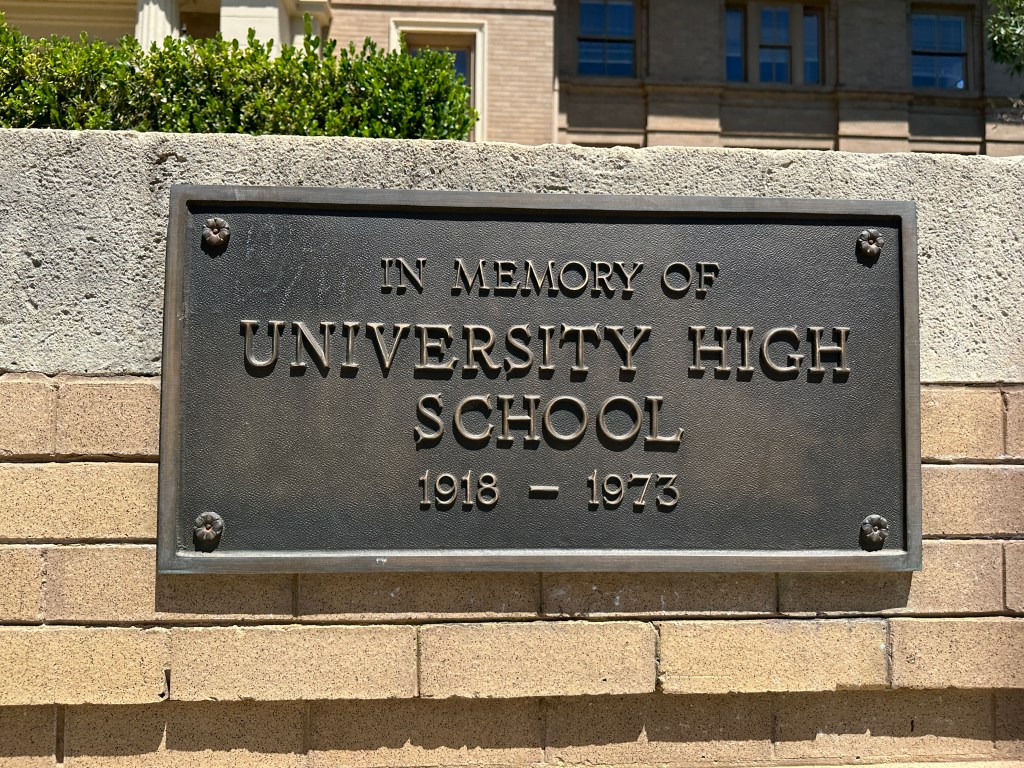
Beginning in 1917, the Carnegie Building also housed the University High School, which trained many of the state’s outstanding citizens. The High School was a secondary school operated by the College of Education until if was discontinued in 1973.
It was not until 1943 that the building was officially named the Andrew Carnegie Building. The Carnegie Building has had many uses since the Education Department moved out, including a campus post office, Financial Aid offices, and Counseling Services. The Carnegie Building is still utilized by the University and stands as a reminder of the University’s unique history.
Evans Hall
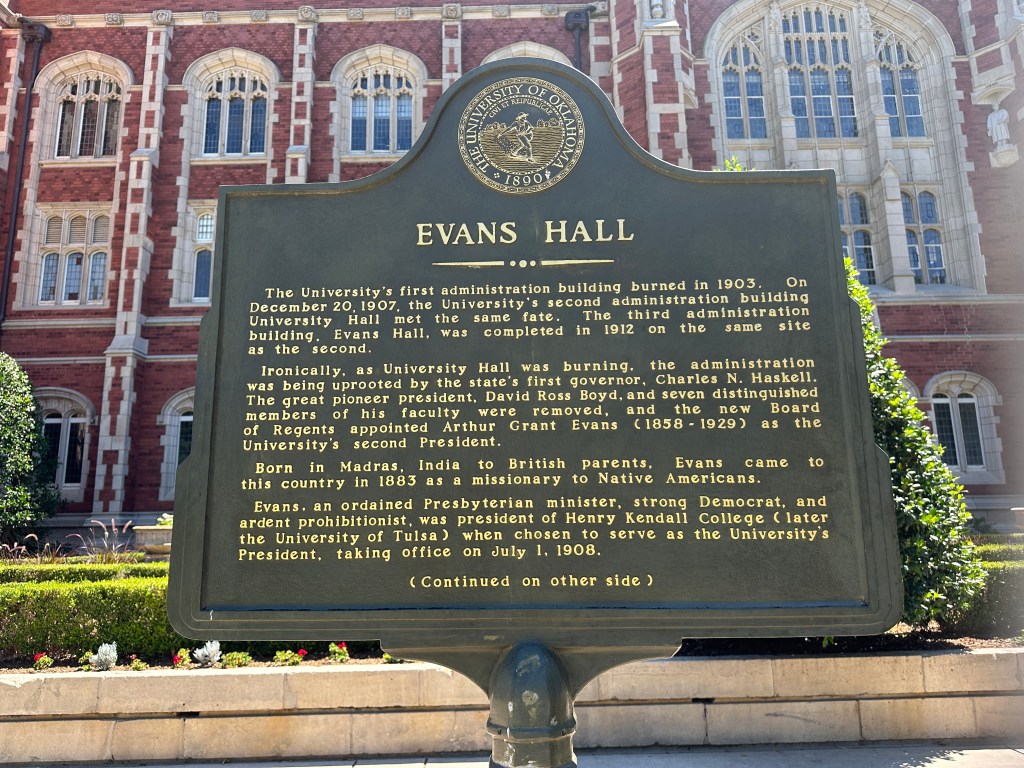


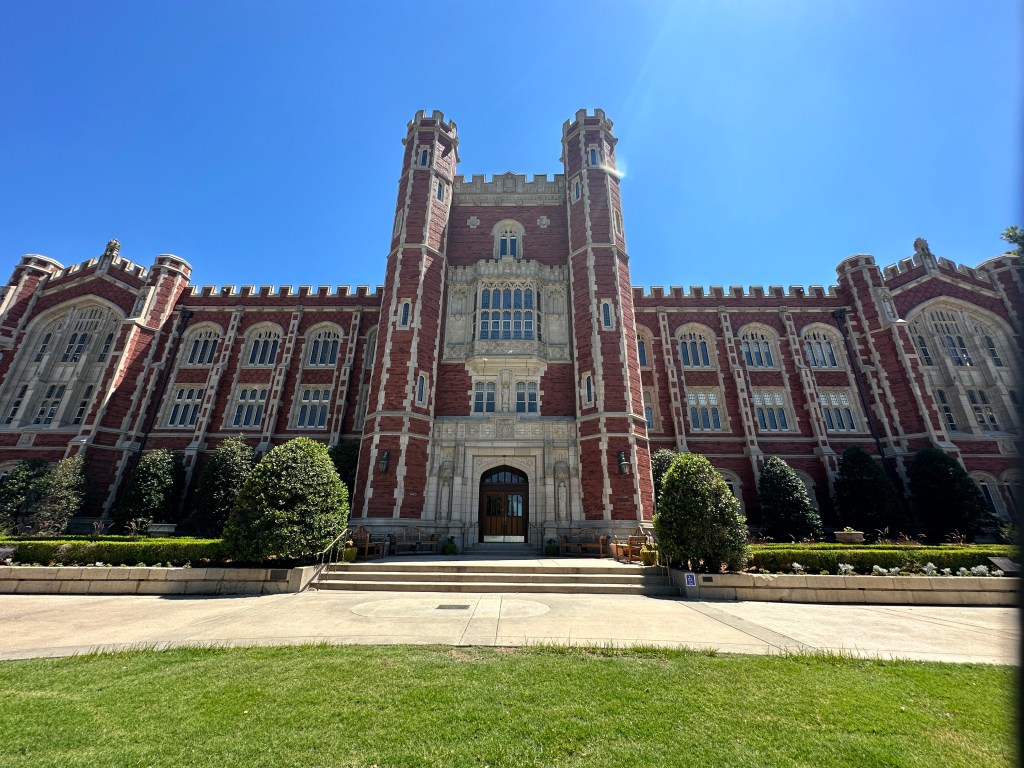
“The University’s first administration building burned in 1903. On December 20, 1907, the University’s second administration building University Hall met the same fate. The third administration building, Evans Hall, was completed in 1912 on the same site as the second.
Ironically, as University Hall was burning, the administration was being uprooted by the state’s first governor, Charles N. Haskell. The great pioneer president, David Ross Boyd, and seven distinguished members of his faculty were removed, and the new Board of Regents appointed Arthur Grant Evans (1858-1929) as the University’s second President.
Born in Madres, India to British parents, Evans came to this country in 1883 as a missionary to Native Americans.
Evans, an ordained Presbyterian minister, strong Democrat, and ardent prohibitionist, was president of Henry Kendall College (later the University of Tulsa) when chosen to serve as the University’s President, taking office on July 1, 1908.
Although his administration was brief, Evans left his mark on the University by two significant accomplishments: the reorganization of the University into colleges and schools and the merger of the medical program with Epworth Medical School in Oklahoma City which established the foundation for the University’s College of Medicine.
Evans also played a substantial role in the construction of the third administration building. Following the advice of the English professor Vernon Parrington, Evans pushed to have it built in a collegiate Gothic design, a style later dubbed “Cherokee Gothic” by architect Frank Lloyd Wright. Dr. Roy Gittinger advocated naming the building after Evans, stating that it was a “fitting tribute to the man who selected our campus architecture and made it an institution and tradition of the University.”
Although well liked by faculty and students, Evans could not overcome the obstacles of politics. As with Boyd, a change in governorship ended his administration on May 24, 1911. Since it was not ready for use until after his departure, Evans never had the opportunity to work in the building that now bears his name. The first president to occupy it was Stratton D. Brooks who came to the University from Boston, Massachusetts where he was the respected Superintendent of the Boston Public Schools.”
Beatrice Carr Wallace Old Science Hall
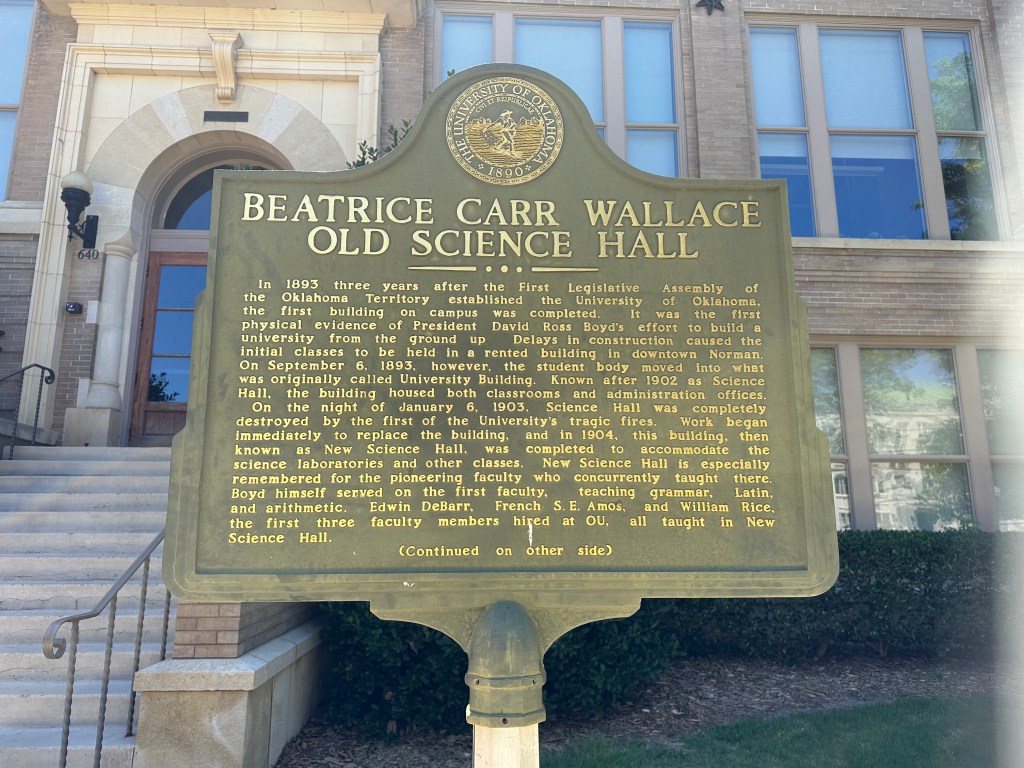

“In 1893 three years after the First Legislative Assembly of the Oklahoma Territory established the University of Oklahoma, the first building on campus was completed. It was the first physical evidence of President David Ross Boyd’s effort to build a university from the ground up. Delays in construction caused the initial classes to be held in a rented building in downtown Norman. On September 6, 1893, however, the student body moved into what was originally called University Building. Known after 1920 as Science Hall, the building housed both classrooms and administration offices.
On the night of January 6, 1903, Science Hall was completely destroyed by the first of the University’s tragic fires. Work began immediately to replace the building, and in 1904, this building, then known as New Science Hall, was completed to accommodate the science laboratories and other classes. New Science Hall is especially remembered for the pioneering faculty who concurrently taught there. Boyd himself served on the first faculty, teaching grammar, Latin, and arithmetic. Edwin DeBarr, French S.E. Amos, and William Rice, the first three faculty members hired at OU, all taught in New Science Hall.
More than a century after its construction, the building was renamed in 2006 by the OU Board of Regents to honor OU alumna Beatrice Carr Wallace. A native of Atoka, Oklahoma, Mrs. Wallace served on the Fred Jones Jr. Museum of Art Board of Visitors as well as one the advisory committee for the campaign to build the Sam Noble Museum of Natural History. A gift to the University from Mrs. Wallace and her husband, W. Ray Wallace, established one of the largest scholarship endowments in OU’s history. Their gift to the Fred Jones Jr. Museum of Art was one of the most significant donations to the acquisitions fund in the museum’s history at that time and helped to significantly enhance the number of Old Masters drawings in the museum’s collections. Through their service and generosity, the Wallaces greatly enhanced the educational and cultural resources of the University.
The Beatrice Carr Wallace Old Science Hall is the oldest remaining building on campus. It stands as a constant reminder of the absolute determination of President David Ross Boyd and the first faculty to overcome any obstacle to build a great university for the generations that would follow them.”
Chemistry Building
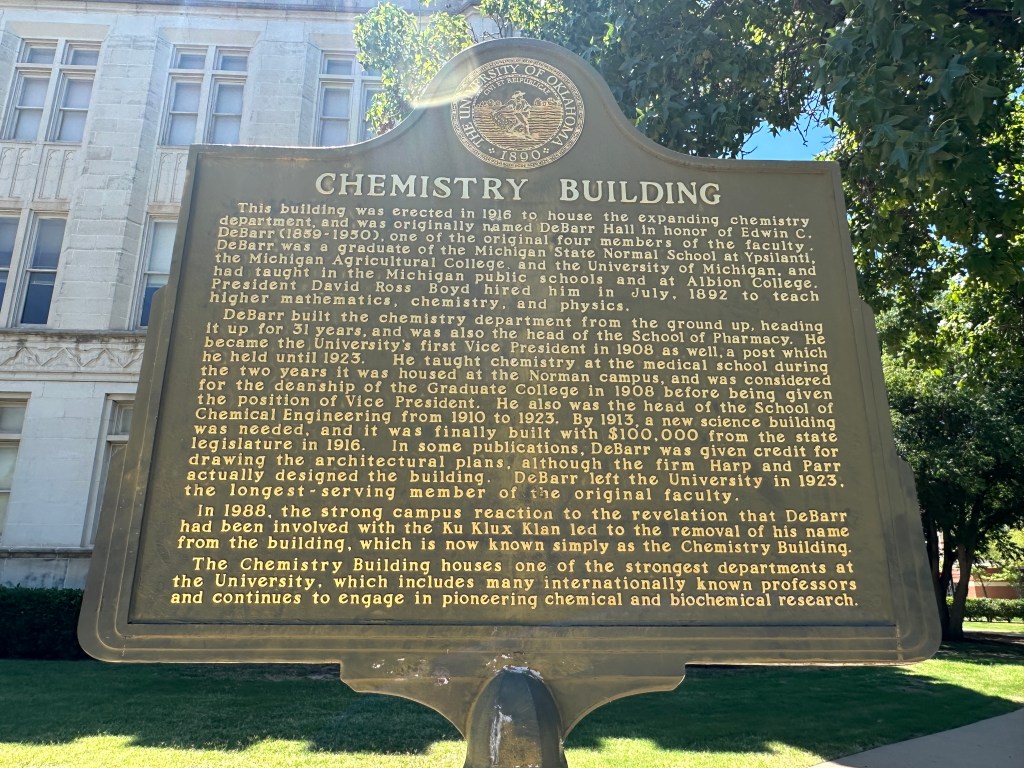

“This building was erected in 1916 to house the expanding chemistry departments, and was originally named DeBarr Hall in honor of Edwin C. DeBarr (1859-1950), one of the original four members of the faculty. DeBarr was a graduate of the Michigan State Normal School at Ypsilanti, the Michigan Agricultural College, and the University of Michigan, and had taught in the Michigan public schools and at Albion College. President David Ross Boyd hired him in July, 1892 to teach higher mathematics, chemistry, and physics.
DeBarr built the chemistry department from the ground up, heading it up for 31 years, and was also the head of the School of Pharmacy. He became the University’s first Vice President in 1908 as well, a post which he held until 1923. He taught chemistry at the medical school during the two years it was housed at the Norman campus, and was considered for the deanship of the Graduate College in 1908 before being given the position of Vice President. He also was the head of the School of Chemical Engineering from 1910 to 1923. By 1913, a new science building was needed, and it was finally built with $100,000 from the state legislature in 1916. In some publications, DeBarr was given credit for drawing the architectural plans, although the firm Harp and Parr actually designed the building. DeBarr left the University in1923, the longest-serving member of the original faculty.
In 1988, the strong campus reaction to the revelation that DeBarr had been Involved with the Ku Klux Klan led to the removal of his name from the building, which is now known simply as the Chemistry Building.
The Chemistry Building houses one of the strongest departments at the University, which includes many internationally known professors and continues to engage in pioneering chemical and biochemical research.”
The ExxonMobil Lawrence G. Rawl Engineering Practice Facility


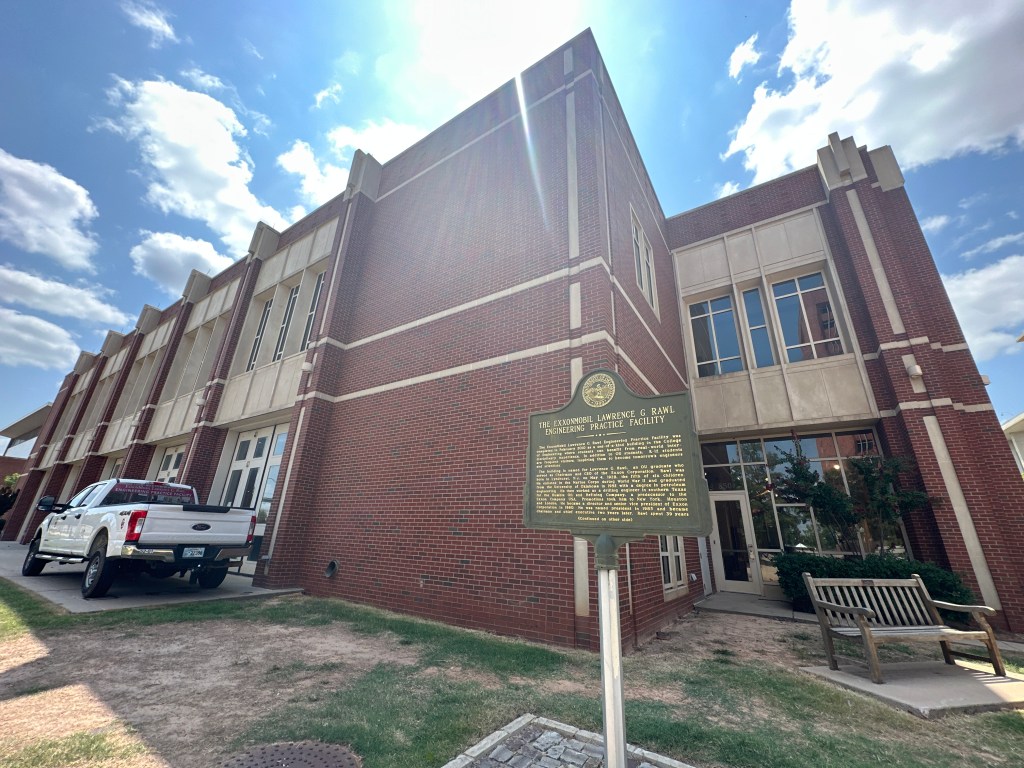
“The ExxonMobil Lawrence G. Rawl Engineering Practice Facility was completed in February 2010 as a one-of-a-kind building in the College of Engineering where students can benefit from real-world interdisciplinary experience. In addition to OU students, K-12 students are frequent visitors, inspiring them to become tomorrow’s engineers and scientists.
The building is named for Lawrence G. Rawl, an OU graduate who served as Chairman and CEO of the Exxon Corporation. Rawl was born in Lyndjurst, N.J., on May 4, 1928, the fifth of six children. He enlisted in the Marine Corps during World War II and graduated from the University of Oklahoma in 1952 with a degree in petroleum engineering. He then worked as a drilling engineer in southern Texas for the Humble Oil and Refining Company, a predecessor to the Exxon Company USA. Promotions took him to New York, Houston and London. He became a director and senior vice president of Exxon Corporation in 1980. He was named president in 1985 and became chairman and chief executive two years later. Rawl spent 39 years at Exxon and was chairman and chief executive from 1987 to 1993. Under his leadership, Exxon scaled down and reduced costs by selling subsidiaries, closing service stations and moving its headquarters from Manhattan to Irving, Texas. It also expanded its chemical operations and increased its oil and gas reserves, largely by exploring sites in Africa and Asia.
The two-story, 41,000-square-foot ExxonMobil Lawrence G. Rawl Engineering Practice Facility includes a 10,000 square-foot area where students can design and build engineering projects and senior capstone projects. It is also home to the nationally recognized K-20 Engineering Education Program. This facility serves as a teaching/work environment for the College’s educational initiatives to recruit more young people to study math and science.
With the completion of the Engineering Practice Facility, many of the student groups have been able to work on their projects here using hands-on design activities. The Practice Facility brings together all of the disciplines of OU engineering students into one centralized location.”
Devon Energy Hall
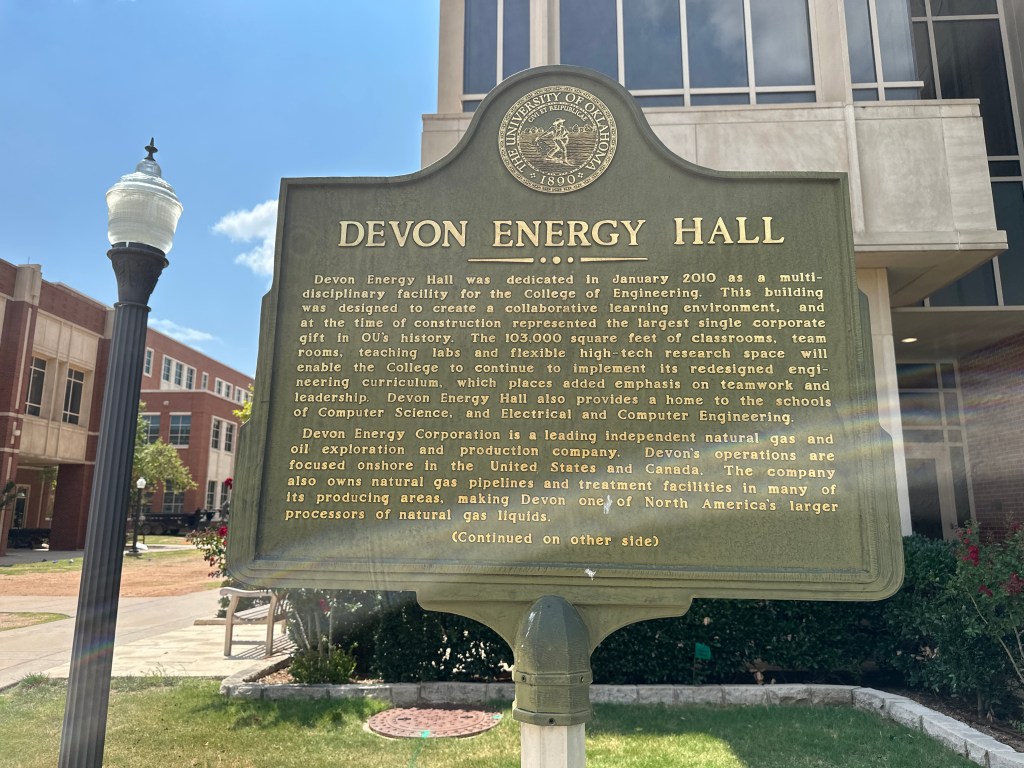


Devon Energy Hall was dedicated in January 2010 as a multidisciplinary facility for the College of Engineering. This building was designed to create a collaborative learning environment, and at the time of construction represented the largest single corporate gift in OU’s history. The 103,000 square feet of classrooms, team rooms, teaching labs and flexible high-tech research space will enable the College to continue to implement its redesigned engineering curriculum, which places added emphasis on teamwork and leadership. Devon Energy Hall also provides a home to the schools of Computer Science, and Electrical and Computer Engineering.
Devon Energy Corporation is a leading independent natural gas and oil exploration and production company. Devon’s operations are focused onshore in the United States and Canada. The company also owns natural gas pipelines and treatment facilities in many of its producing areas, making Devon one of North America’s larger processors of natural gas liquids.
The company’s portfolio of gas and oil properties provides stable environmentally responsible production and a platform for future growth. The company’s co-founder John Nichols was a pioneer in the oil and gas industry and filed the first public oil and gas drilling fund with the U.S. Securities Exchange Commission in 1950. He received the university’s inaugural Oklahoma Trailblazer Award for Outstanding Leadership in the energy industry. Oil and Gas investor magazine named him as one of the hundred most influential people in the petroleum industry in the 20th century.
Devon CEO Larry Nichols and his wife, Polly, an OU graduate; have perpetuated the company’s support of the university initiated by Larry’s father, Devon’s first chairman, John Nichols and his wife, Mary, both of whom are OU graduates. John and Mary met at OU and shared a deep commitment to the university, supporting The Library, The School of Dance and College of Business, as well as the academic programs related to energy.”
Sarkeys Energy Center
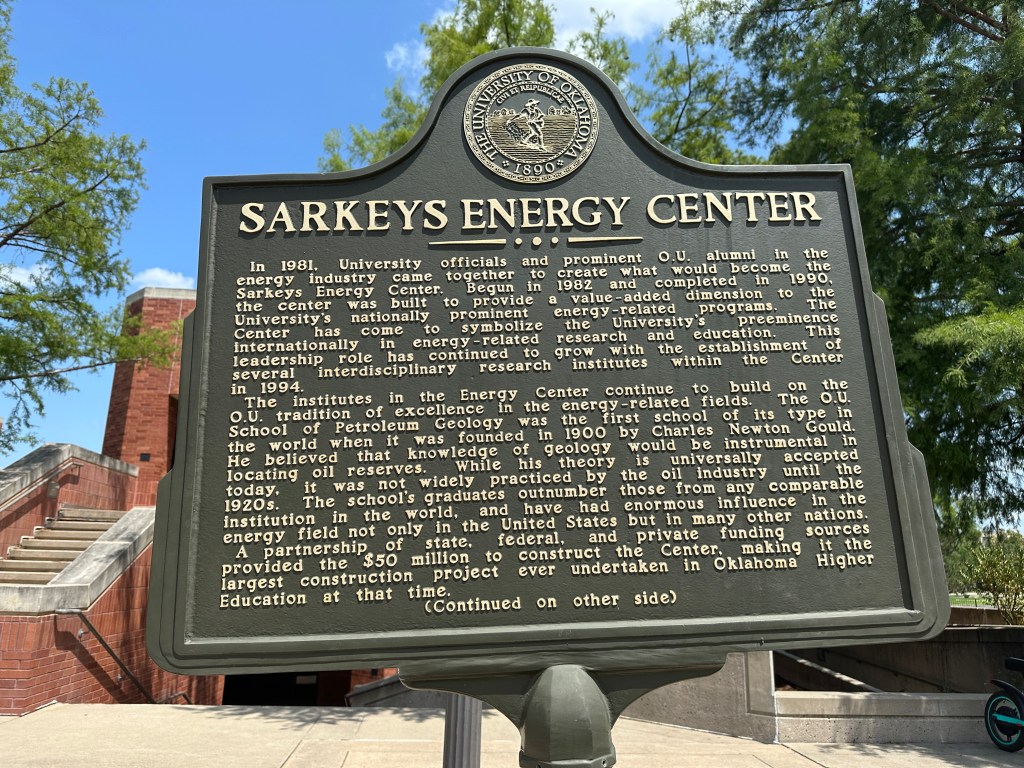

“In 1981, University officials and prominent O.U. alumni in the energy industry came together to create what would become the Sarkeys Energy Center. Begun in 1982 and completed in 1990, the center was built to provide a value-added dimension to the University’s nationally prominent energy-related programs. The Center has come to symbolize the University’s preeminence internationally in the energy-related research and education. This leadership role has continued to grow with the establishment of several interdisciplinary research institutes within the Center in 1994.
The institutes in the Energy Center continue to build on the O.U. tradition of excellence in the energy-related fields. The O.U. School of Petroleum Geology was the first school of its type in the world when it was founded in 1900 by Charles Newton Gould. He believed that knowledge of geology would be instrumental in locating oil reserves. While his theory is universally accepted today, it was not widely practiced by the oil industry until the 1920s. The school’s graduates outnumber those from any comparable institution in the world, and have had enormous in the energy fields not only in the United States but in many other nations.
A partnership of state, federal, and private funding sources provided the $50 million to construct the Center, making it the largest construction project ever undertaken in Oklahoma Higher Education at the time.
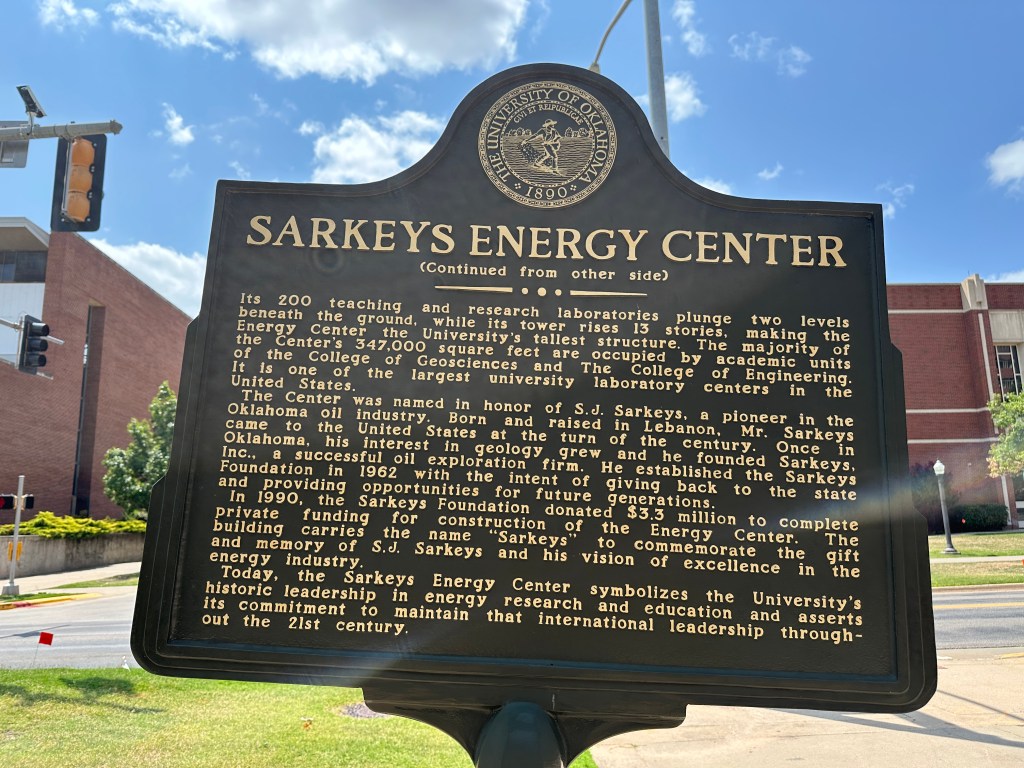
Its 200 teaching and research laboratories plunge two levels beneath the ground, while its tower rises 13 stories, making the Energy Center the University’s tallest structure. The majority of the Center’s 347,000 square feet are occupied by academic units of the College of Geosciences and The College of Engineering. It is one of the largest university laboratory centers in the United States.
The Center was named in honor of S.J. Sarkeys, a pioneer in the Oklahoma oil industry. Born and raised in Lebanon, Mr. Sarkeys came to the United States at the turn of the century. Once in Oklahoma, his interest in geology grew and he founded Sarkeys, Inc., a successful oil exploration firm. He established the Sarkeys Foundation in 1962 with the intent of giving back to the state and providing opportunities for future generations.
In 1990, the Sarkeys Foundation donated $3.3 million to complete private funding for the construction of the Energy Center. The building carries the name “Sarkeys” to commemorate the gift and memory of S.J. Sarkeys and his vision of excellence in the energy industry.
Today, the Sarkeys Energy Center symbolizes the University’s historic leadership in energy research and education and asserts its commitment to maintain that international leadership throughout the 21st century.”
Mewbourne School of Petroleum and Geological Engineering Centennial Monument


“Home to the nation’s first commercial oil well and a series of important early advancements in petroleum engineering, Oklahoma has been a destination for the energy industry since the very beginning. One of the earliest academic players in the energy industry, the University of Oklahoma’s influence on the industry is immeasurable.
In 1919, Oklahoma had been a state for only twelve short years when Leon Everette English walked across the stage at the University of Oklahoma and made history as the first person in the United States to earn a degree in engineering geology. In the same year, the University expanded its energy curriculum to include courses in petroleum technology. The School of Petroleum Engineering was founded in 1924, and the two schools later merged to become the School of Petroleum and Geological Engineering.
These early students seized their opportunity to make a mark in energy. They were the wildcatters, the trailblazers, the shoulders we still stand on today. The graduates of our school share a proud tradition and heritage. They have earned respect and admiration as they have served with distinction all over the world. They lead multinational corporations and have founded hundreds of successful independent companies.
In 2000, the historic and celebrated school was renamed the Mewbourne School of Petroleum and Geological Engineering to honor industry leader and distinguished alumnis Curtis W. Mewbourne of Tyler, Texas. His passion for the energy industry, the University of Oklahoma and the students of the Mewbourne College of Earth and Energy ensure that the legacy started 100 years ago will continue.
The Mewbourne School of Petroleum and Geological Engineering is home to people, research, and scholarship that shaped a century. The school’s influence and contributions to the industry began on the windy plains of Oklahoma and the dusty horizons of West Texas.
An international destination for aspiring petroleum engineers from all nationalities and walks of life, the Melbourne School of Petroleum and Geological Engineering’s influence extends across the country and around the world.
The legacy of the last century lives on in us, the bearers of the next one hundred years of unlimited energy at the University of Oklahoma.”
Oklahoma Memorial Union


“This Union building, along with Memorial Stadium, honors the University of Oklahoma students who died in World War I. In later years, it has honored those who have served their country in all wars and national emergencies. The idea for a student union had been present as early as 1916, but the onset of the war the next year halted planning for it. With the burning of the YMCA building in 1922, however, a new type of facility was needed. In 1925, under President James S. Buchanan, fundraising for the Union building and the football stadium were joined to initiate a $1 million Stadium-Union campaign. In January, 1928, students approved a $2.50 per semester Stadium-Union fee. The Union building was completed in November.
Although it eventually became both popular and successful, the Union suffered many difficulties in its first years. Students began to protest the Stadium-Union fee. In 1931, Senator Hardin Ballard called for an investigation into unfair business practices and gambling at the Union.
The only incriminating evidence uncovered was one student’s testimony that he had heard another say. “I’ll bet you a dime I’ll put the nine ball in the side pocket.” The investigation found no fault in Union practices and stated in its report that “the Union is serving a most useful purpose and has answered a great need of the school.” Yet this was not the end of the Union’s problems. In 1939, Governor Leon C. Phillips, who opposed Ted Beaird, the Union’s longtime director, pushed for a fifty-percent cut in the student Union fee, which would have decimated the Union’s budget. He was unsuccessful, although a smaller cut was made.
Throughout its history the Union has grown in both size and function. In 1936, the clock tower was added with the help of the Work Projects Administration. Two wings were completed in 1951, the Union Parking Garage was added in 1982, and major renovations and additions were started in 1995. Throughout its history. the Oklahoma Memorial Union has served as a meeting place for students, faculty, parents, and alumni, and has been an important center of campus activity.”
Felgar Hall

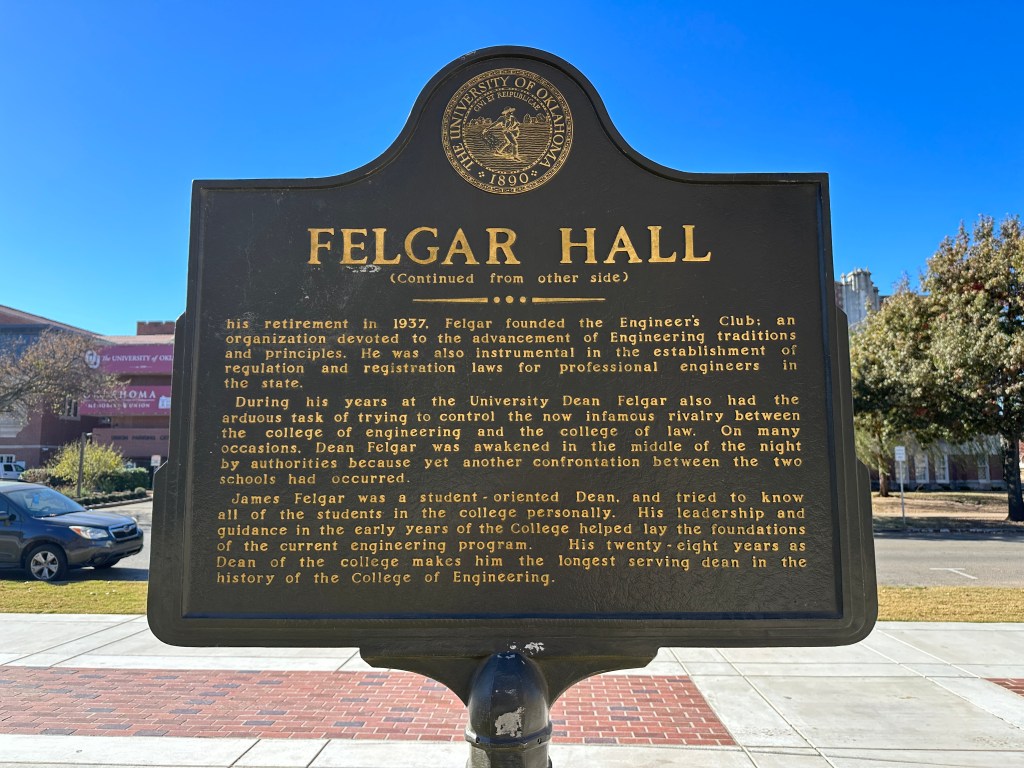

“This building is named for James Houston Felgar, the first Dean of the College of Engineering. Known just as the engineering building, this structure was funded by an Oklahoma legislative appropriation in 1923. The building was completed and came to house the growing college of engineering in 1925. Originally, the building consisted only of what is now the west wing, but took its present form with the addition of the north and east wings in 1948. The name was changed to Felgar Hall in honor of Dean Felgar in 1952.
Dean Felgar gained his training Mechanical and Electrical Engineering first at Kansas University and then at Armour Institute of Technology in Chicago. IN 1906, he was hired by the University as an instructor in the school of Applied Sciences. Upon the reorganization of the University’s structure, and the resulting creation of the college of Engineering in 1909, James Felgar was named the first Dean.
During Felgar’s tenure, which stretched until 1937, important advances took place in the college. In addition to expanding the enrollment of the college from only 51 in 1909 to over 1000 upon his retirement in 1937, Felgar founded the Engineer’s Club; an organization devoted to the advancement of Engineering traditions and principles. He was also instrumental in the establishment of regulation and registration laws for professional engineers in the state.
During his years at the University Dean Felgar also had the arduous task of trying to control the now infamous rivalry between the college of engineering and the college of law. On many occasions, Dean Felgar was awakened in the middle of the night by authorities because yet another confrontation between the two schools had occurred.
James Felgar was a student-oriented Dean, and tried to know all of the students in the college personally. His leadership and guidance in the early yeasrs of the College helped lay the foundations of the current engineering program. His twenty-eight years as Dean of the college makes him the longest serving dean in the history of the College of Engineering.”
Michael F. Price Hall
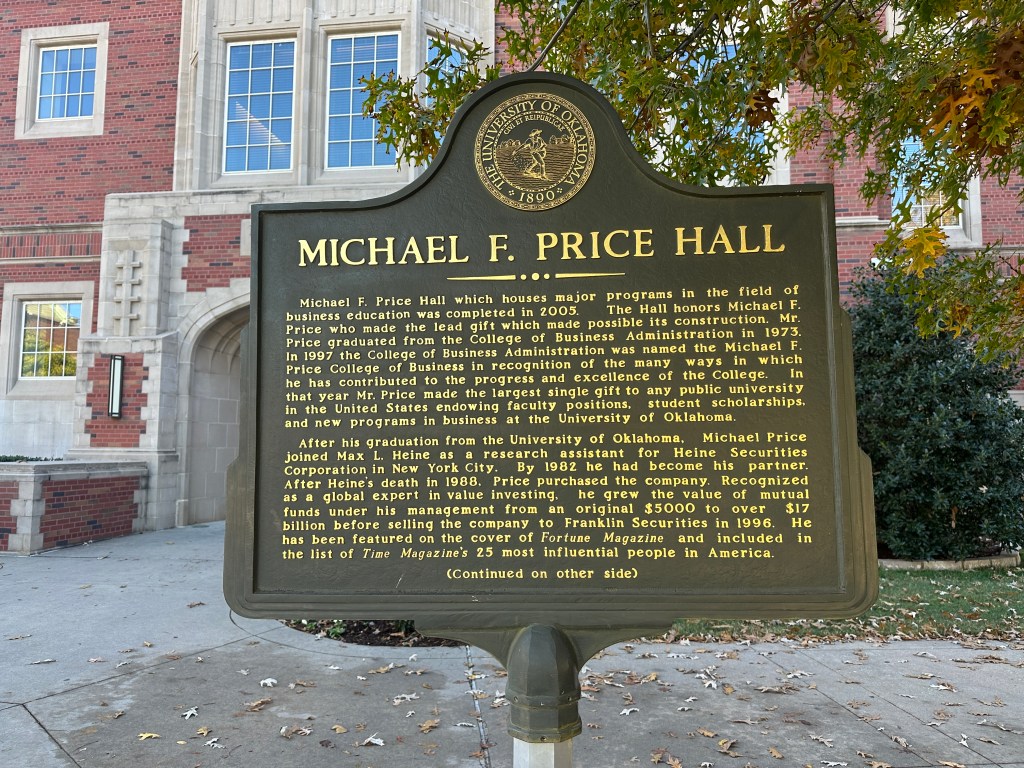

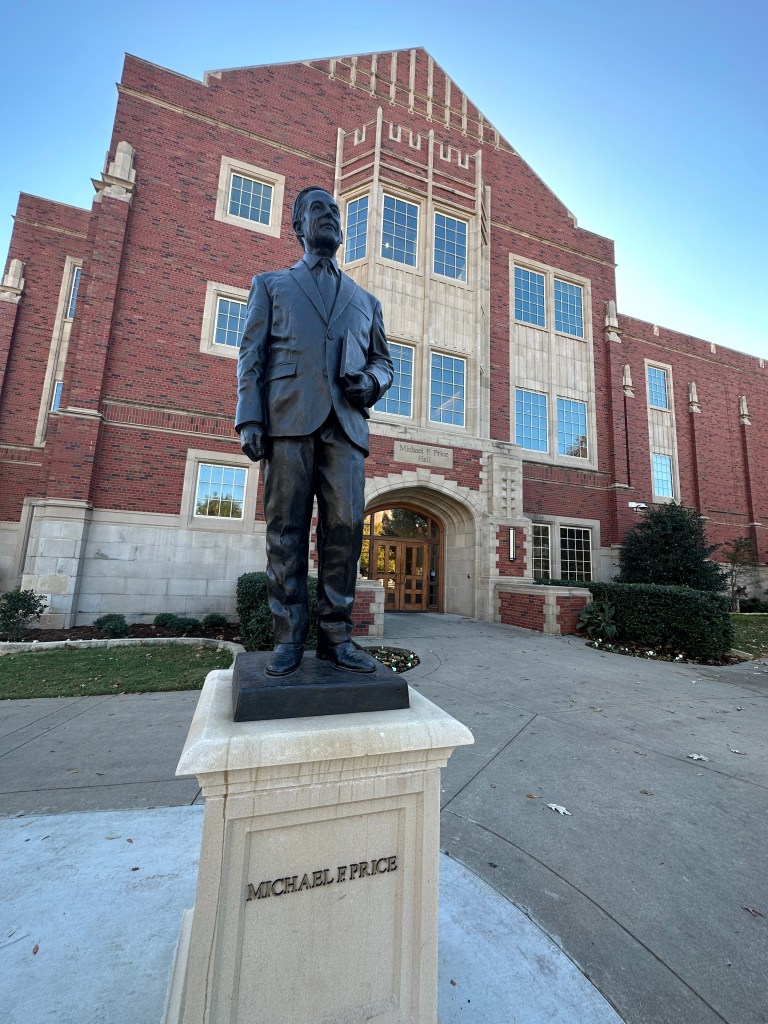


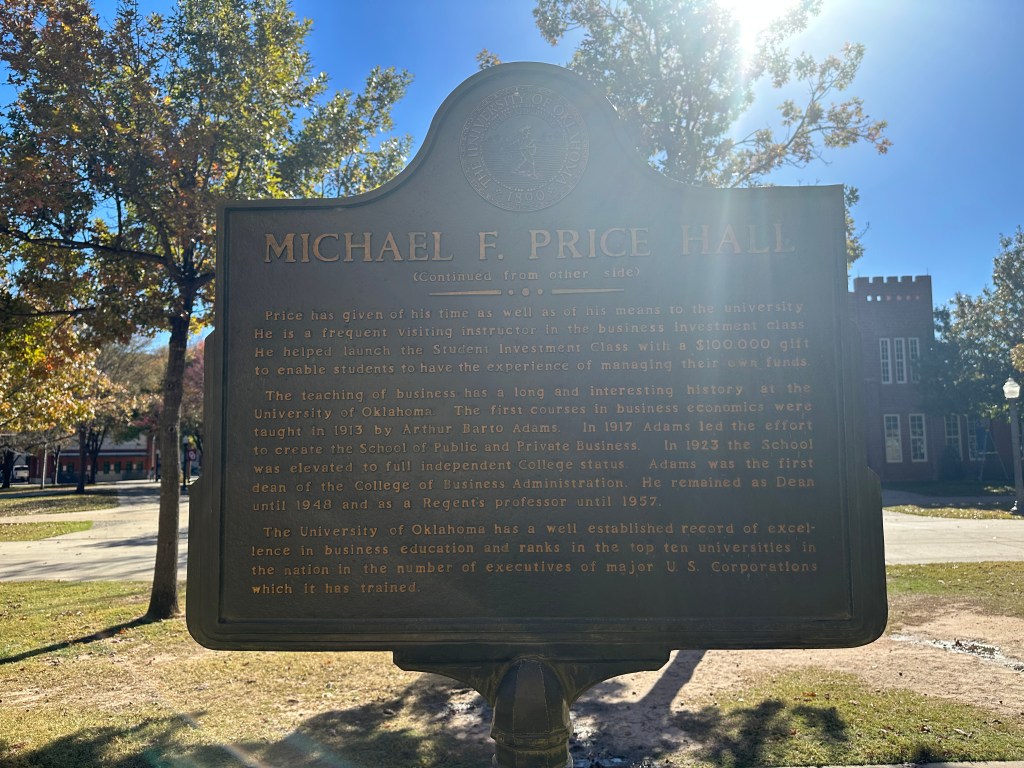
“Michael F. Price Hall which houses major programs in the field of business education was completed in 2005. The Hall honors Michael F. Price who made the lead gift which made possible its construction. Mr. Price graduated from the College of Business Administration in 1973. In 1997 the College of Business Administration was named the Michael F. Price College of Business in recognition of the many ways in which he has contributed to the progress and excellence of the college. In that year Mr. Price made the largest single gift to any public university in the United States endowing faculty positions, student scholarships, and new programs in business at the University of Oklahoma.
After his graduation from the University of Oklahoma, Michael Price joined Max L. Heine as a research assistant for Heine Securities Corporation in New York City. By 1982 he had become his partner. After Heine’s death in 1988, Price purchased the company. Recognized as a global expert in value investing, he grew the value of mutual funds under his management from an original $5000 to over $17 billion before selling the company to Franklin Securities in 1996. He has been featured on the cover of Fortune Magazine and included in the list of Time Magazine‘s 25 most influential people in America.
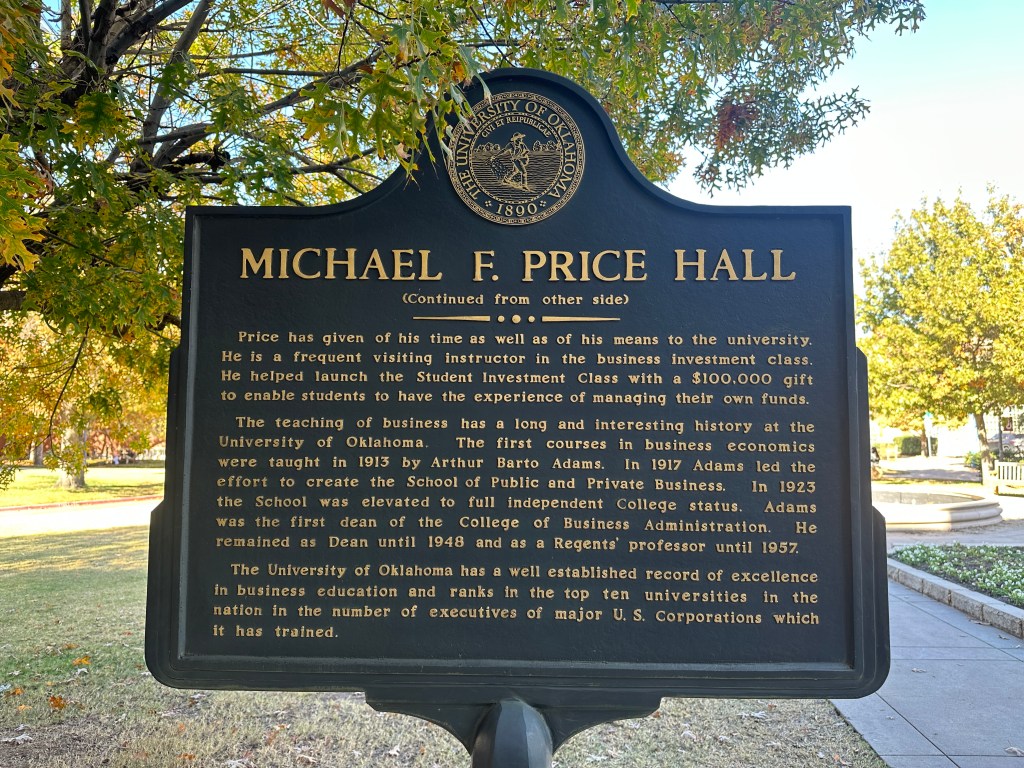
Price has given of his time as well as of his means to the university. He is a frequent visiting instructor in the business investment class. He helped launch the Student Investment Class with a $100,000 gift to enable students to have the experience of managing their own funds.
The teaching of business has a long and interesting history at the University of Oklahoma. The first courses in business economics were taught in 1913 by Arthur Barto Adams. In 1917 Adams led the effort to create the School of Public and Private Business. In 1923 the School was elevated to full independent College status. Adams was the first dean of the College of Business Administration. He remained as dean until 1948 and as a Regent’s professor until 1957.
The University of Oklahoma has a well established record of excellence in business education and ranks in the top ten universities in the nation in the number of executives of major U S. corporations which it has trained.”
The Roy T. Oliver Walk and Gardens


“This walk, which extends in front of the Gaylord Family-Oklahoma Memorial Stadium from Jenkins Street to Michael F. Price Hall, and the gardens to the north side of it are named in honor of Roy T. Oliver, Jr. He graduated from the University of Oklahoma with a degree in Business in 1979.
Roy T. Oliver, Jr. is a native Oklahoman who was born in Holdenville in 1952. He attended Calvin High School in Calvin, Oklahoma. While growing up in rural Oklahoma, he loved the outdoors and was involved in competitive skeet shooting, winning junior and adult state titles at the age of 16. He served in the United States Air Force during the Vietnam era. After being honorably discharged he used his GI Bill benefits to attend the University of Oklahoma. Roy Oliver’s story is one which captures the Sooner Spirit. It is a story of hard work and creativity. While attending the university, he engaged in the buying and selling of rental property. He purchased his first property with $3,000, which he borrowed from a local bank as a down payment. By the time of his graduation, Roy Oliver had accumulated over 30 properties.
After graduating from college, he used these resources to help form the U.S. Rig and Equipment Company which pursued the purchase, sale, and brokerage of drilling rigs and equipment. During the depression in the oil industry following the 1982 collapse of oil prices, Mr. Oliver had the vision and boldness to accumulate more than 100 drilling rigs. He is involved in a wide range of businesses including oil and gas products, banking, specialty advertising, and real estate.
By 2005, Roy Oliver was the largest individual owner of office buildings in the state of Oklahoma. He and his wife, Rebecca, have two sons – Ran and Ty. He has a zest for life and has been a fixed wing helicopter pilot for 25 years and an aerobatic aircraft pilot. He has been a loyal and generous alumnus of the University of Oklahoma and has made major gifts, especially in the areas of business education and athletics. In addition, he is committed to wildlife conservation and has maintained a large herd of 275 bison and 50 elk on his ranch near Norman.”
Adams Hall

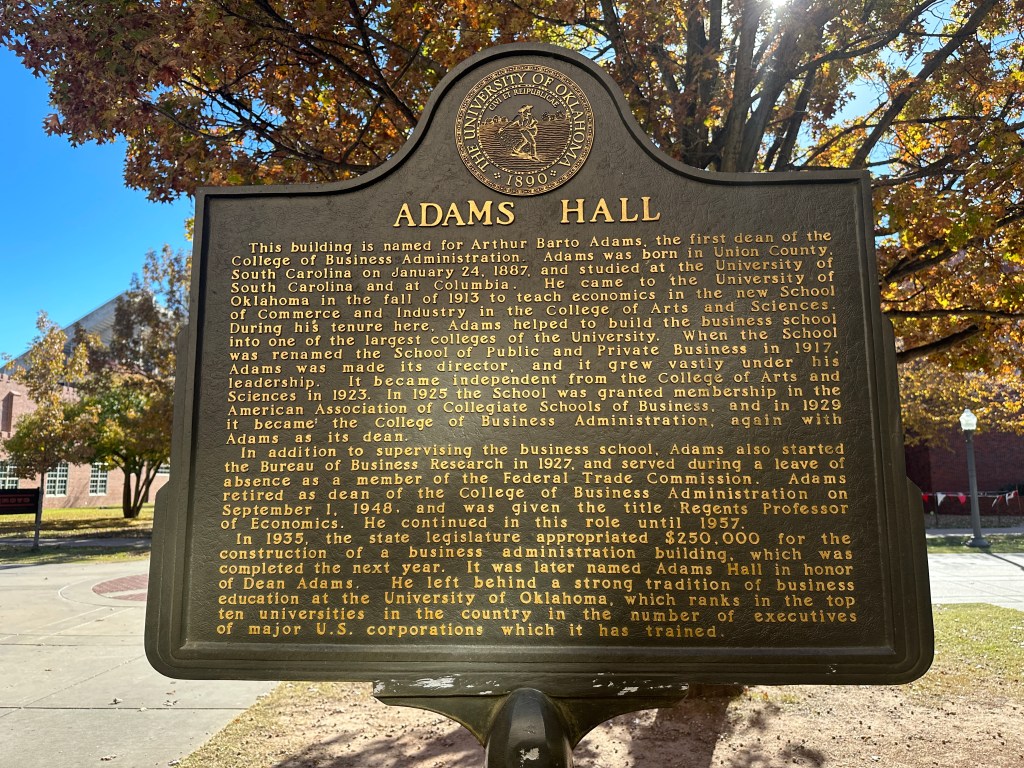

“This building is named for Arthur Barto Adams, the first dean of the College of Business Administration. Adams was born in Union County, South Carolina on January 24, 1887, and studied at the University of South Carolina and at Columbia. He came to the University of Oklahoma in the fall of 1913 to teach economics in the new School of Commerce and Industry in the College of Arts and Sciences. During his tenure here, Adams helped to build the business school into one of the largest colleges of the university. When the School was renamed the School of Public and Private Business in 1917, Adams was made its director, and it grew vastly under his leadership. It became independent from the College of Arts and Sciences in 1923. In 1925 the School was granted membership in the American Association of Collegiate Schools of Business, and in 1929 it became the College of Business Administration, again with Adams as its dean.
In addition to supervising the business school, Adams also started the Bureau of Business Research in 1927, and served during a leave of absence as a member of the Federal Trade Commission. Adams retired as dean of the College of Business Administration on September 1, 1948 and was given the title Regents Professor of Economics. He continued in this role until 1957.
In 1935, the state legislature appropriated $250,000 for the construction of a business administration building, which was completed the next year. It was later named Adams Hall in honor of Dean Adams. He left behind a strong tradition of business education at the University of Oklahoma, which ranks in the top ten universities in the country in the number of executives of major U.S. corporations which it has trained.”
Bizzell Memorial Library


“This library honors William Bennett Bizzell (1876-1944), the University’s fifth president. Born in Texas, Bizzell received a total of seven degrees from Baylor University, The Illinois College of Law, the University of Chicago, and Columbia University. He came to the University of Oklahoma from his eleven-year presidency of Texas A&M on July 1, 1925. His sixteen years as president were vibrant and innovative. Under his leadership, the University granted more than three times as many degrees (including the University’s first Ph.D.) as under all his predecessors combined. A visionary educator, he reorganized or began many of the University’s most important programs. The renowned international literary journal Books Abroad (now World Literature Today) and the University of Oklahoma Press were founded while he was president, as was the alumni publication, the Sooner Magazine. His proudest achievement, however, was the new library.
A lifelong bibliophile and author of scholarly books, Bizzell had been shocked by the University’s tiny library, and he resolved to correct the situation. He successfully lobbied the state legislature for an unprecedented $560,000 to build the first phase of the new library, which was completed in 1929. Renamed Bizzell Memorial Library in 1949, the building was expanded in 1958 and again in 1982 with the addition of the Doris W. Neustadt wing. As of 1995 the library system contained over 2.3 million volumes, making it the largest in the state. The building houses the world renowned History of Science Collections, which contain books printed as early as 1467 and documents bearing the handwriting of Galileo and other great scientists. The library also includes major collections in Western History, the history of business, and President Bizzell’s personal collection of 550 rare Bibles, theological works, and prayer books.
Bizzell’s statue still watches over his creation from its vantage point on Van Vleet oval. Having transformed the University, Bizzell resigned as president in 1941, serving as head of the sociology department until his death. As President Emeritus George L. Cross so appropriately wrote, “President Bizzell was quiet, kindly, sensitive, and scholarly, with a deep concern for the dignity of others. He was a man of unimpeachable integrity…”
Nielsen Hall

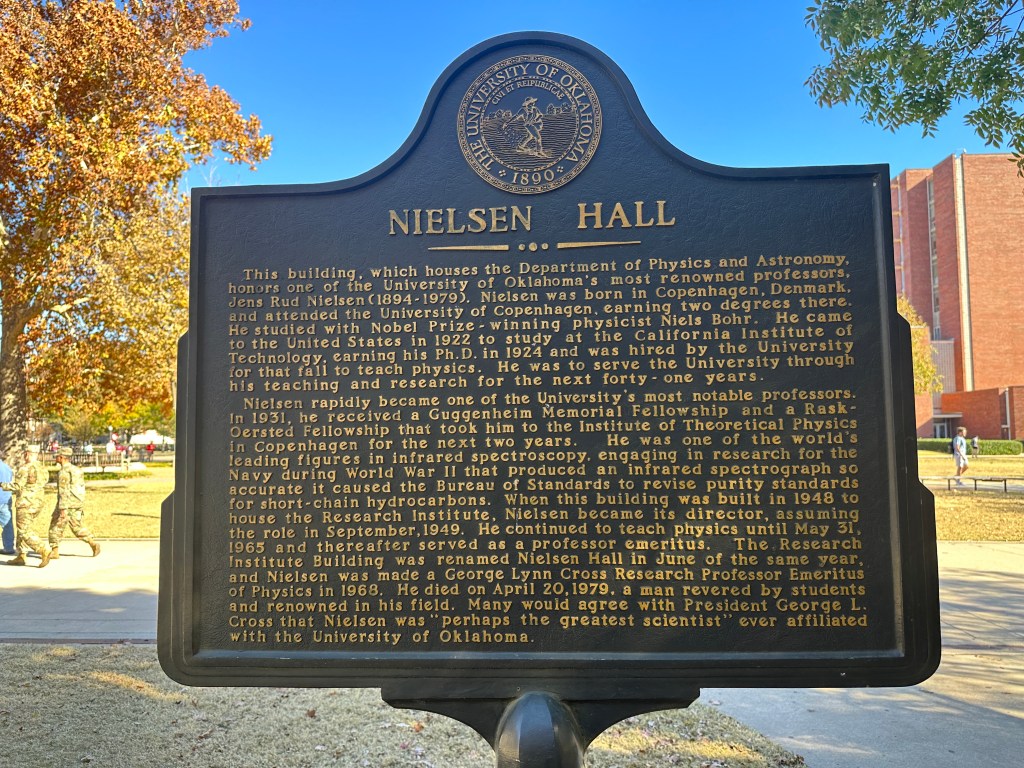
“This building, which houses the Department of Physics and Astronomy, honors one of the University of Oklahoma’s most renowned professors, Jens Rud Nielsen (1894-1979). Nielsen was born in Copenhagen, Denmark. and attended the University of Copenhagen, earning two degrees there. He studied with Nobel Prize-winning physicist Niels Bohr. He came to the United States in 1922 to study at the California Institute of Technology, earning his Ph.D. in 1924 and was hired by the University for that fall to teach physics. He was to serve the University through his teaching and research for the next forty-one years.
Nielsen rapidly became one of the University’s most notable professors. In 1931, he received a Guggenheim Memorial Fellowship and a Rask- Oersted Fellowship that took him to the Institute of Theoretical Physics in Copenhagen for the next two years. He was one of the world’s leading figures in infrared spectroscopy, engaging in research for the Navy during World War II that produced an infrared spectrograph so accurate it caused the Bureau of Standards to revise purity standards for short-chain hydrocarbons. When this building was built in 1948 to house the Research Institute, Nielsen became its director, assuming the role in September, 1949. He continued to teach physics until May 31, 1965 and thereafter served as a professor emeritus. The Research Institute Building was renamed Nielsen Hall in June of the same year, and Nielsen was made a George Lynn Cross Research Professor Emeritus of Physics in 1968. He died on April 20, 1979, a man revered by students and renowned in his field. Many would agree with President George L. Cross that Nielsen was “perhaps the greatest scientist” ever affiliated with the University of Oklahoma.”
Dodge Family College of Arts and Sciences
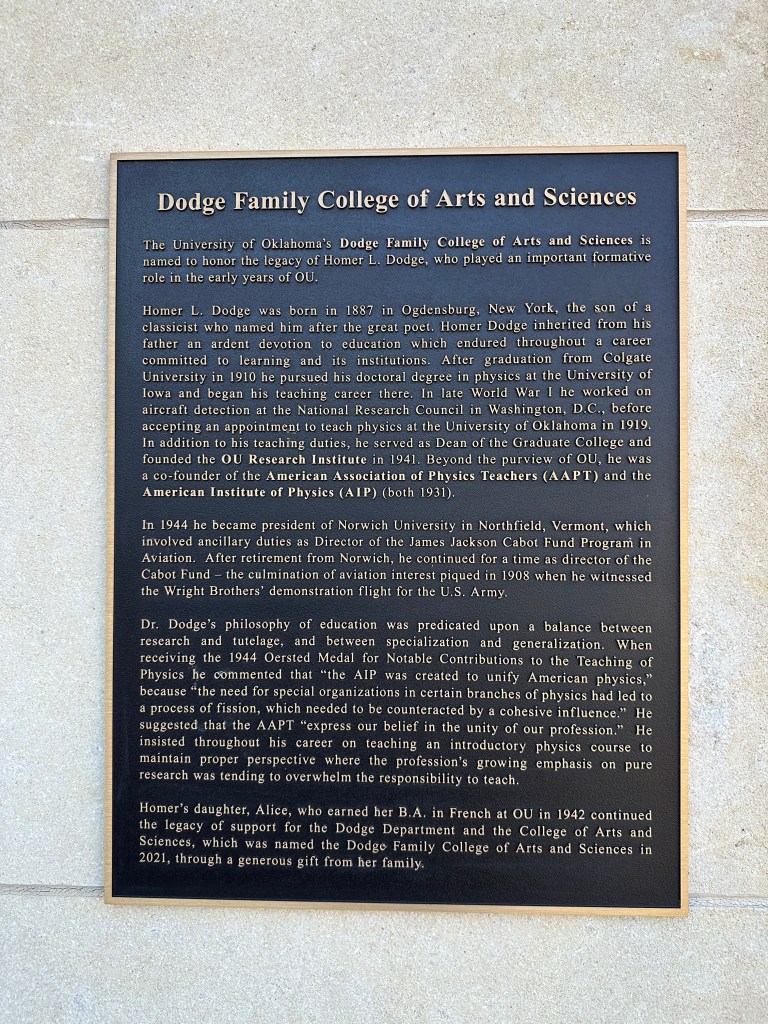
“The University of Oklahoma’s Dodge Family College of Arts and Sciences is named to honor the legacy of Homer L. Dodge, who played an important formative role in the early years of OU.
Homer L. Dodge was born in 1887 in Ogdensburg, New York, the son of classicist who named him after the great poet. Homer Dodge inherited from his father an ardent devotion to education which endured throughout a career committed to learning and its institutions. After graduation from Colgate University in 1910 he pursued his doctoral degree in physics at the University of Iowa and began his teaching career there. In late World War I he worked on aircraft detection at the National Research Council in Washington, D.C., before accepting an appointment to teach physics at the University of Oklahoma in 1919. In addition to his teaching duties, he served as Dean of the Graduate College and founded the OU Research Institute in 1941. Beyond the purview of OU, he was a co-founder of the American Association of Physics Teachers (AAPT) and the American Institute of Physics (AIP) (both 1931).
IN 1944 he became president of Norwich University in Northfield, Vermont, which involved ancillary duties as Director of the James Jackson Cabot Fund Program in Aviation. After retirement from Norwich, he continued for a time as director of the Cabot Fund – the culmination of aviation interest piqued in 1908 when he witnessed the Wright Brothers’ demonstration flight for the U.S. Army.
Dr. Dodge’s philosophy of education was predicated upon a balance between research and tutelage, and between specialization and generalization. When receiving the 1944 Oersted Medal for Notable Contributions to the Teaching of Physics he commented that “the AIP was created to unify American physics,” because “the need for special organizations in certain branches of physics had led to a process of fission, which needed to be counteracted by a cohesive influence.” He suggested that the AAPT “express our belief in the unity of our profession.” He insisted throughout his career on teaching an introductory physics course to maintain proper perspective where the profession’s growing emphasis on pure research was tending to overwhelm the responsibility to teach.
Homer’s daughter, Alice, who earned her B.A. in French at OU in 1942 continued the legacy of support for the Dodge Department and the College of Arts and Sciences, which was named the Dodge Family College of Arts and Sciences in 2021, through a generous gift from her family.”
Van Fleet Oval
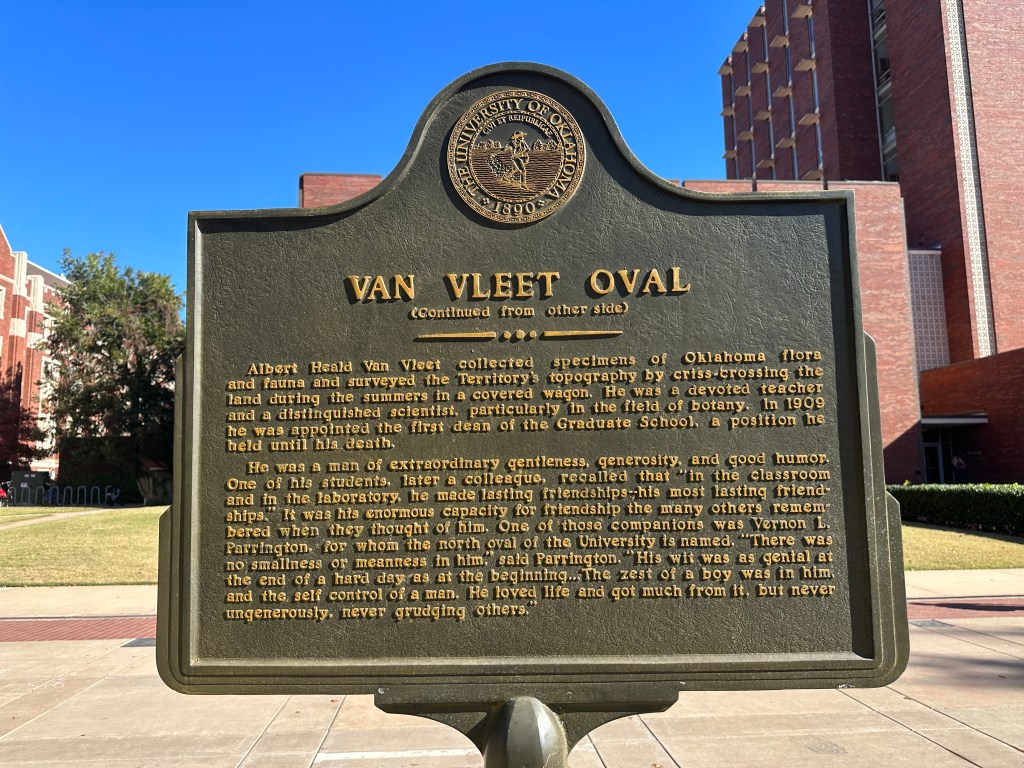

“This part of the campus is named in honor of Albert Heald Van Vleet (1861-1925). Born in Iowa and raised and educated in Nebraska and Wisconsin, he earned his PhD at the University of Leipzig in 1897 and then undertook an additional year of study at the Johns Hopkins University. He came to this campus – hired by President David Ross Boyd at an annual salary of $1200 – in the fall of 1898. The university had been in existence for only six years when he arrived, and he was the first holder of a doctorate to join the faculty.
Albert H. Van Vleet was the father of the study of the natural sciences here. At this university the disciplines of botany, zoology, physiology, anatomy, medicine and geology can all trace their origins to his dedicated and multi-faceted instruction. Seven months after arriving in Norman, he led in the establishment of the Territorial natural history and geological survey and became its director. It was the forerunner of the Sam Noble Oklahoma Museum of Natural History.
Albert Heald Van Vleet collected specimens of Oklahoma flora and fauna and surveyed the Territory’s topography by crisscrossing the land during the summers in a covered wagon. He was a devoted teacher and a distinguished scientist, particularly in the field of botany. In 1909 he was appointed the first dean of the Graduate School, a position he held until his death.
He was a man of extraordinary gentleness, generosity, and good humor. One of his students, later a colleague, recalled that “in the classroom and in the laboratory, he made lasting friendships – his most lasting friendships.” It was his enormous capacity for friendship the many others remembered when they thought of him. One of those companions was Vernon L. Parrington, for whom the north oval of the university is named. “There was no smallness or meanness in him.” said Parrington. “His wit was as genial at the end of a hard day as at the beginning … The zest of a boy was in him, and the self control of a man. He loved life and got much from it, but never ungenerously, never grudging others.”
George Lynn Cross Hall
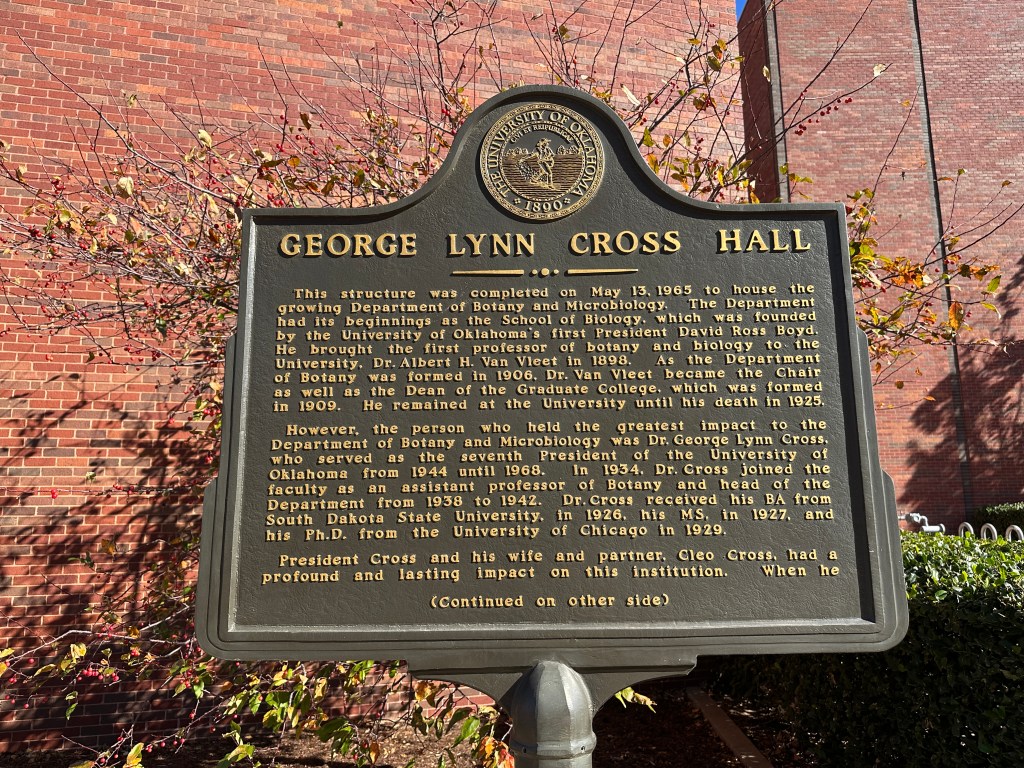
“This structure was completed on May 13, 1965 to house the growing Department of Botany and Microbiology. The department had its beginnings as the School of Biology, which was founded by the University of Oklahoma’s first President David Ross Boyd. He brought the first professor of botany and biology to the university, Dr. Albert H. Van Vleet in 1898. As the Department of Botany was formed in 1906, Dr. Van Vleet became the chair as well as the dean of the Graduate College, which was formed in 1909. He remained at the university until his death in 1925.
However, the person who held the greatest impact to the Department of Botany and Microbiology was Dr. George Lynn Cross, who served as the seventh president of the University of Oklahoma from 1944 until 1968. In 1934, Dr. Cross joined the faculty as an assistant professor of Botany and head of the department from 1938 to 1942. Dr. Cross received his BA from South Dakota State University in 1926, his MS, in 1927, and his Ph.D. from the University of Chicago in 1929.
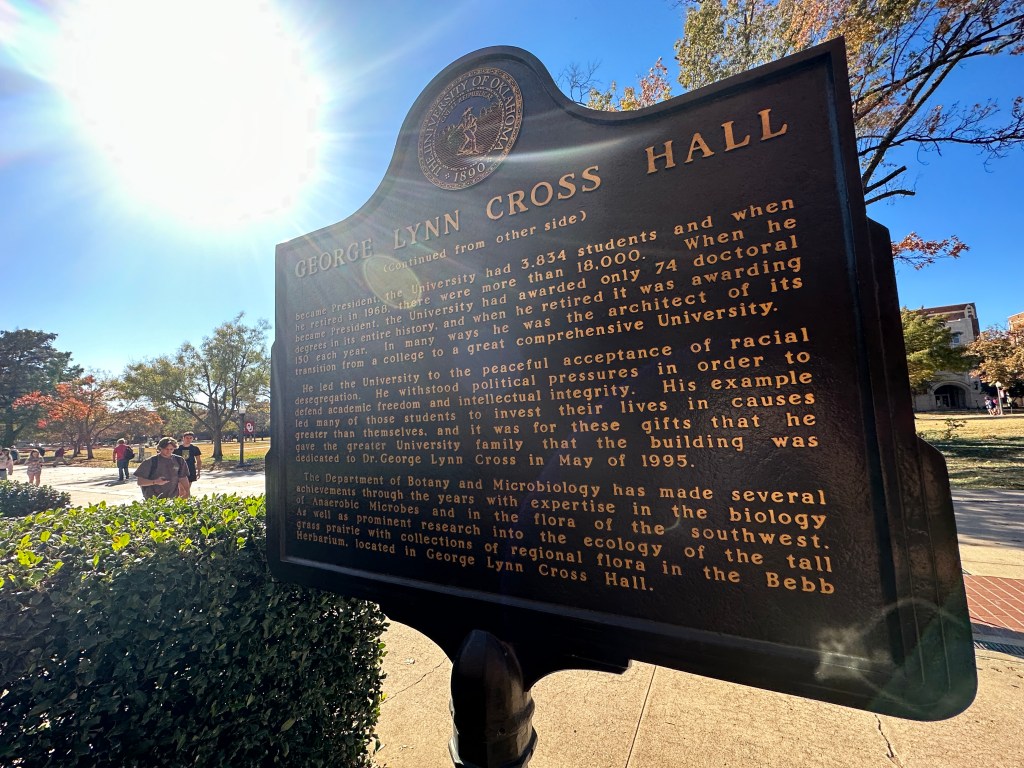
President Cross and his wife and partner, Cleo Cross, had a profound and lasting impact on this institution. When he became president, the university had 3.834 students and when he retired in 1968, there were more than 18,000. When he became president, the university had awarded only 74 doctoral degrees in its entire history, and when he retired it was awarding 150 each year. In many ways he was the architect of its transition from a college to a great comprehensive university.
He led the university to the peaceful acceptance of racial desegregation. He withstood political pressures in order to defend academic freedom and intellectual integrity. His example led many of those students to invest their lives in causes greater than themselves, and it was for these gifts that he gave the greater university family that the building was dedicated to Dr. George Lynn Cross in May of 1995.
The Department of Botany and Microbiology has made several achievements through the years with expertise in the biology of anaerobic microbes and in the flora of the Southwest. As well as prominent research into the ecology of the tall grass prairie with collections of regional flora in the Bebb Herbarium, located in George Lynn Cross Hall.”
Richards Hall
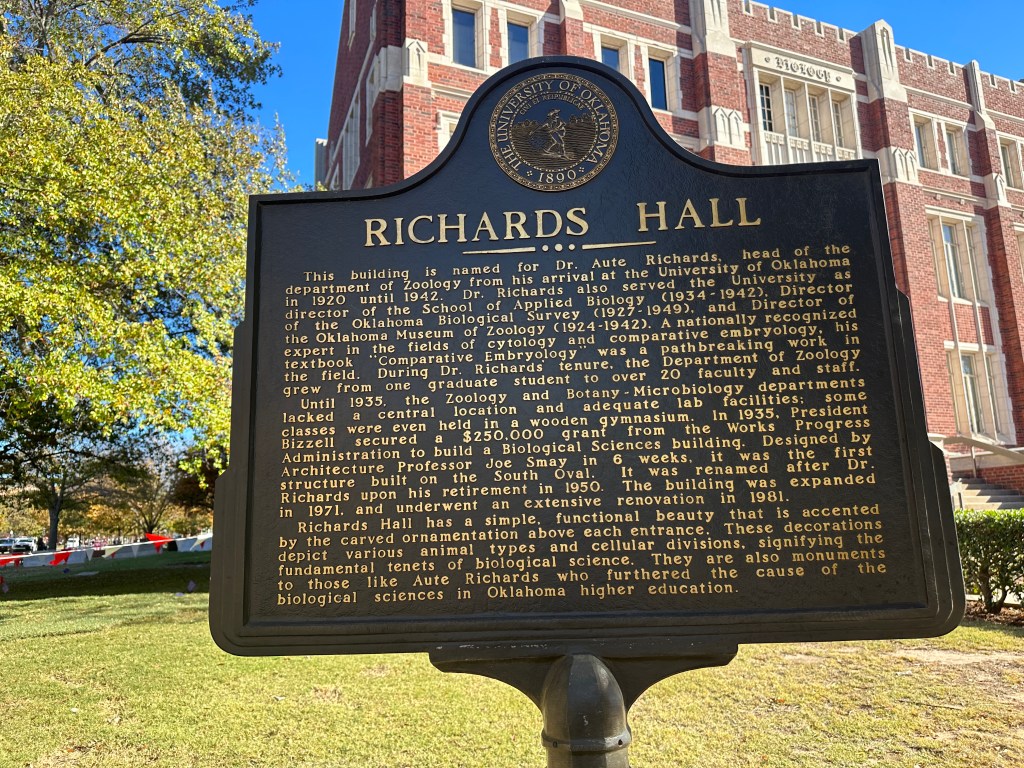
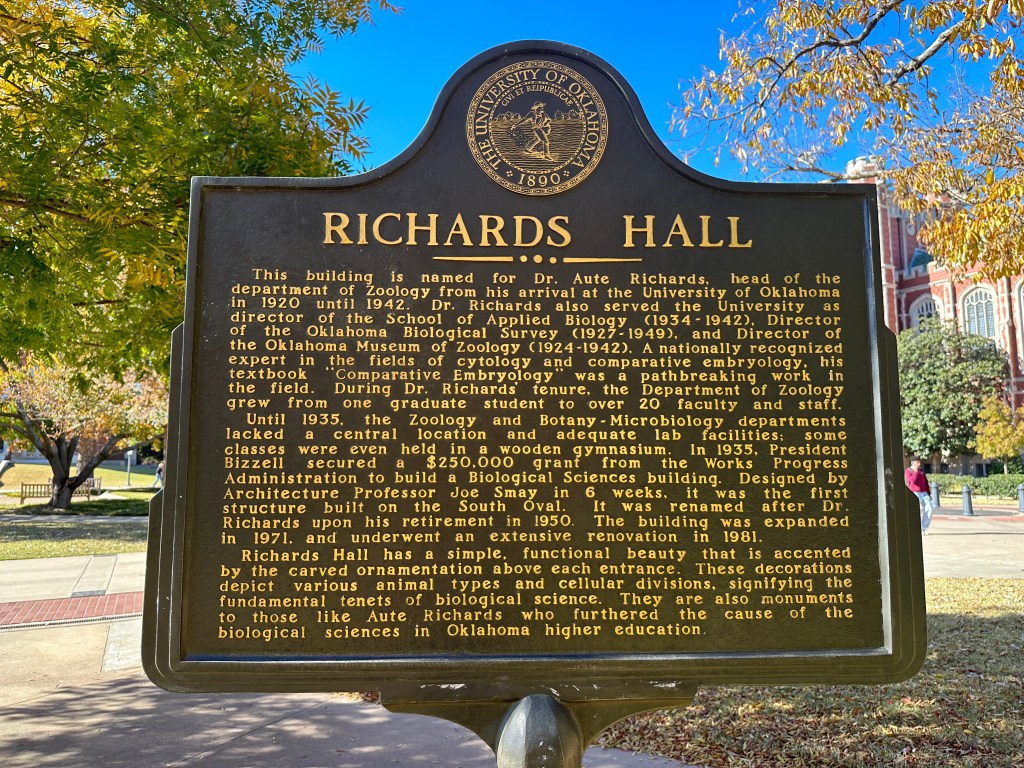
“This building is named for Dr. Aute Richards, head of the department of Zoology from his arrival at the University of Oklahoma in 1920 until 1942. Dr. Richards also served the university as director of the School of Applied Biology (1934-1942), Director of the Oklahoma Biological Survey (1927-1949), and Director of the Oklahoma Museum of Zoology (1924-1942). A nationally recognized expert in the fields of cytology and comparative embryology, his textbook “Comparative Embryology” was a pathbreaking work in the field. During Dr. Richards’ tenure, the Department of Zoology grew from one graduate student to over 20 faculty and staff.
Until 1935, the Zoology and Botany-Microbiology departments lacked a central location and adequate lab facilities: some classes were even held in a wooden gymnasium. In 1935, President Bizzell secured a $250.000 grant from the Works Progress Administration to build a Biological Sciences building. Designed by Architecture Professor Joe Smay in 6 weeks, it was the first structure built on the South Oval. It was renamed after Dr. Richards upon his retirement in 1950. The building was expanded in 1971, , and underwent an extensive renovation in 1981.
Richards Hall has a simple, functional beauty that is accented by the carved ornamentation above each entrance. These decorations depict various animal types and cellular divisions, signifying the fundamental tenets of biological science. They are also monuments to those like Aute Richards who furthered the cause of the biological sciences in Oklahoma higher education.”
Ada Lois Sipuel Fisher Garden
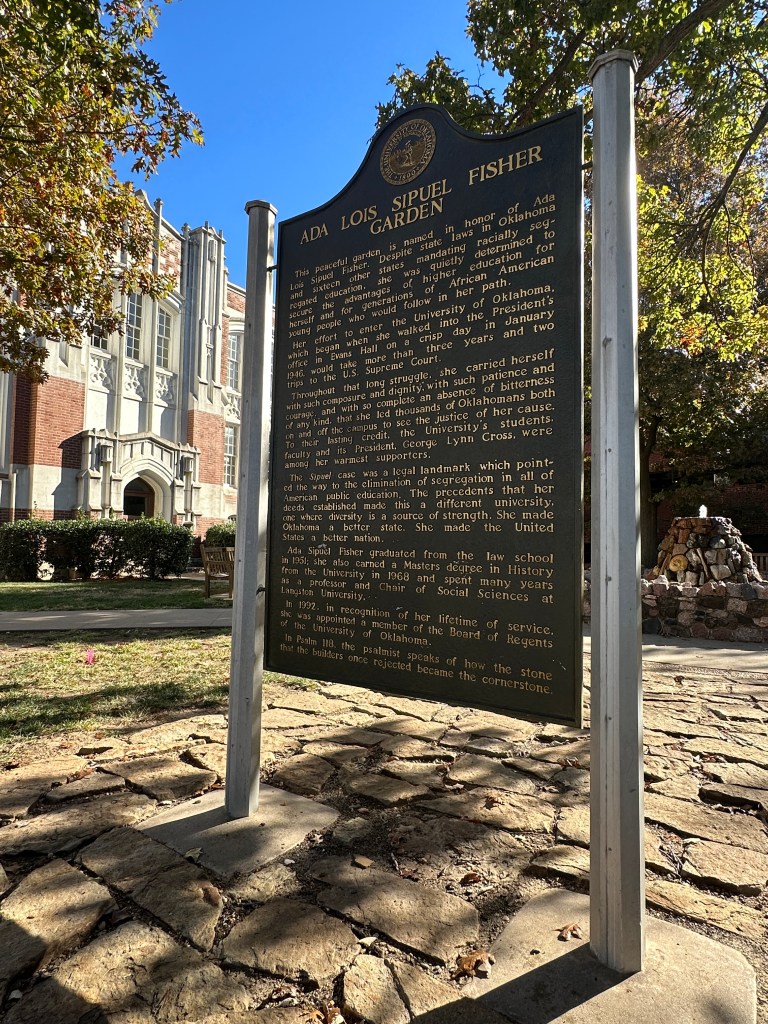
“This peaceful garden is named in honor of Ada Lois Sipuel Fisher. Despite state laws in Oklahoma and sixteen other states mandating racially segregated education, she was quietly determined to secure the advantages of higher education for herself and for generations of African American young people who would follow in her path.
Her effort to enter the University of Oklahoma, which began when she walked into the President’s office in Evans Hall on a crisp day in January 1946, would take more than three years and two trips to the U.S. Supreme Court.
Throughout that long struggle, she carried herself with such composure and dignity, with such patience and courage, and with so complete an absence of bitterness of any kind, that she led thousands of Oklahomans both on and off the campus to see the justice of her cause. To their lasting credit, the university’s students, faculty and its President, George Lynn Cross, were among her warmest supporters.
The Sipuel case was a legal landmark which pointed the way to the elimination of segregation in all of American public education. The precedents that her deeds established made this a different university, one where diversity is a source of strength. She made Oklahoma a better state. She made the United States a better nation.
Ada Sipuel Fisher graduated from the law school in 1951; she also earned a Masters degree in History from the university in 1968 and spent many years as a professor and Chair of Social Sciences at Langston University.
In 1992, in recognition of her lifetime of service, she was appointed a member of the Board of Regents of the University of Oklahoma.
In Psalm 118. the psalmist speaks of how the stone that the builders once rejected became the cornerstone.”
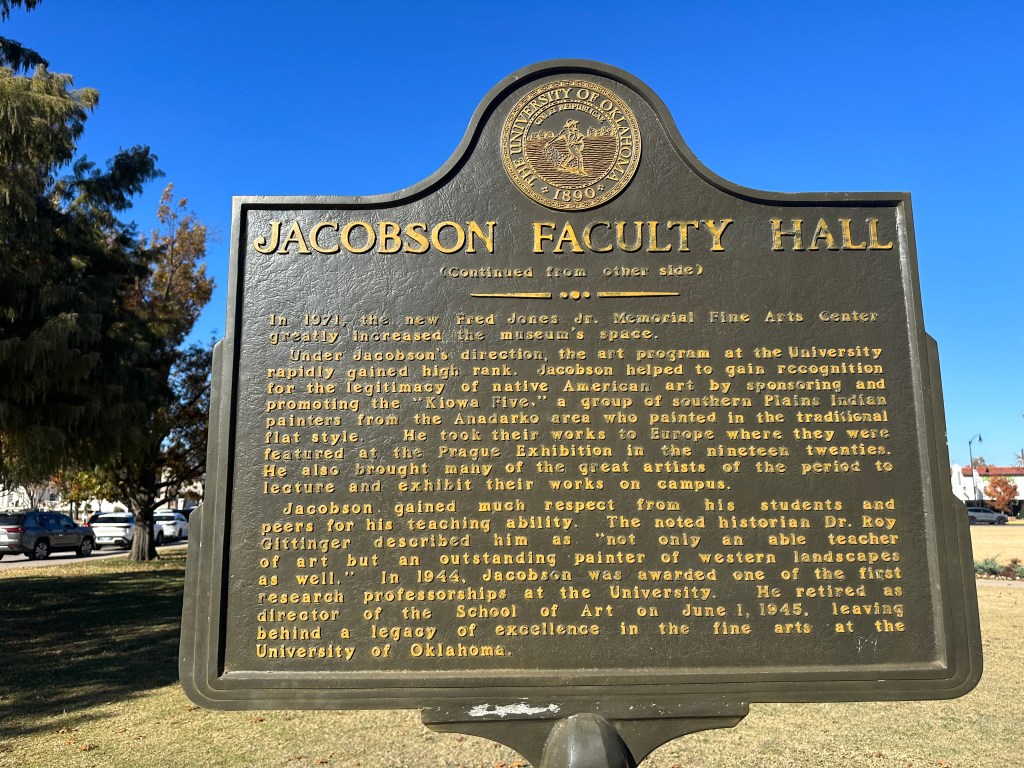
Jacobson Faculty Hall

“This building is named in honor of Oscar Brousse Jacobson, first director of the School of Art. On July 1, 1917, President Stratton D. Brooks received appropriations for three new buildings on the Norman campus, which included what are now Holmberg, Carpenter, and Jacobson Halls. Occupied for the first time in the 1919-1920 academic year, Jacobson Faculty Hall (known then as the New Library) became the University’s second library building. In 1930, it was remodeled to provide quarters for the School of Art. The building was officially renamed Jacobson Faulty Hall in 1992 to honor the 50th anniversary of the Faculty Senate.
Jacobson was born on May 16, 1882, in Westervik, Sweden. He trained at Bethany College, Kansas and at Yale University, and joined the faculty in 1915. He was appointed in 1924 to be the first director of the School of Painting & Design, which became known as the School of Art in 1930. In 1936, the Board of Regents approved the establishment of the Museum of Art, appointing Jacobson as its director. The museum occupied two rooms in the Art Building and quickly received valuable collections. In 1971, the new Fred Jones Jr. Memorial Fine Arts Center greatly increased the museum’s space.
Under Jacobson’s direction, the art program at the University rapidly gained high rank. Jacobson helped to gain recognition for the legitimacy of native American art by sponsoring and promoting the “Kiowa Five,” a group of southern Plains Indian painters from the Anadarko area who painted in the traditional flat style. He took their works to Europe where they were featured at the Prague Exhibition in the nineteen twenties. He also brought many of the great artists of the period to lecture and exhibit their works on campus.
Jacobson gained much respect from his students and peers for his teaching ability. The noted historian Dr. Roy Gittinger described him as “not only an able teacher of art but an outstanding painter of western landscapes as well.” In 1944, Jacobson was awarded one of the first research professorships at the University. He retired as director of the School of Art on June 1, 1945, leaving behind a legacy of excellence in the fine arts at the University of Oklahoma.”
Buchanan Hall


“This building is named in honor of James S. Buchanan, fourth president of the University. Buchanan was born on October 14, 1864 in Franklin, Tennessee, not far from the Civil War battle that was engaged there at the time. He graduated from Cumberland University, served as the Assistant State Superintendent of Schools for Tennessee, and taught for a year at what is now the University of Central Oklahoma in Edmond before coming to the University of Oklahoma in 1895 to teach history. In 1906, he served as a delegate to the Oklahoma Constitutional convention, and he became the first dean of the College of Arts and Sciences in 1909. When President Stratton D. Brooks departed in 1923, he was made the acting president, and the title “acting” was removed in 1924. In 1925, Buchanan became the university’s vice president, a post which he held until his death on March 20, 1930.
Throughout his career. Buchanan was loved by students and faculty alike, who affectionately referred to him as “Uncle Buck.” He was a sparkling conversationalist and after dinner speaker, as well as an effective administrator. During his brief term as president, he organized the University’s first formal campaign for private support, the fruits of which would eventually finance the Oklahoma Memorial Union and Memorial Stadium. He successfully steered the University through one of the most troubled periods in Oklahoma’s politics. In 1929, the State Historical Society and the Oklahoma Memorial Association recognized him as one of the outstanding citizens in Oklahoma’s history. President David Ross Boyd later echoed this sentiment by writing, “Few men in Oklahoma had a wider circle of good friends. He enjoyed a long and very important service to the University and to the State.”
Buchanan Hall was built in 1926 as the Liberal Arts Building, and has housed various administrative offices throughout its history.”
*I will continue updating this list of historic markers at OU as I find them!

 The Active Historian
Leave a reply to Museums & Historic Sites to Visit in Norman! – The Active Historian Cancel reply