
Hey, friend! Welcome back to another post. Today, I want to show you the Blue Whale located in Catoosa, Oklahoma. Let’s get started!
History of the Blue Whale
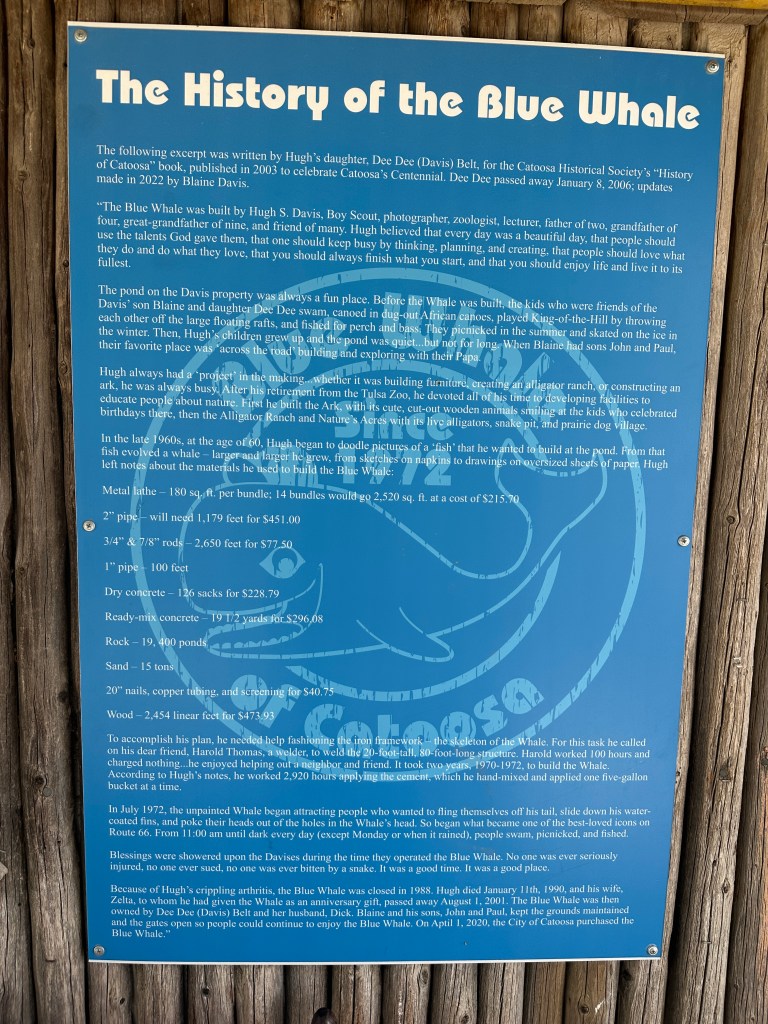
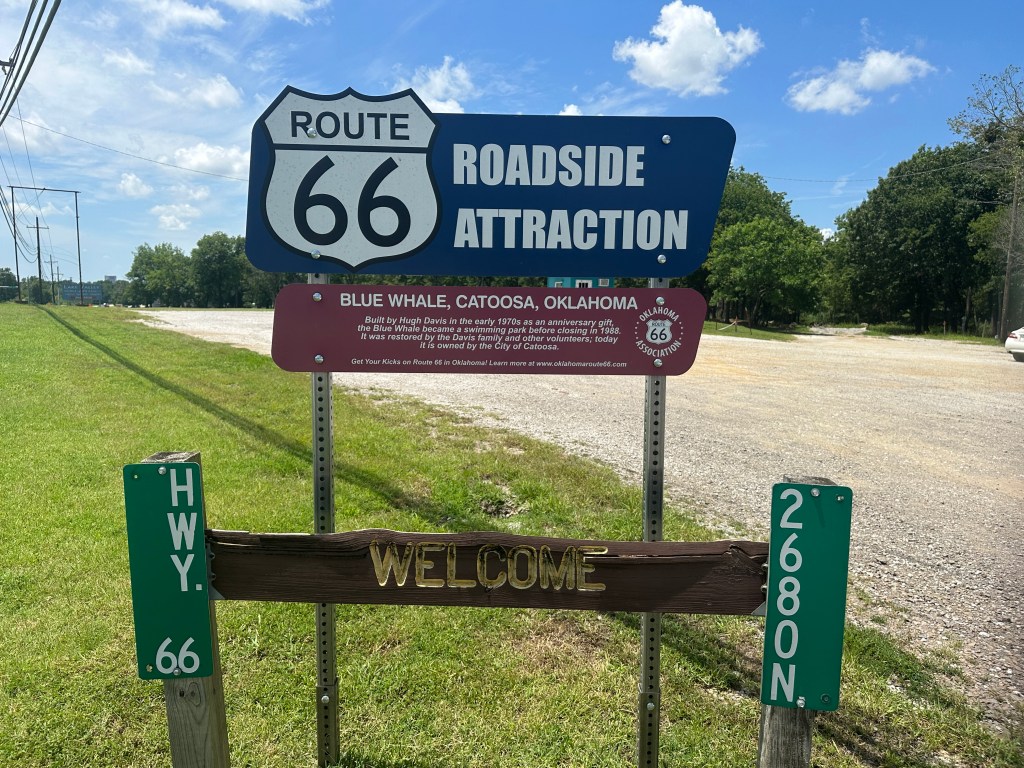
The above photo of the marker reads,
“The following excerpt was written by Hugh’s daughter, Dee Dee (Davis) Belt, for the Catoosa Historical Society’s “History of Catoosa” book, published in 2003 to celebrate Catoosa’s Centennial. Dee Dee passed away January 8, 2006; updates made in 2002 by Blaine Davis.
The Blue Whale was built by Hugh S. Davis, Boy Scout, photographer, zoologist, lecturer, father of two, grandfather of four, great-grandfather of nine, and friend of many. Hugh believed that every day was a beautiful day, that people should use the talents God gave them, that one should keep busy by thinking, planning and creating, that people should love what they do and do what they love, that you should always finish what you start, and that you should enjoy life and live it to its fullest.
The pond on the Davis property was always a fun place. Before the Whale was built, the kids who were friends of the Davis’ son Blaine and daughter Dee Dee swam, canoed in dug-out African canoes, played King-of-the-Hill by throwing each other off the large floating rafts, and fished for perch and bass. They picnicked in the summer and skated on ice in the winter. Then, Hugh’s children grew up and the pond was quiet… but not for long. When Blaine had sons John and Paul, their favorite place was ‘across the road’ building and exploring with their Papa.
Hugh always had a ‘project’ in the making… whether it was building furniture, creating an alligator ranch, or constructing an ark, he was always busy. After his retirement from the Tulsa Zoo, he devoted all of his time to developing facilities to educate people about nature. First he built the Ark, with its cute, cut-out wooden animals smiling at the kids who celebrated birthdays there, then the Alligator Ranch and Nature’s Acres with its live alligators, snake pit, and prairie dog village.
In the late 1960s, at the age of 60, Hugh began to doodle pictures of a ‘fish’ that he wanted to build at the pond. From that fish evolved a whale – larger and larger he grew, from sketches on napkins to drawings on oversized sheets of paper. Hugh left notes about the materials he used to build the Blue Whale:
Metal lathe – 180 sq. ft. per bundle; 14 bundles would go 2,520 sq. ft. at a cost of $215.70
2″ pipe – will need 1,179 feet for $451.00
3/4″ & 7/8″ rods – 2,650 feet for $77.50
1″ pipe – 100 feet
Dry concrete – 126 sacks for $228.79
Ready-mix concrete – 19 1/2 yards for $296.08
Rock – 19,400 pounds
Sand – 15 tons
20″ nails, copper tubing, and screening for $40.75
Wood – 2,454 linear feet for $473.93
To accomplish his plan, he needed help fashioning the iron framework – the skeleton of the Whale. For this task he called on his dear friend, Harold Thomas, a welder, to weld the 20-foot-tall, 80-foot-long structure. Harold worked 100 hours and charged nothing… he enjoyed helping out a neighbor and friend. It took two years, 1970-1972, to build the Whale. According to Hugh’s notes, he worked 2,920 hours applying cement, which he hand-mixed and applied one five-gallon bucket at a time.
In July 1972, the unpainted Whale began attracting people who wanted to fling themselves off his tail, slide down his water-coated fins, and poke their heads out of the holes in the Whale’s head. So began what became one of the best-loved icons on Route 66. From 11:00 am until dark every day (except Monday or when it rained), people swam, picnicked, and fished.
Blessings were showered upon the Davises during the time they operated the Blue Whale. No one was ever seriously injured, no one ever sued, no one was ever bitten by a snake. It was a good time. It was a good place.
Because of Hugh’s crippling arthritis, the Blue Whale was closed in 1988. Hugh died January 11th, 1990, and his wife, Zelta, to whom he had given the Whale as an anniversary gift, passed away August 1, 2001. The Blue Whale was then owned by Dee Dee (Davis) Belt and her husband, Dick. Blaine and his sons, John and Paul, kept the grounds maintained and the gates open so people could continue to enjoy the Blue Whale. On April 1, 2020, the City Council of Catoosa purchased the Blue Whale.”
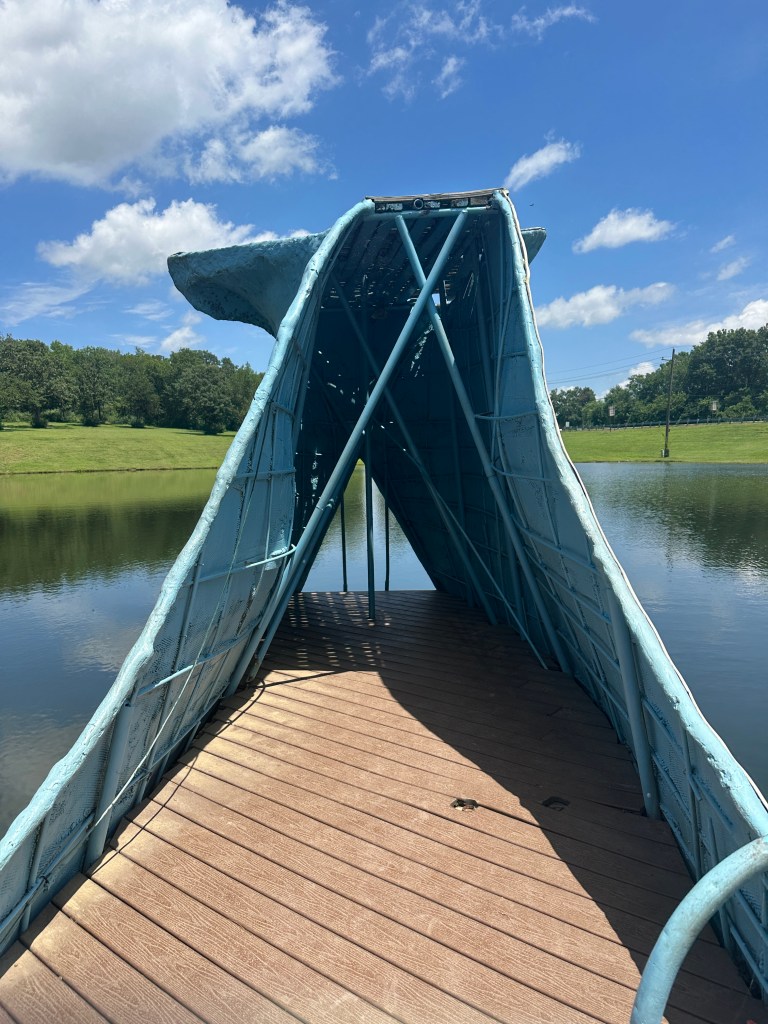
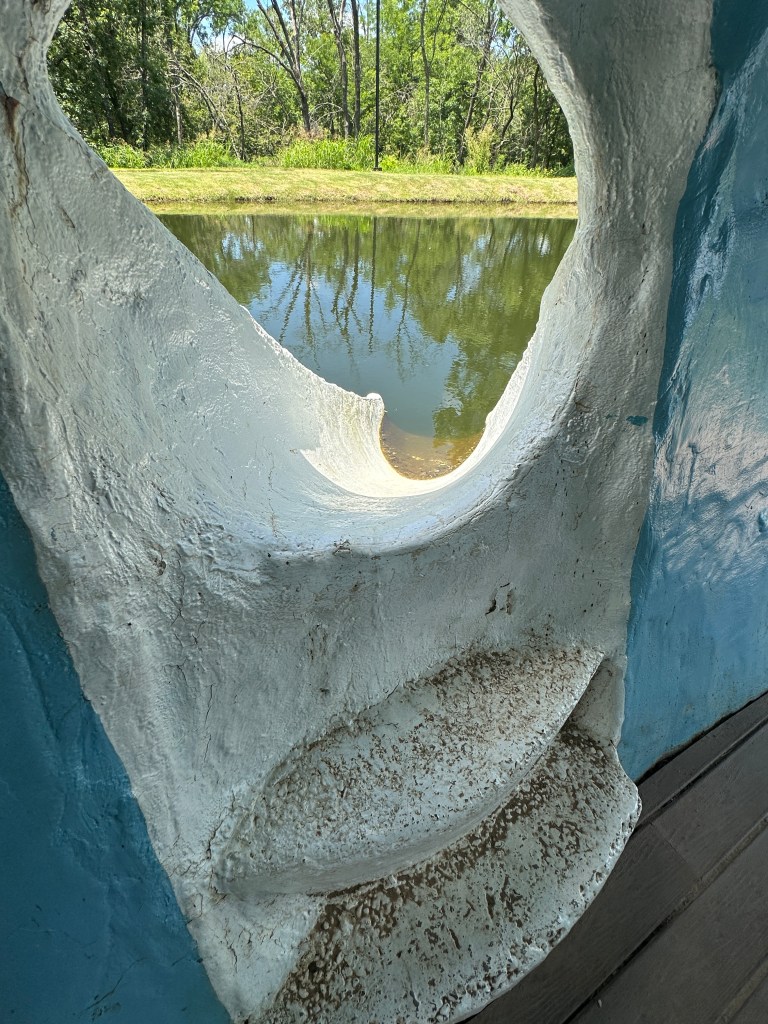
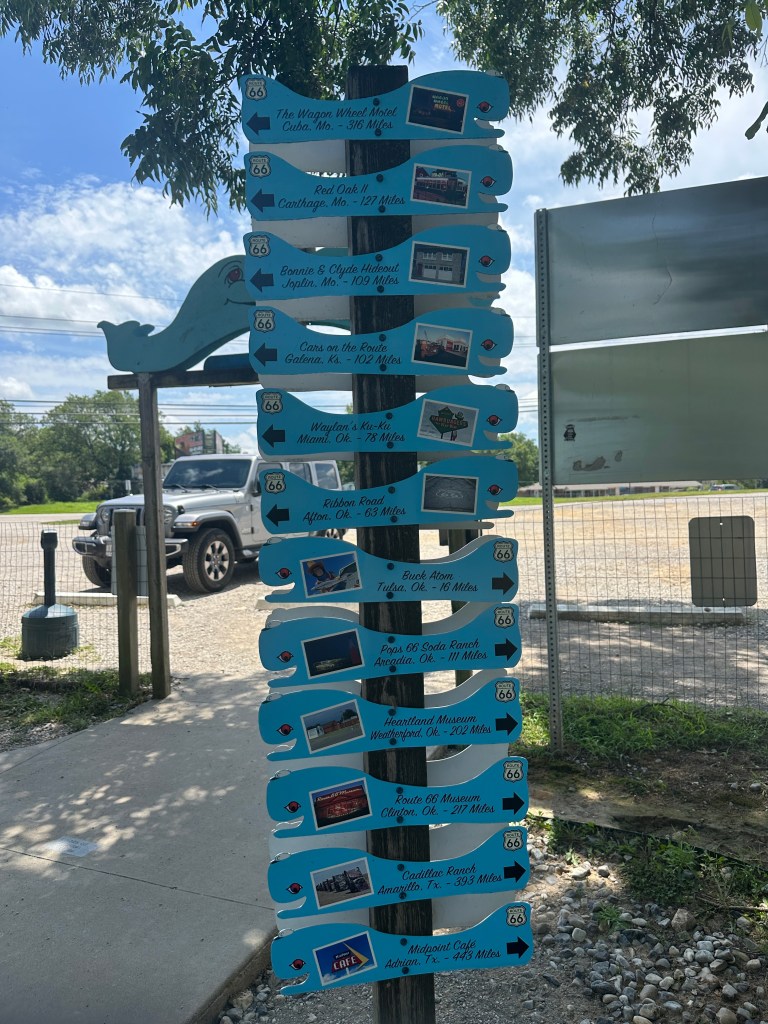
The Blue Whale Today



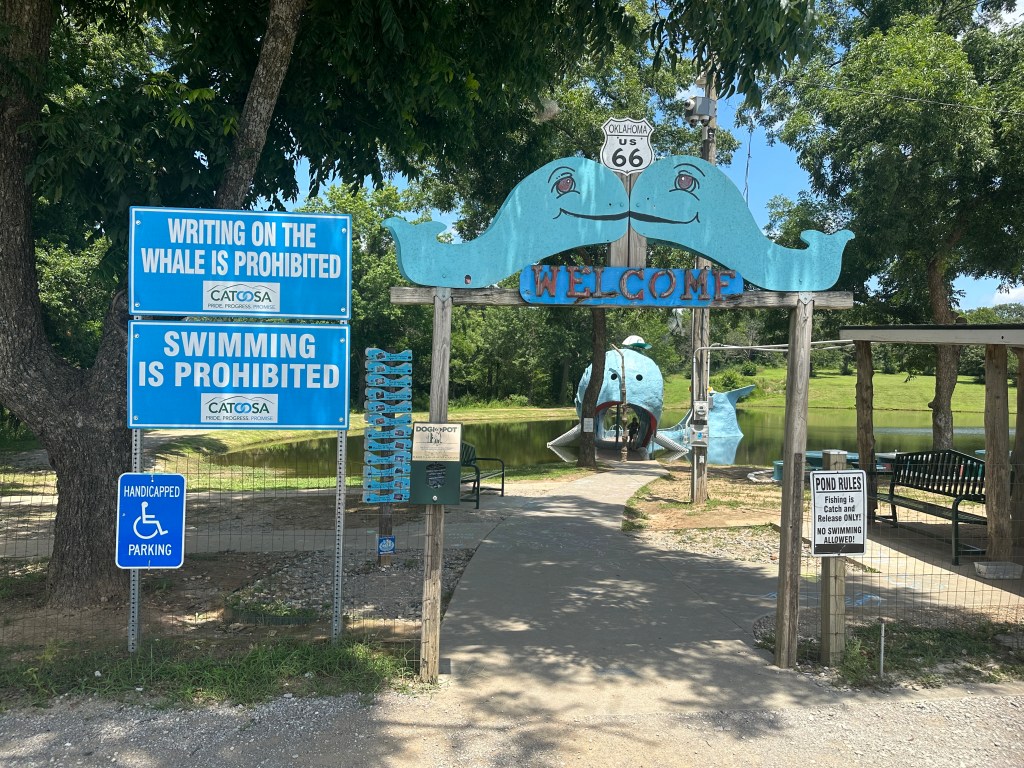

Concluding Thoughts
I had seen pictures of the Blue Whale for years and it’s a stop on the Oklahoma Route 66 Passport. I was in Catoosa for a conference and decided to pop by after I was finished.
This was a cool place to see, but I’m not sure I would drive out of my way to visit. It’s definitely a neat thing to stop and see if you’re passing through Catoosa along Route 66!
Happy Traveling, friend! I’ll talk to ya soon 🙂
Visit
2600 OK-66,
Catoosa, OK 74015

Sources
Signs at the Blue Whale

 The Active Historian
Leave a reply to Discover Catoosa's Historic Marker: The Old Star Mail Route Cancel reply