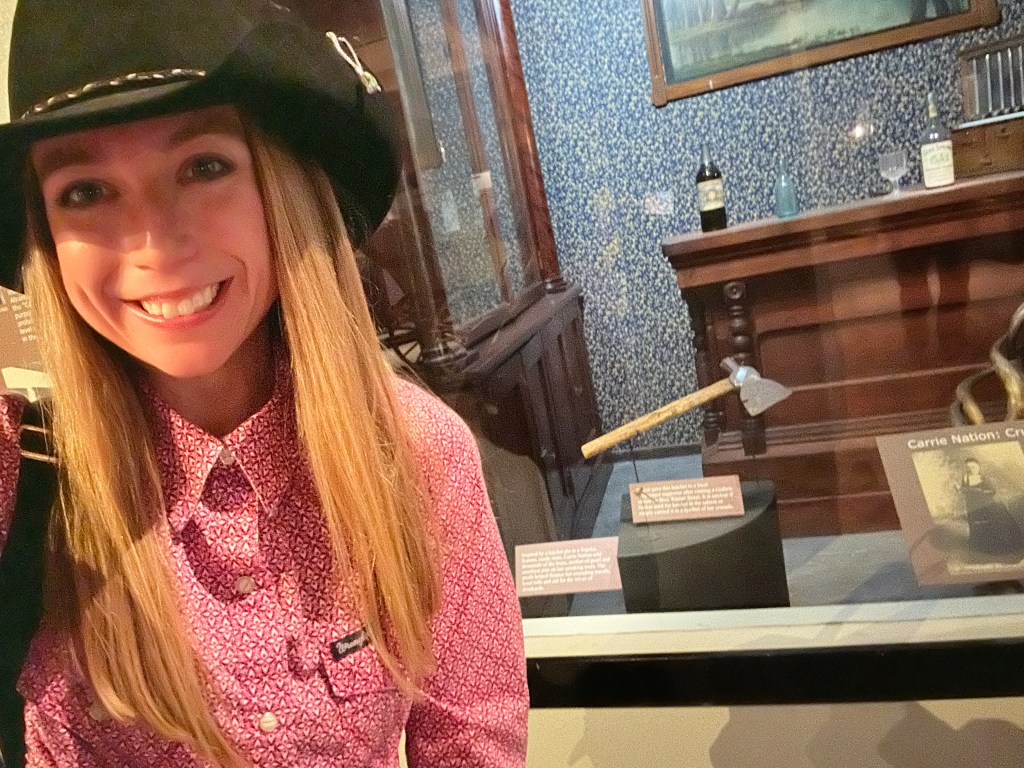
I’m not going to lie to you… the story of Carry Nation is one of my favorites to tell. She was a hatchet-wielding temperance leader in the late-nineteenth and early-twentieth centuries who mainly operated in Kansas and Oklahoma. She would smash up saloons in Kansas with her hatchet in the name of temperance. These episodes were known as ‘hatchetations.’
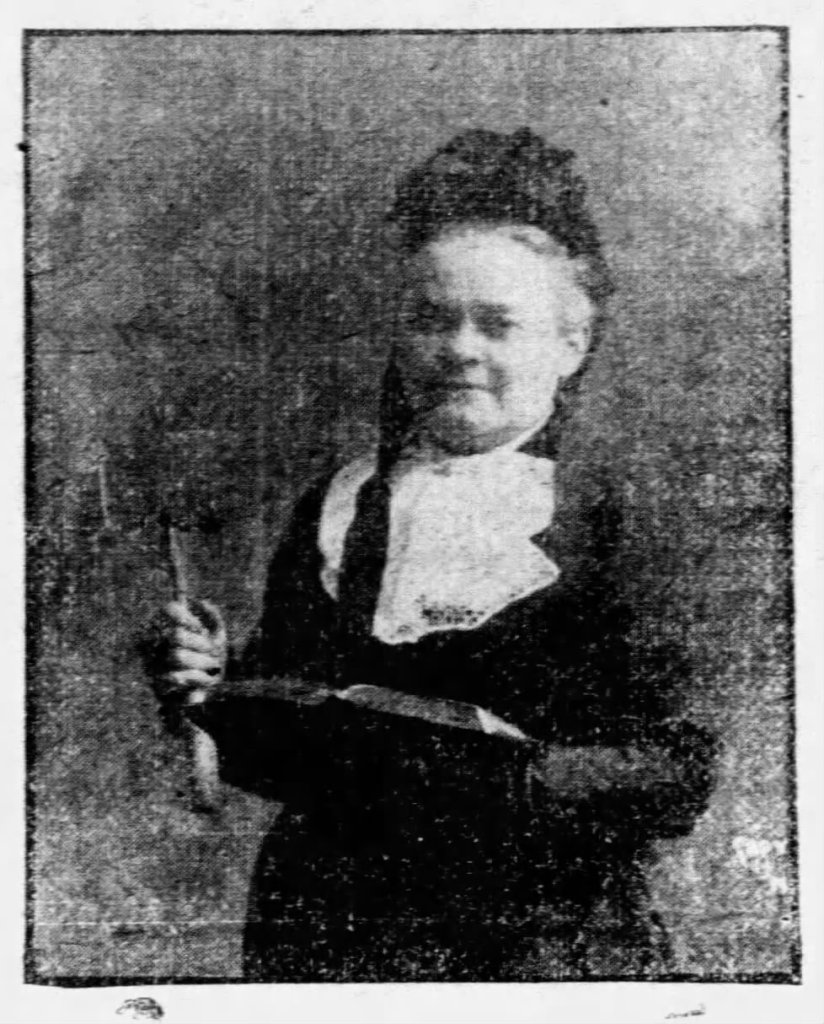
But first, let’s learn more about Carry’s life before she smashed saloons. Carry Amelia Moore was born on November 25, 1846, in Kentucky to George and Mary Campbell Moore. She was the oldest of six children. The Moore family moved to Belton, Missouri in 1854 and they moved again to Texas in 1862. There was a lot of turmoil with the Civil War in the United States. Carry served as a nurse to soldiers after a raid in Independence, Missouri.
Carry married Charles Gloyd, a Union doctor during the Civil War in November 1867. Her first husband died of alcoholism 16 months into their marriage in 1869. This led to her hatred of liquor and a lifelong devotion to the idea of prohibition. She was forced to raise their daughter, Charlien alone.
Carry was able to sell land given to her by her father and he husband’s medical equipment from his job as a physician. This gave her enough money to build a small house in Holden, Missouri. She lived with her young daughter and mother-in-law.
Carry attended the Normal Institute in Warrensburg, Missouri from 1871-1872 earning a teaching certificate. She then taught in Holden for the next four years.
She married her second husband on December 30, 1874. David Nation was a fellow widower with five children of his own and he was 19 years older than Carry. They lived in Missouri for a time before moving to Texas. Carry’s faith was very important to her and she began having visions while living in Texas.
Carry Nation was an outspoken woman who believed strongly in the name of her Christian faith. She once described herself as a “bulldog running along at the feet of Jesus, barking at what He doesn’t like.”
The family moved to Medicine Lodge, Kansas in 1889 when David Nation became a preacher. Carry began serving the community and became known as “Mother Nation.” She founded a Women’s Christian Temperance Union (WCTU) chapter in Medicine Lodge, Kansas. She lectured on prohibition and the problems caused by alcohol. She also began her saloon smashing during this time. Her second husband eventually filed for a divorce in 1901 because she was never home due to her saloon smashing and lecturing. Her saloon smashing had landed her in jail a couple of times.
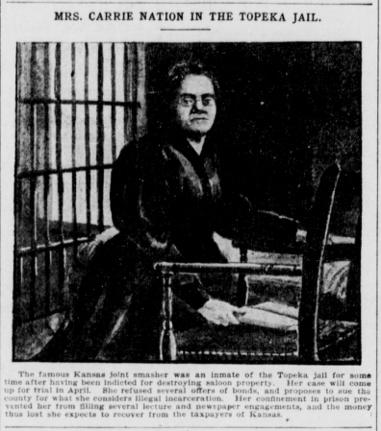
Carry was given a medallion by the Kansas WCTU that was inscribed, “To the Bravest Woman in Kansas.” People began to follow her in larger numbers and she sold the small hatchet pins to raise money.
Carry Nation moved to Guthrie, Oklahoma four years after her divorce. This was an intentional move because Guthrie was the capitol of Oklahoma Territory. She wanted to ensure that Oklahoma entered the Union as a dry state. From 1905-1906, she went on a lecture tour and published, “The Hatchet.” She was successful in her efforts as Oklahoma entered the Union on November 16, 1907, as a dry state.
In addition to her work on prohibition, Carry Nation was a suffragist who believed that women should have the right to vote.
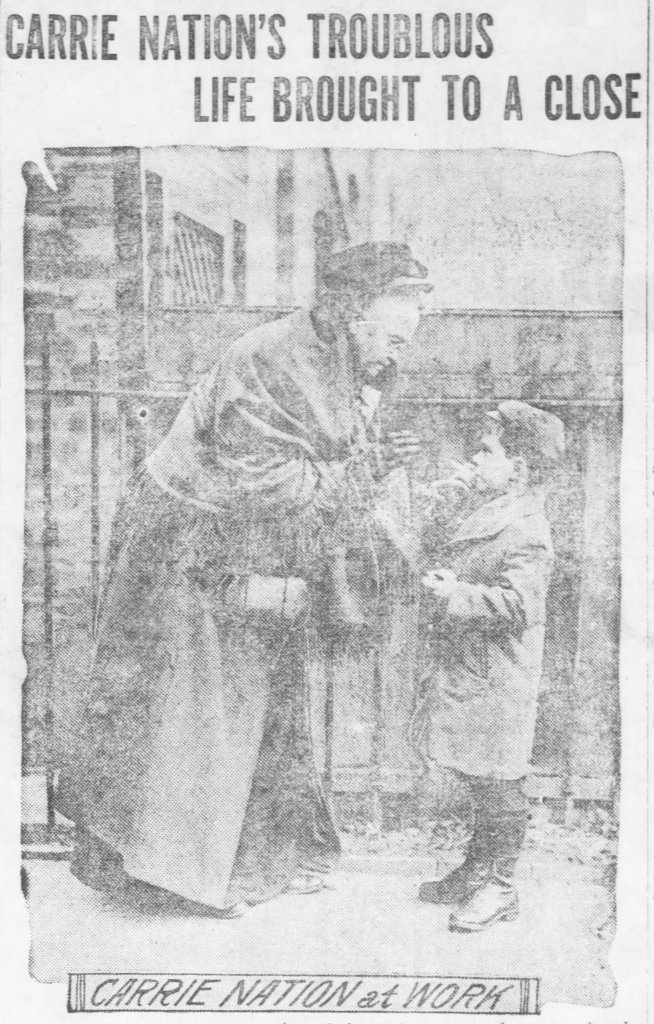
Carry Nation passed away four years later on June 2, 1911 in Leavenworth, Kansas. She was buried in Belton, Missouri alongside her parents.
Carry Nation at the Museums in Oklahoma
Interpretive Panel Transcription
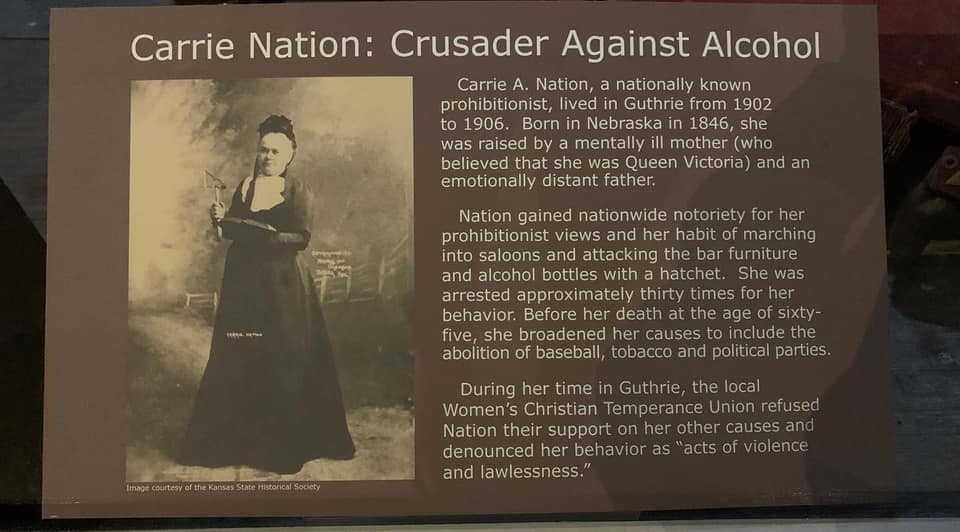
The panel at the Oklahoma Territorial Museum in Guthrie reads: “Carrie Nation: Crusader Against Alcohol”
“Carrie A. Nation, a nationally known prohibitionist, lived in Guthrie from 1902 to 1906. Born in Nebraska in 1846, she was raised by a mentally ill mother (who believed she was Queen Victoria) and an emotionally distant father.
Nation gained notoriety for her prohibitionist views and her habit of marching into saloons and attacking the bar furniture and alcohol bottles with a hatchet. She was arrested approximately thirty times for her behavior. Before her death at the age of sixty-five, she broadened her causes to include the abolition of baseball, tobacco, and political parties.
During her time in Guthrie, the local Women’s Christian Temperance Union refused Nation their support on her causes and denounced her behavior as ‘acts of violence and lawlessness.’”
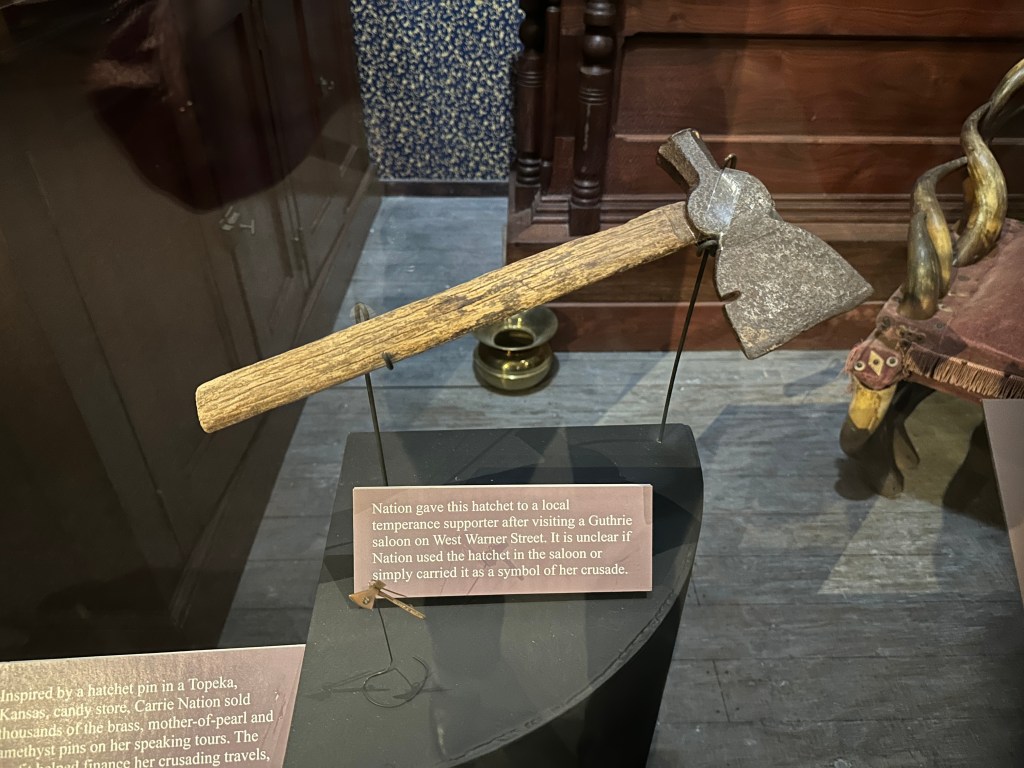
One of Carrie Nation’s hatchets and hatchet pins are on exhibition at the Oklahoma Territorial Museum in Guthrie, Oklahoma. Read this blog post to learn more!
You can also see some of Carrie Nation’s things at the Oklahoma History Center in Oklahoma City. Read this blog post to learn more!
Sources
Museum Panels at the Oklahoma History Center (Oklahoma City).
Museum Panels at Oklahoma Territorial Museum (Guthrie).
Secondary Sources
Websites
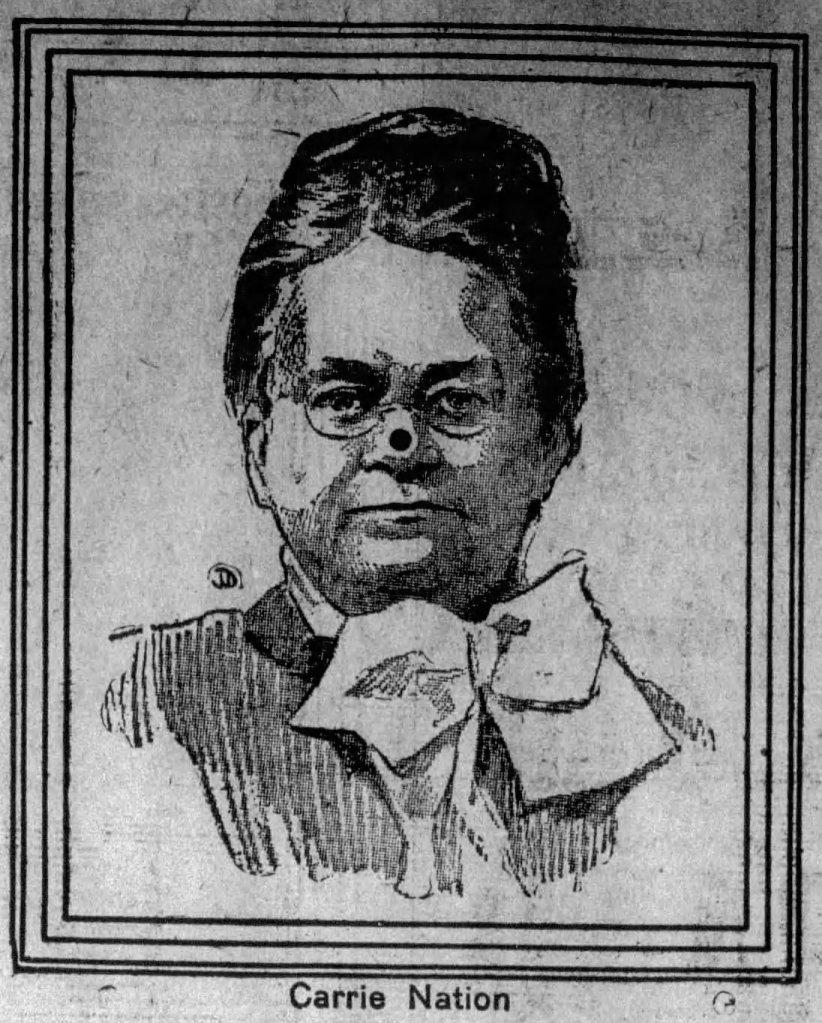
“Carrie Nation: Topics in Chronicling America.” Library of Congress.
Linda D. Wilson. “Nation, Carry Moore.” The Encyclopedia of Oklahoma History and Culture. Oklahoma Historical Society.
Margot Ford McMillen & Carlynn Trout. “Carry A. Nation.” State Historical Society of Missouri.
“Carrie Nation.” Visit Topeka.
“Carry Nation.” Prohibition A Film by Ken Burns & Lynn Novick. PBS.
Primary Sources
Newspapers
“Mrs. Carrie Nation in the Topeka Jail.” Crittenden Press (Marion, Kentucky), March 14, 1901.
“Carrie Nation’s Troublous Life Brought To A Close.” The Leavenworth Post (Leavenworth, Kansas), June 10, 1911.
“Death Calls Carrie Nation.” The Great Falls Leader (Great Falls, Montana), June 10, 1911.
“Carrie Nation To Be Buried in Richmond, MO.” The Atlanta Journal (Atlanta, Georgia), June 11, 1911.
“Carrie Nation Passes Away.” The Clay Center Dispatch (Clay Center, Kansas), June 15, 1911.
*All newspaper clippings in this blog post were pulled from newspapers.com. I am not affiliated with this website. I just wanted to let you know where I found my digitized sources.


Leave a comment