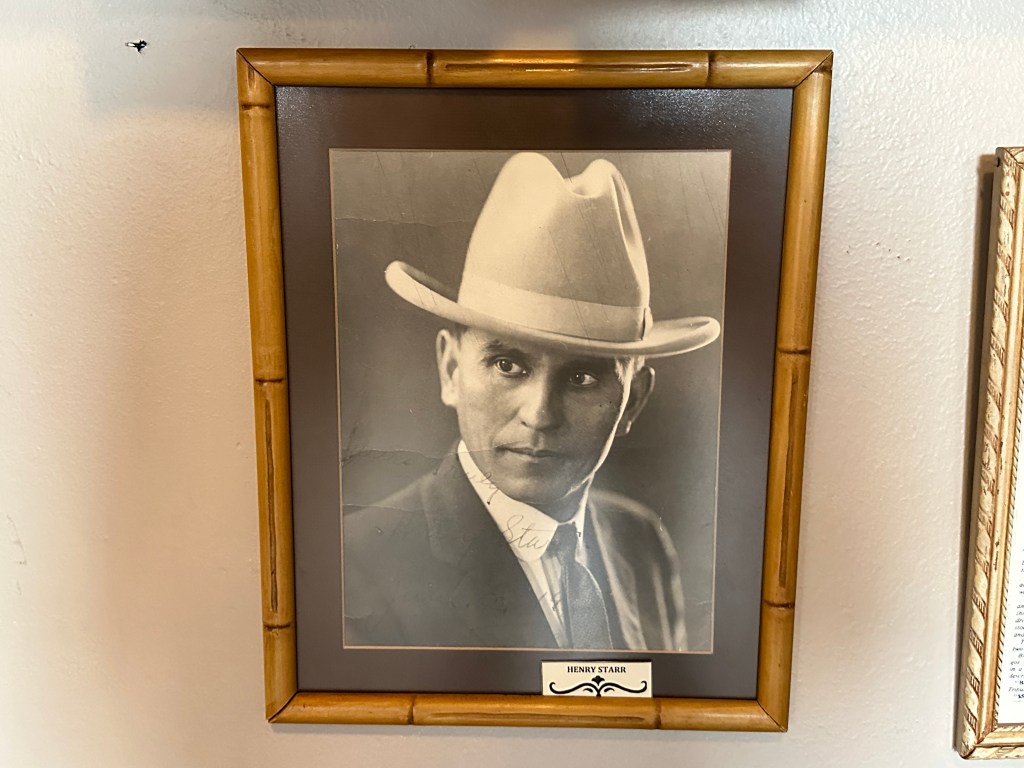
Henry Starr was born in Fort Gibson, Indian Territory (later Oklahoma) on December 2, 1873. He received a little bit of education and then began working as a cowboy. He was highly intelligent and continued learning throughout his life. In his teenage years, he was falsely accused of committing two crimes he didn’t commit. Because he was taken to the Fort Smith prison he developed a reputation as a criminal and later resorted to a life of crime.
Henry Starr’s first crime was robbing the train depot at Nowata, Oklahoma in 1892. Floyd Wilson was hired to catch him. Henry Starr shot Wilson after he missed shooting him. Henry Starr claims that Floyd Wilson was the only person he killed.
Henry Starr and his gang robbed the People’s Bank on June 5, 1893, in Bentonville, Arkansas. No innocent bystanders were killed in the robbery. They got away.
In the latter part of 1893, Henry Starr was arrested in Colorado and sent to Fort Smith for trial. Judge Isaac Parker sentenced Starr to hang for shooting Floyd Wilson. Starr later appealed to the United States Supreme Court and it was determined that Starr had acted in self defense.
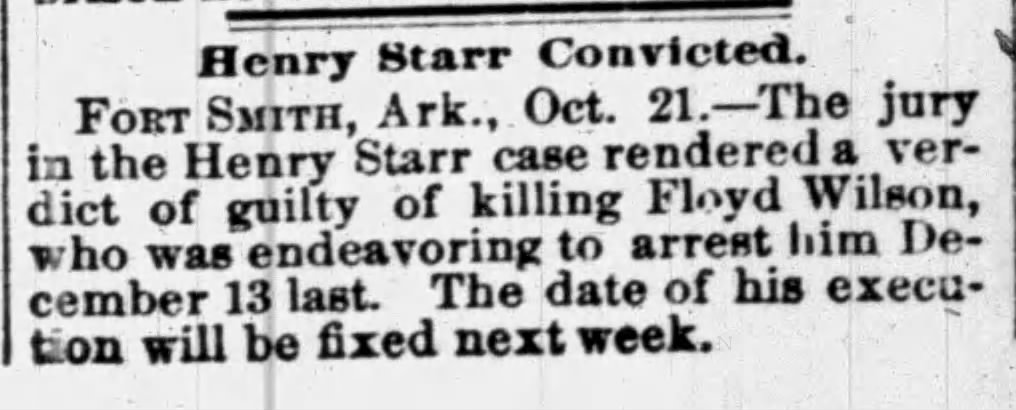
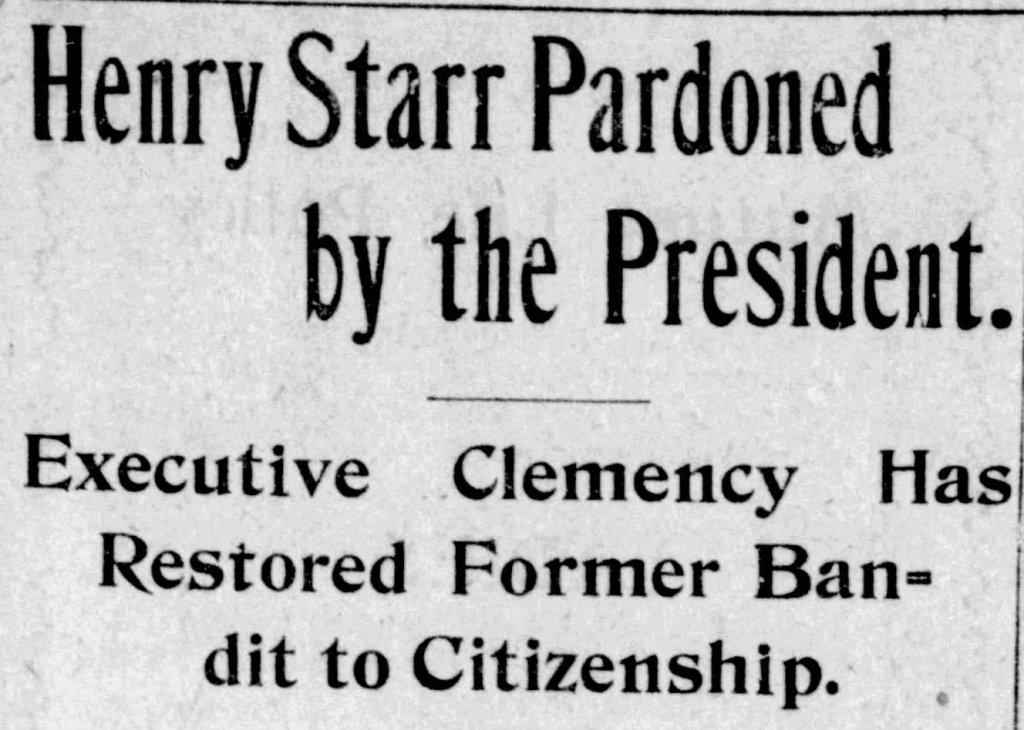
He was granted a retrial and while in prison he helped subdue a prison break by Cherokee Bill. Judge Parker tried Henry Starr again and sentenced him to hang for a second time. Henry Starr appealed to United States Supreme Court again and was granted another retrial. Judge Parker passed away before the third trial could take place. The new judge for the third trial, Judge Rogers, sentenced him to fifteen years after he plead guilty to manslaughter in 1898. He would serve his sentence at the Ohio State Penitentiary. Henry Starr was released on parole from the penitentiary in 1903. United States President Theodore Roosevelt pardoned him.
He married Ollie Griffin in September 1903 in Muskogee.
By 1908, he was back to robbing banks. He was caught in 1909 and sent to the Colorado State Penitentiary. He was released in 1913. During his time in Colorado, Henry Starr penned an autobiography: “Thrilling Events: Life of Henry Starr.”
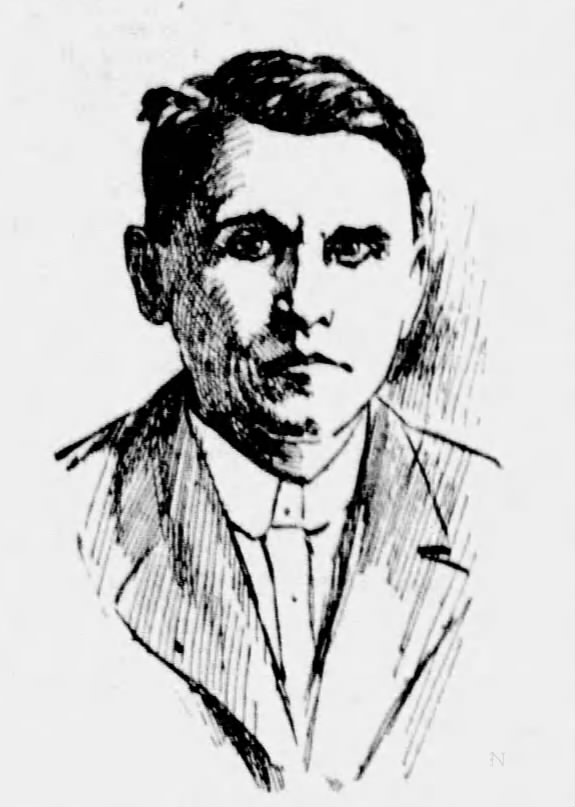
Once he was released, he tried to lead a normal life. Unfortunately, his criminal history made it hard for him to keep a job. He would be fired once his employers discovered who he was.
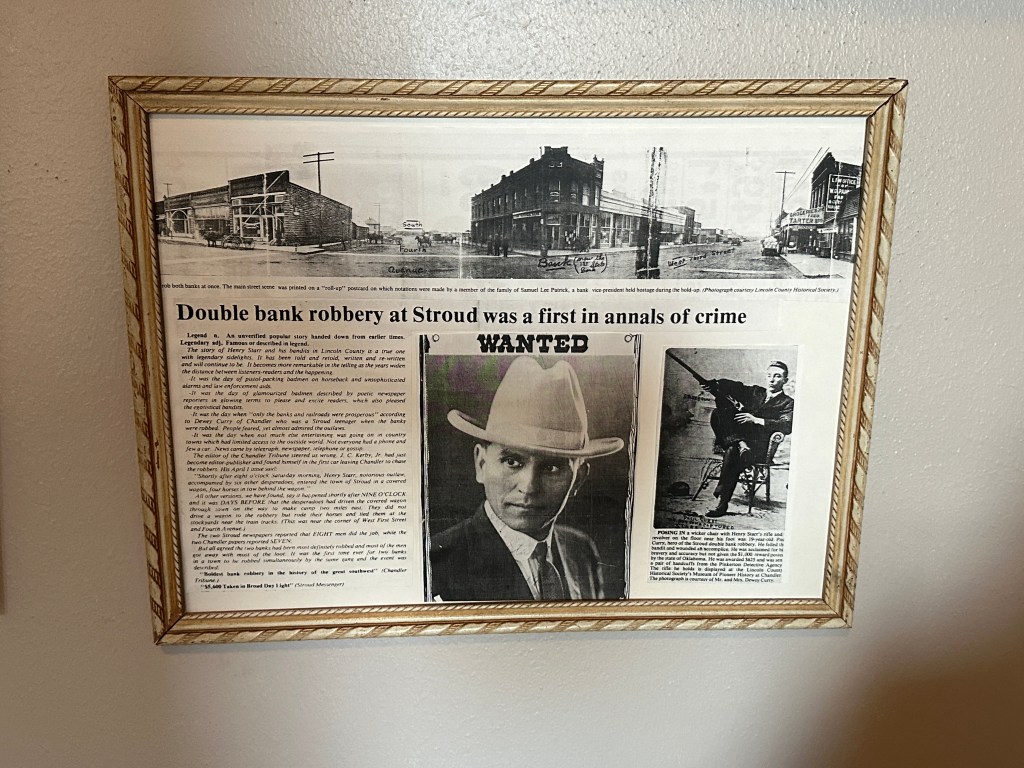
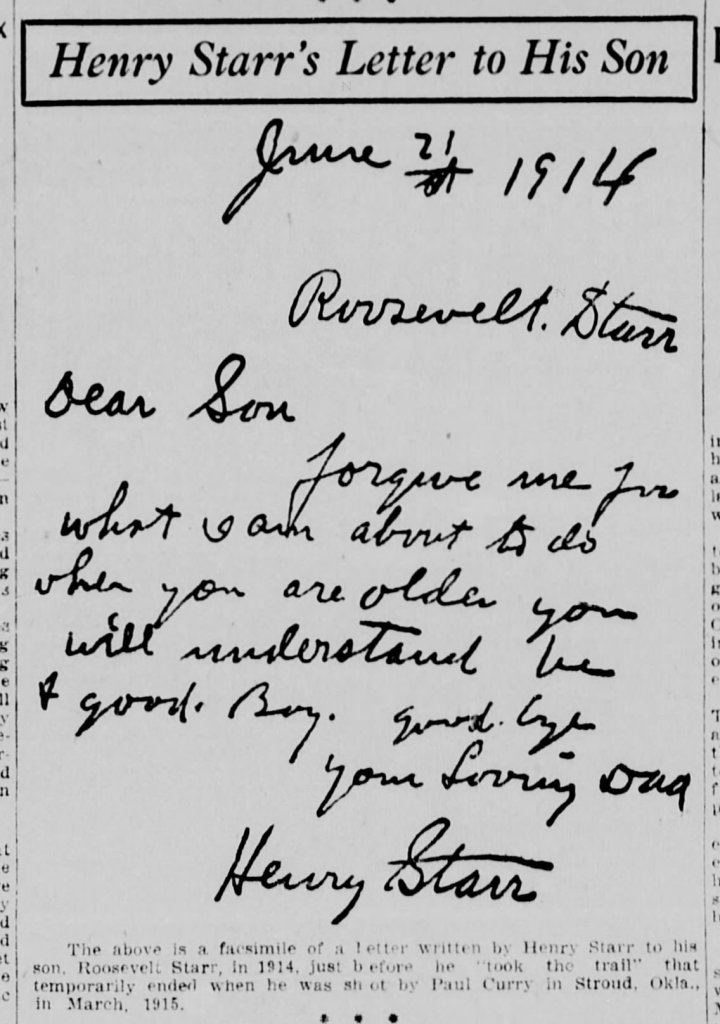
Moving to Tulsa in 1914, Henry Starr violated the terms of his parole. He then organized a series of bank robberies across Oklahoma. In 1915, he made history as the first person to successfully pull off a double bank robbery in Stroud, Oklahoma. Henry Starr was hit by a bullet in the hip as he tried to escape. A teenager was the one who hit Starr. He was caught and placed in the Oklahoma State Penitentiary at McAlester. He was paroled by Oklahoma Governor Robertson in 1919.
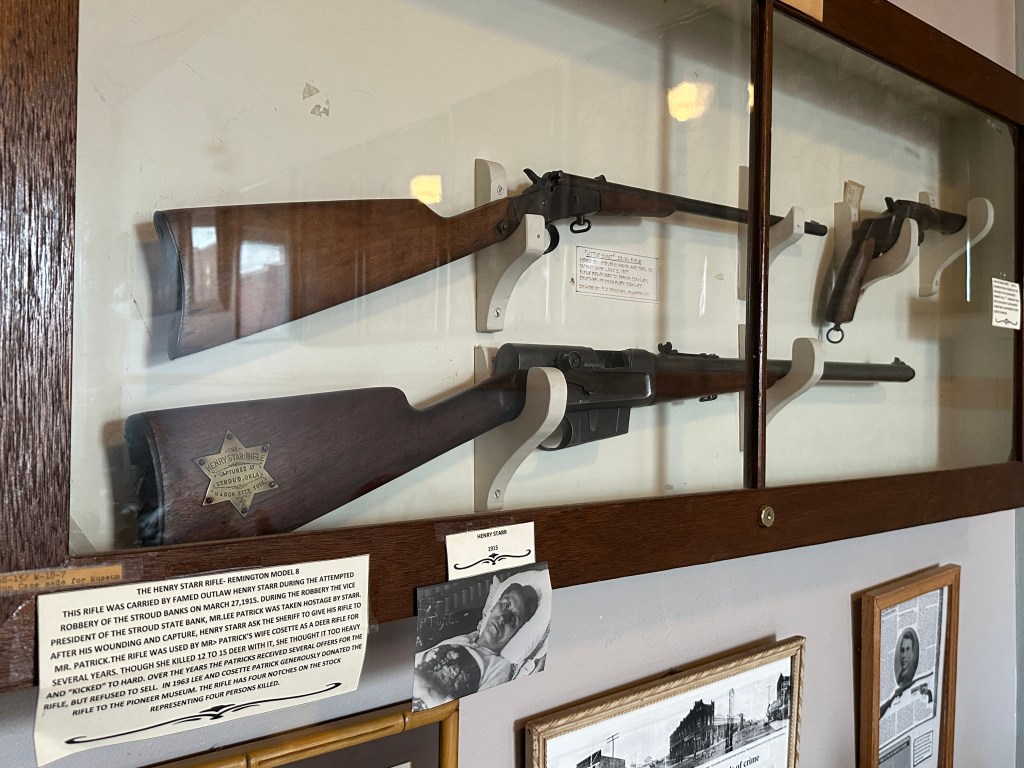
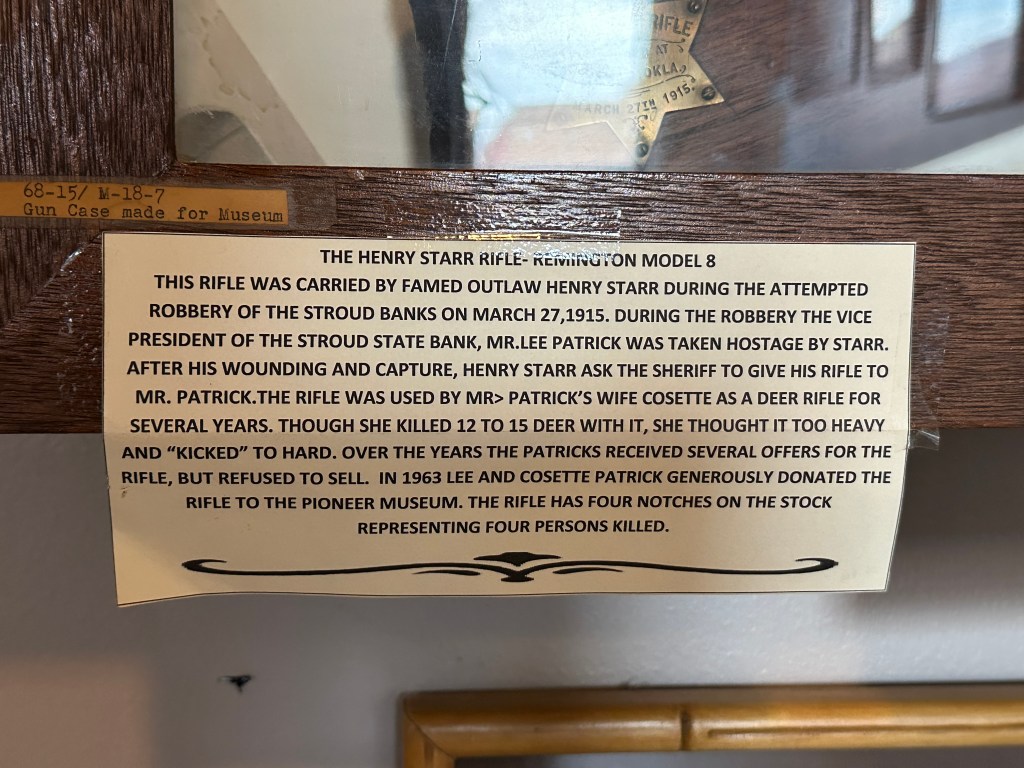
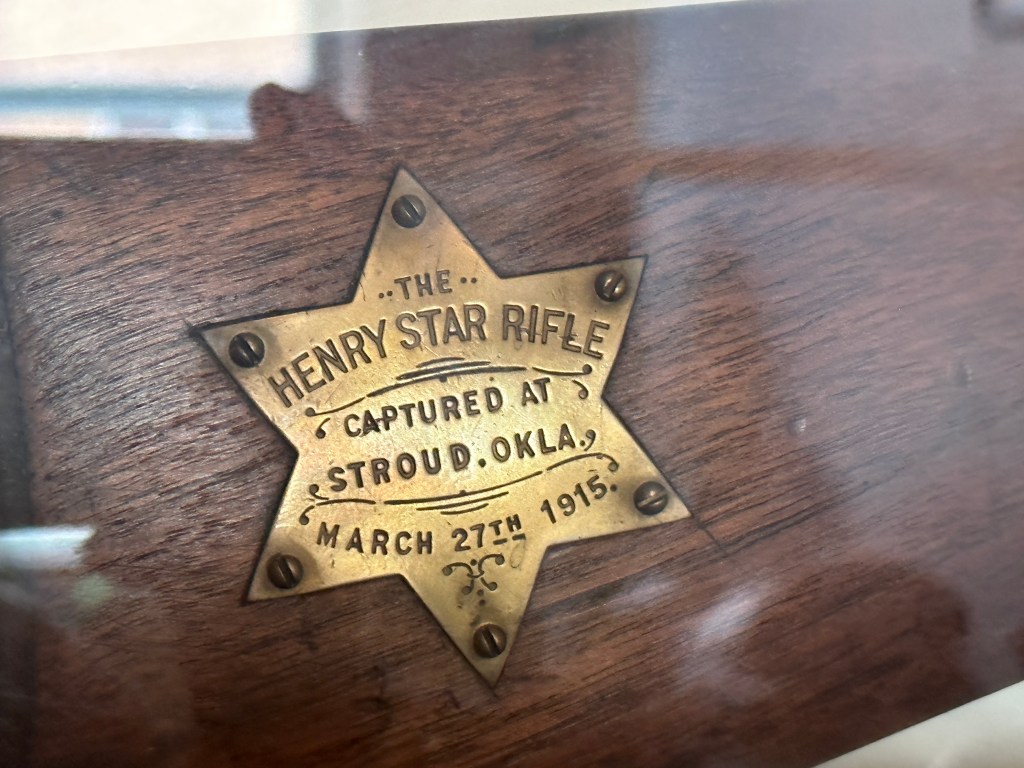
The rifle below was taken at the scene in Stroud and it is currently on display in the Lincoln County Museum of Pioneer History in Chandler, Oklahoma.
Henry Starr is quoted in the newspapers saying, “I’m through. If for no other reason that I know the game can’t be beaten. I’m going to prove to my son that I can go straight.” (The Florida Times Union, March 18, 1919)
In 1919, he decided to go into the silent film industry. He played himself in “A Debtor to the Law.” The Pan American Motion Picture Corporation produced the film. The film premiered in Muskogee, Oklahoma at the New Yale Theater.
Henry Starr and his gang robbed their final bank on February 18, 1921 in Harrison, Arkansas. Henry Starr was shot in the back during the robbery while his gang fled. He passed away four days later from his wounds and was buried in Dewey, Oklahoma. The inscription on his tombstone reads, “I’ve robbed more banks than any man in America.”
Sources
Secondary Sources
*The museum photos from this post are from the Chandler Historical Society Museum in Chandler, Oklahoma.
Websites
Jon D. May. “Starr, Henry (1873-1921).” The Encyclopedia of Oklahoma History and Culture. Oklahoma Historical Society.
Mark Archuleta. “Henry Starr (1873-1921).” The Encyclopedia of Arkansas.
Primary Sources
Newspapers
“Henry Starr Caught.” The Greeley News (Greely, Colorado), July 7, 1893.
“Henry Starr Convicted.” The Reedsburg Times-Press (Reedsburg, Wisconsin), October 26, 1893.
“Henry Starr Sentenced.” The Commercial Appeal (Memphis, Tennessee), January 16, 1898.
“Henry Starr Pardoned by the President.” Fort Smith News Record (Fort Smith, Arkansas), January 16, 1903.
“Henry Starr, Ex-Outlaw, Married.” The Odessan (Odessa, Missouri), September 19, 1903.
“Henry Starr’s Wild Life.” The Kansas City Times (Kansas City, Missouri), March 29, 1915.
“18 Year Old Boy At Stroud Ends Career of Henry Starr.” Hollis Post-Herald (Hollis, Oklahoma), April 1, 1915.
“Henry Starr Gets 25 Years.” The Morris News (Morris, Oklahoma), August 5, 1915.
“Henry Starr, Noted Bandit, Now Paroled.” The Florida Times-Union (Jacksonville, Florida), March 18, 1919.
“Henry Starr Gives Advice to Governor.” Dewey Globe (Dewey, Oklahoma), July 11, 1919.
“Starr Accused of Missouri Robbery.” The Oklahoma News (Oklahoma City, Oklahoma), February 19, 1921.


Leave a Reply