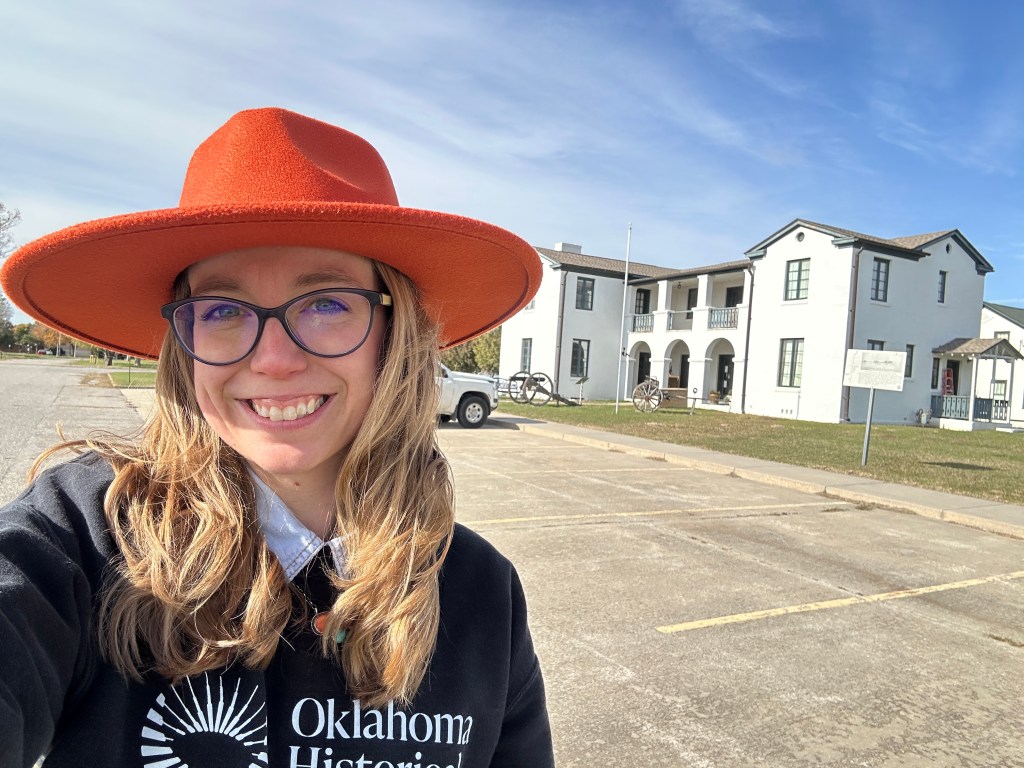
Hey, Friend! Welcome back to another post. Today, I want to show you around the historic Fort Reno in El Reno, Oklahoma. Let’s get started!
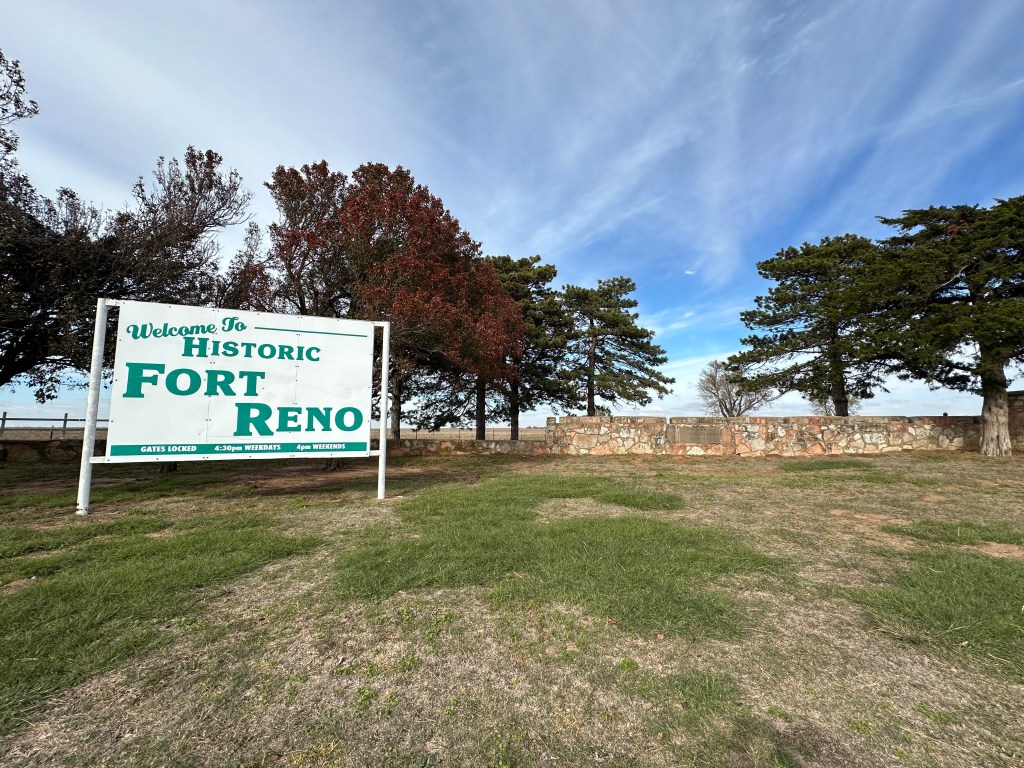
History
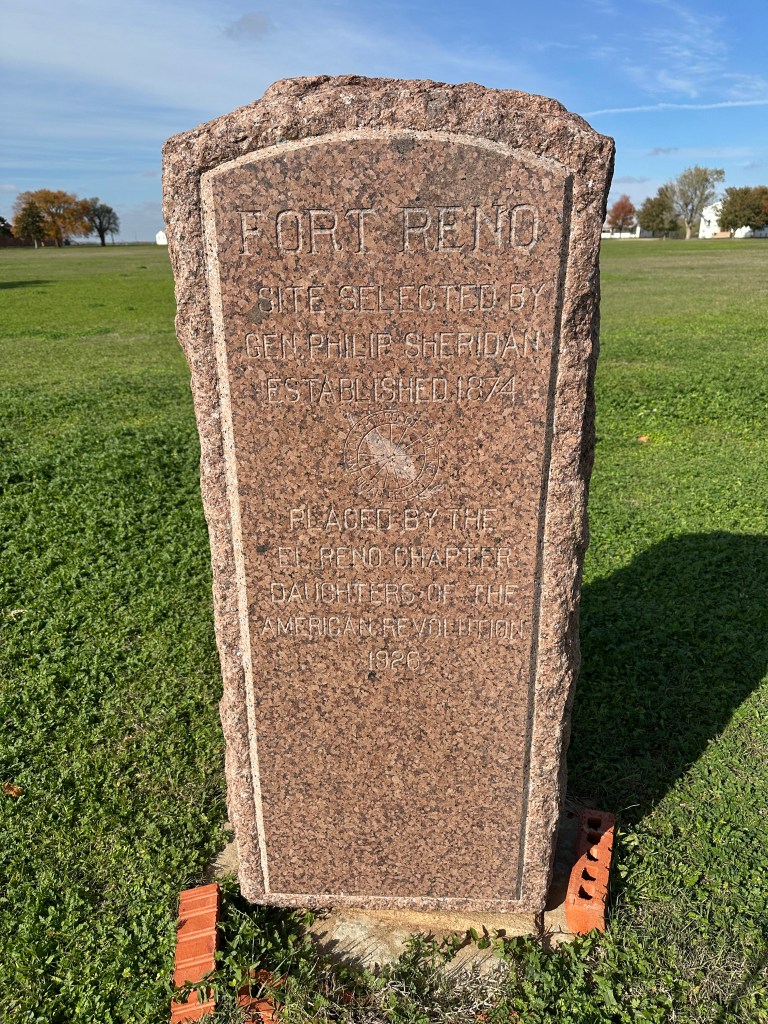
Fort Reno was commissioned in 1874 as a temporary camp. Their goal was to protect the Cheyenne-Arapaho Agency at Darlington. There were tensions surrounding the 1874 Red River War.
Fort Reno was named for General Jesse L. Reno who was killed during the Civil War at the Battle of South Maryland.
Fort Reno was enlarged on July 15, 1875 and established as a permanent camp. Over the next seven decades, Fort Reno served different purposes.
Many Indigenous peoples were forcibly relocated to Indian Territory. Lakota and Northern Cheyenne were forced to move near Fort Reno. In 1878, Dull Knife and Little Wolf led 300 people as they escaped. They made it to their homeland of Montana and evaded the Army.
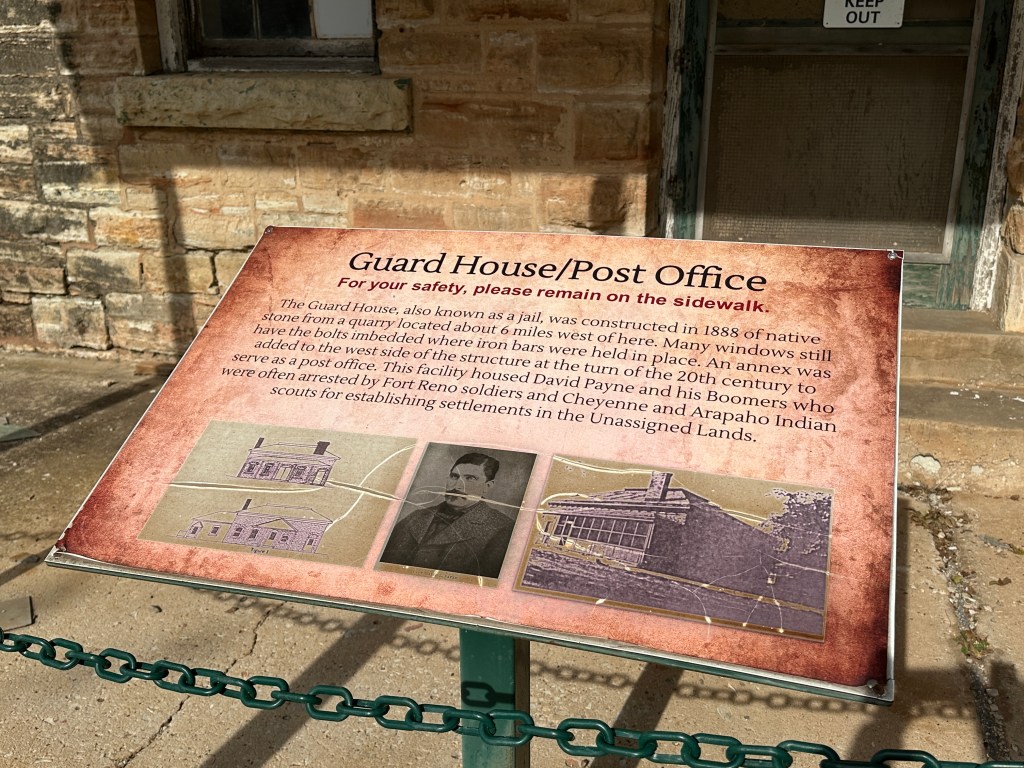
Soldiers at Fort Reno also supervised the Land Runs of 1889, 1892, and 1894. They arrested the ‘Boomers’ for settling early. David Payne and some of his men were held in the jail at Fort Reno.
In the early-twentieth century, Fort Reno became a remount station for raising livestock for military use. Thousands of horse and mules were trained at Fort Reno for use during World War I and World War II.
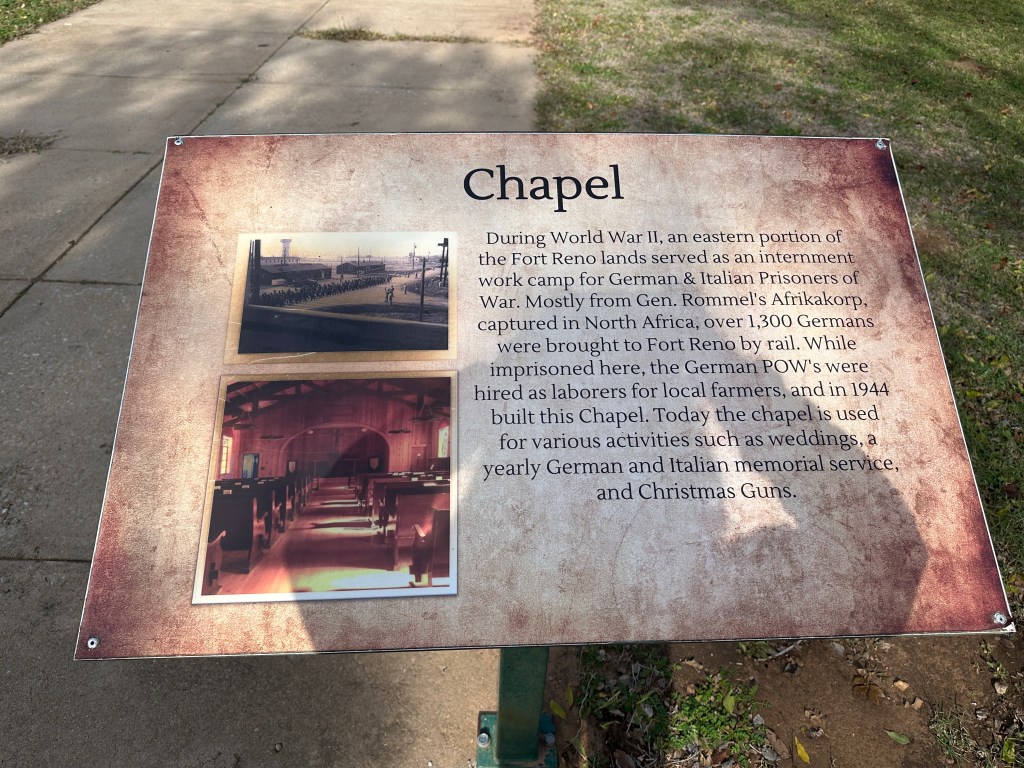
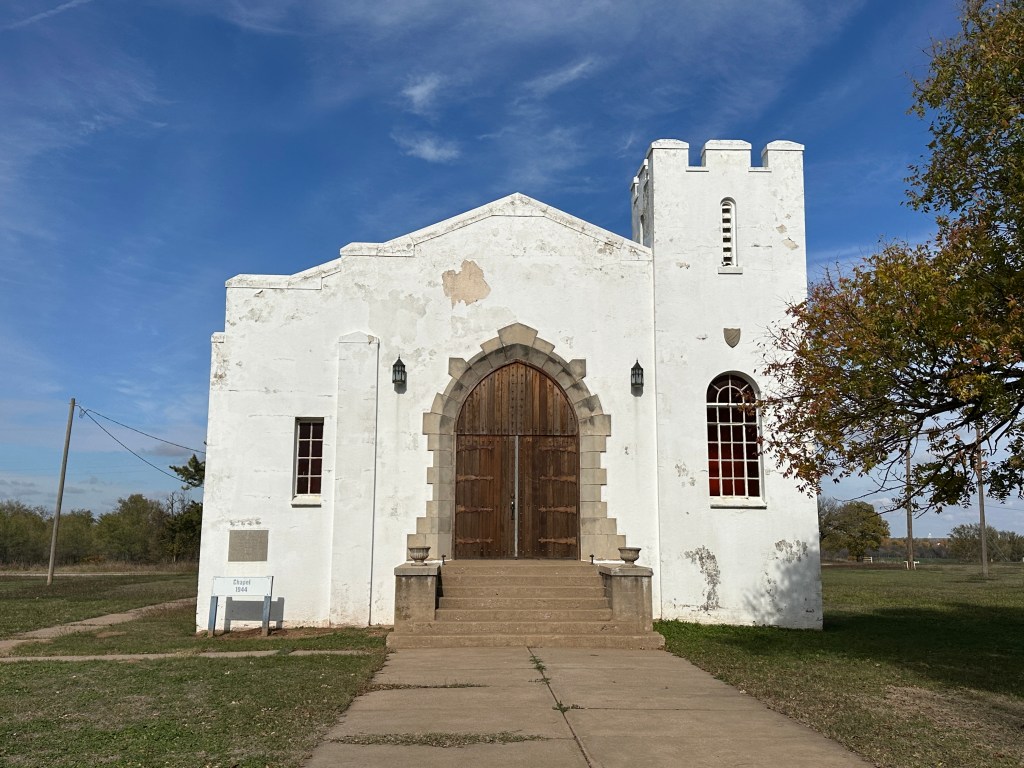
During World War II, Fort Reno was also used as a POW camp. Approximately 1,300 German soldiers were sent to Fort Reno. The German soldiers worked for local farmers and on the construction of the Chapel at Fort Reno.
Fort Reno was officially closed in 1947. The United States Department of Agriculture established the Grazinglands Research Laboratory in 1948 which still operates on the property today in 2026.
Fort Reno was added to the National Register of Historic Places in 1970.
In 1997, Historic Fort Reno, Inc. opened a visitor’s center on the site. Over the year, they have received a handful of grants to try to help preserve the historic site. Despite these efforts when I visited in November 2026, many of the building have fallen into disrepair and you can’t walk near them for safety reasons. I took photos of the buildings and signs and attached them below.
Photos & Plaque Transcriptions
Please see the photo of the building, plaque, and text transcription below!
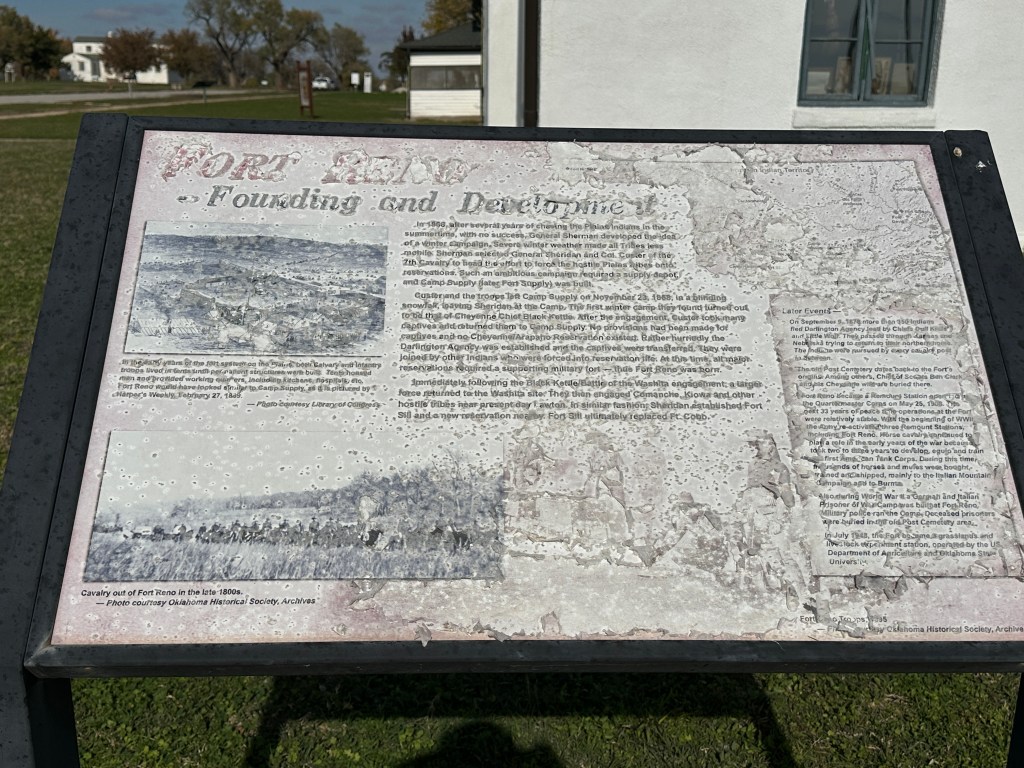
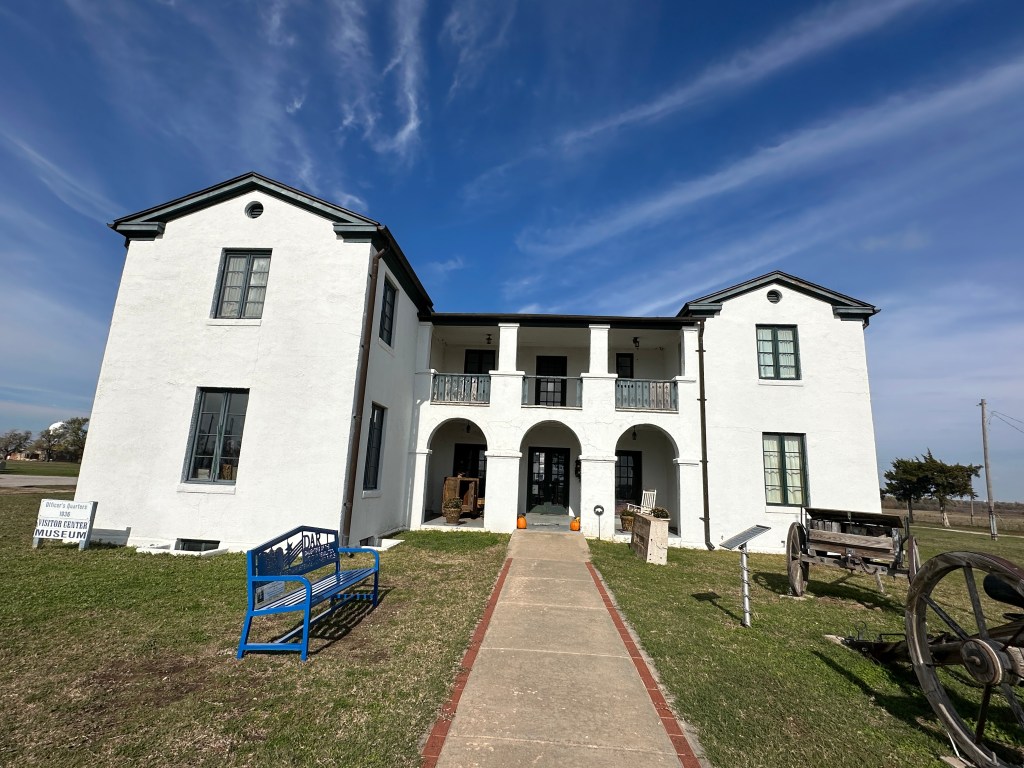
Fort Reno Founding and Development
“In 1868, after several years of chasing the Plains Indians in the summertime, with no success, General Sherman developed the idea of a winter campaign. Severe winter weather made all Tribes less mobile. Sherman selected General Sheridan and Col. Custer of the 7th Cavalry to head the effort to force the hostile Plains tribes onto reservations. Such an ambitious campaign required a supply depot, and Camp Supply (later Fort Supply) was built.
Custer and the troops left Camp Supply on November 23, 1868, in a blinding snowfall, leaving Sheridan at the Camp. The first winter camp they found turned out to be that of Cheyenne Chief Black Kettle. After the engagement, Custer took many captives and returned them to Camp Supply. No provisions had been made for captives and no Cheyenne/Arapaho Reservation existed. Rather hurriedly the Darlington Agency was established and the captives were transferred. They were joined by other Indians who were forced into reservation life. At this time, all major reservations required a supporting military fort – thus Fort Reno was born.
Immediately following the Black Kettle/Battle of the Washita engagement, a larger force returned to the Washita site. They then engaged Comanche, Kiowa and other hostile tribes near present day Lawton. In similar fashion, Sheridan established Fort Sill and a new reservation nearby. Fort Sill ultimately replaced Ft. Cobb.
Box on the Right Side:
Later Events –
• On September 9, 1878 more than 350 Indians fled Darlington Agency lead by Chiefs Dull Knife and Little Wolf. They passed through Kansas and Nebraska trying to return to their northern home. The Indians were pursued by every cavalry post in between.
• The old Post Cemetery dates back to the Fort’s origins. Among others, Chief of Scouts Ben Clark and his Cheyenne wife are buried there.
• Fort Reno became a Remount Station operated by the Quartermaster Corps on May 25, 1908. The next 33 years of peace time operations at the Fort were relatively stable. With the beginning of WWII, the Army re-activated three Remount Stations, including Fort Reno. Horse cavalry continued to play a role in the early years of the war because it took two to three years to develop, equip and train the first American Tank Corps. During this time, thousands of horses and mules were bought, trained and shipped, mainly to the Italian Mountain Campaign and to Burma.
• Also during World War II a German and Italian Prisoner of War Camp was built at Fort Reno. Military police ran the Camp. Deceased prisoners were buried in the old Post Cemetery area.
• In July 1948, the Fort became a grasslands and livestock experiment station, operated by the US Department of Agriculture and Oklahoma State University.
Left Photo Caption:
In the early years of the fort system on the Plains, both Calvary and Infantry troops lived in tents until permanent structures were built. Tents housed men and provided working quarters, including kitchens, hospitals, etc. Fort Reno would have looked similar to Camp Supply, as it is pictured by Harper’s Weekly, February 27, 1869.
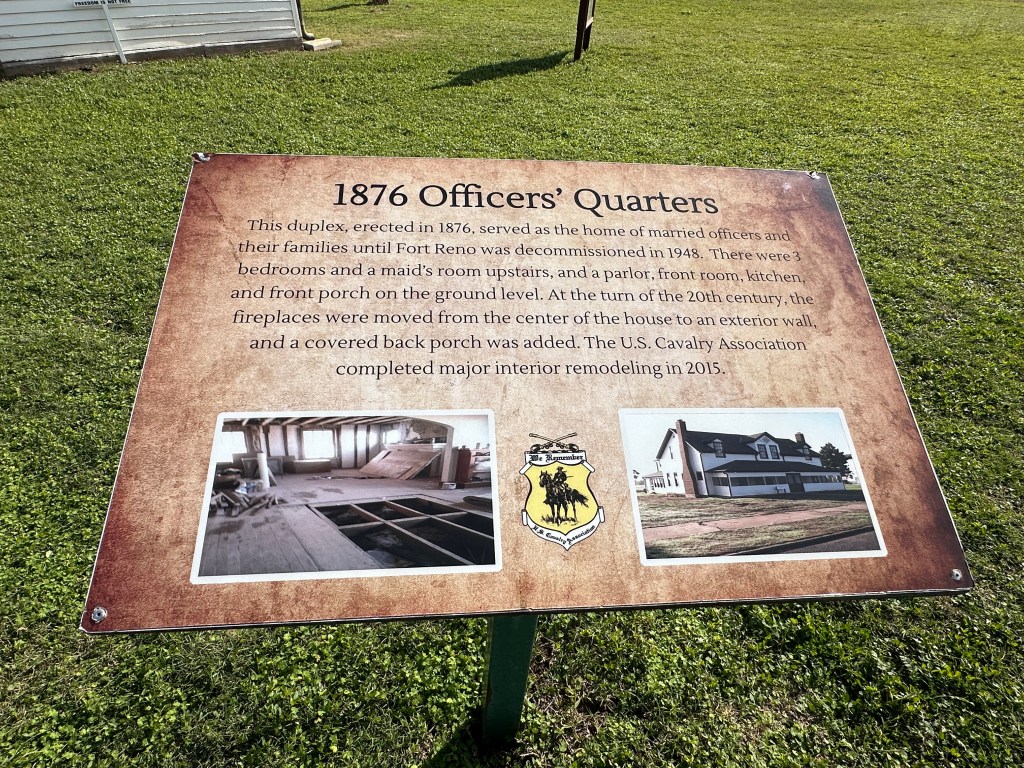
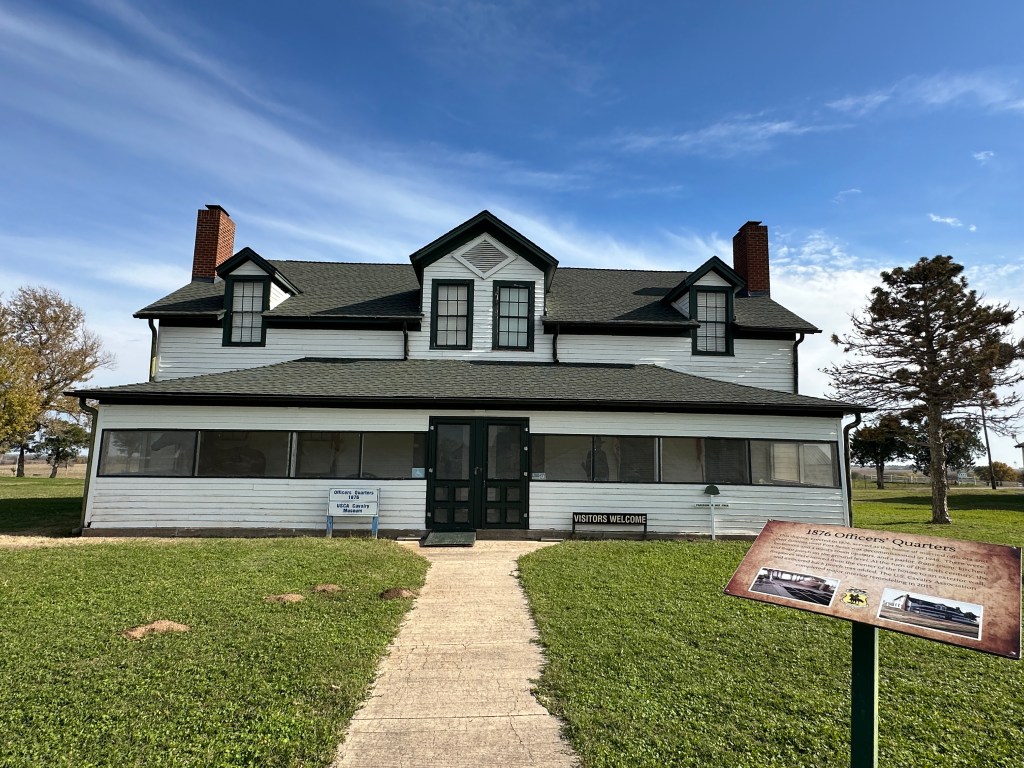
1876 Officers’ Quarters
“This duplex, erected in 1876, served as the home of married officers and their families until Fort Reno was decommissioned in 1948. There were 3 bedrooms and a maid’s room upstairs, and a parlor, front room, kitchen, and front porch on the ground level. At the turn of the 20th century, the fireplaces were moved from the center of the house to an exterior wall, and a covered back porch was added. The U.S. Cavalry Association completed major interior remodeling in 2015.”
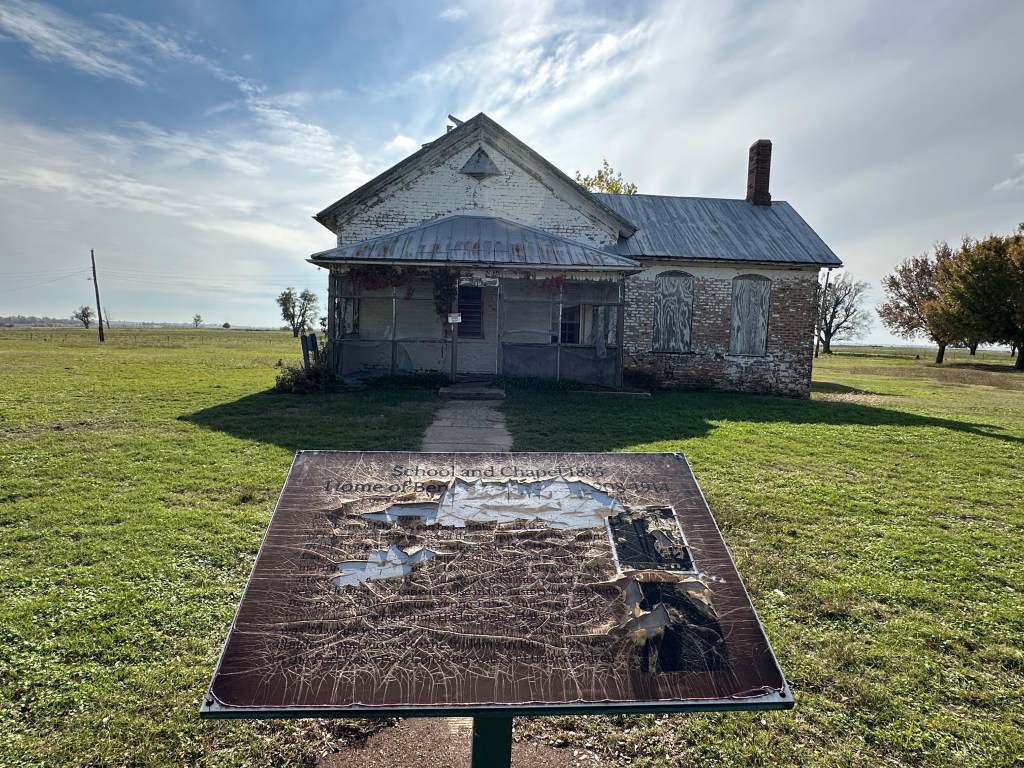
School and Chapel 1885 – Home of Ben & Moka Clark 1908-1914
“Ben Clark, more than any other man in the history of Western Oklahoma, can be identified with the history of Fort Reno. He was one of the interpreters at the signing of the treaty at Medicine Lodge, KS in 1867. He was with Cavalry Commander George Armstrong Custer on the morning of November 27, 1868, during the ill-conceived attack on Black Kettle’s Village. As post interpreter he served longer than anyone else in the history of Fort Reno. Ben married into the Cheyenne Tribe 3 times. All of his wives passed before him. His last wife, Moka (mo-kay), was 20 years younger. They married in 1880, had 12 children, and moved to the building in 1908. They rest in the Fort Reno Post Cemetery with 5 of their children.”
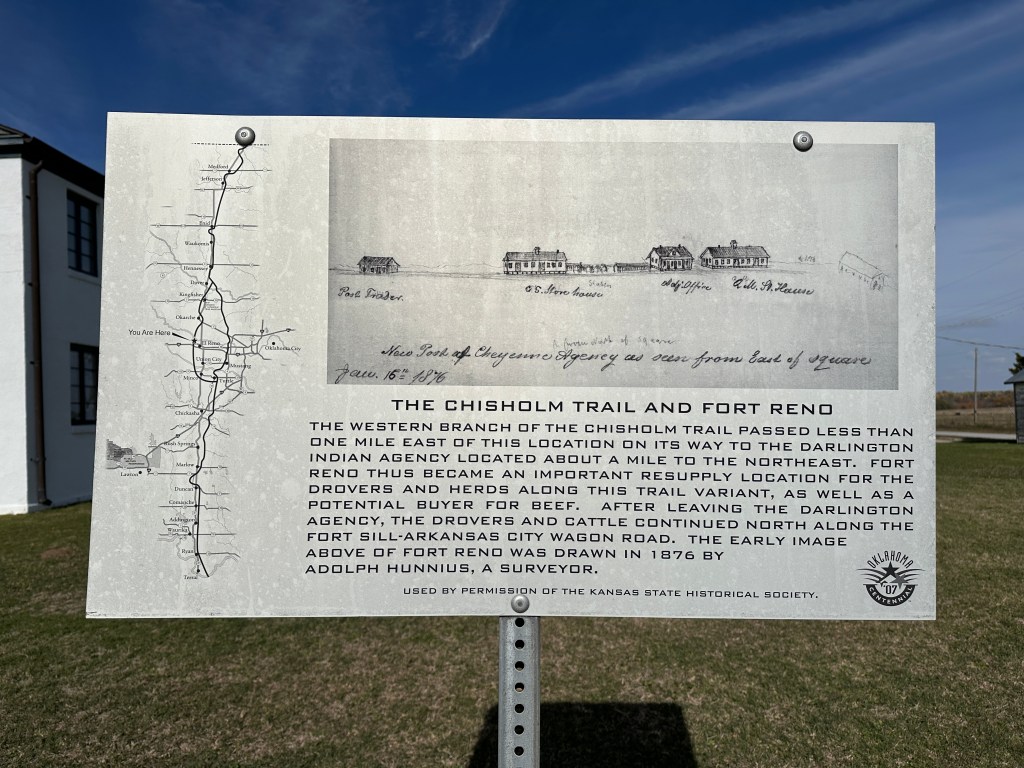
The Chisholm Trail and Fort Reno
“The western branch of the Chisholm Trail passed less than one mile east of this location on its way to the Darlington Indian Agency located about a mile to the northeast. Fort Reno thus became an important resupply location for the drovers and herds along this trail variant, as well as a potential buyer for beef. After leaving the Darlington Agency, the drovers and cattle continued north along the Fort Sill-Arkansas City Wagon Road. The early image above of Fort Reno was drawn in 1876 by Adolph Hunnius, a surveyor.”
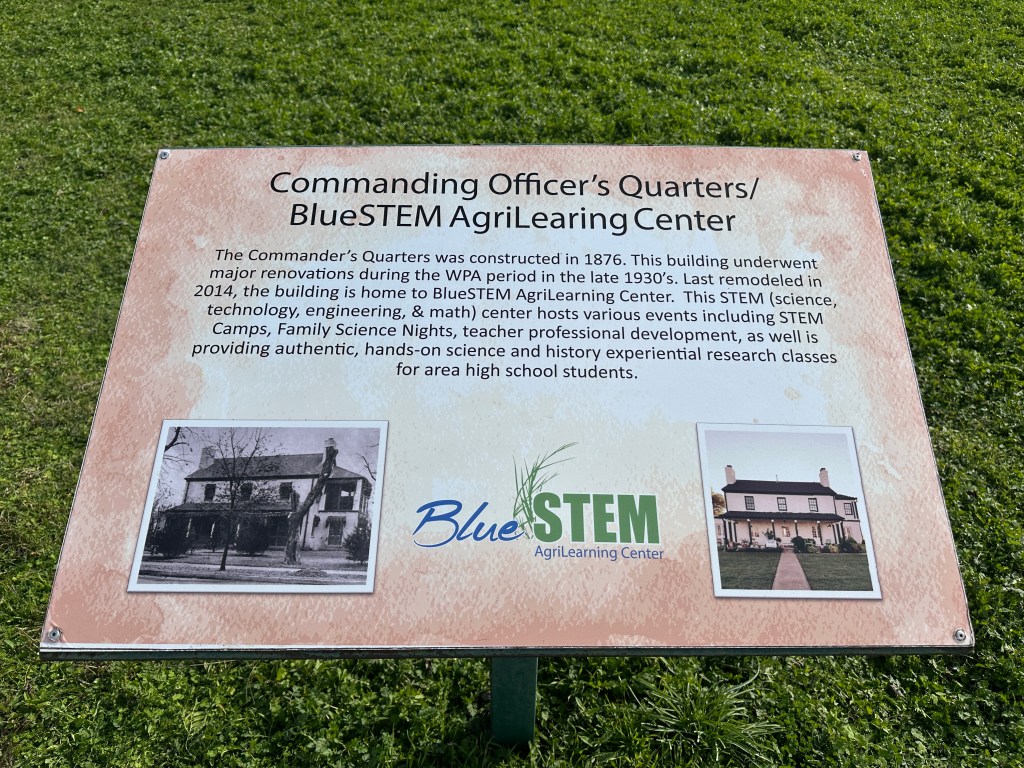
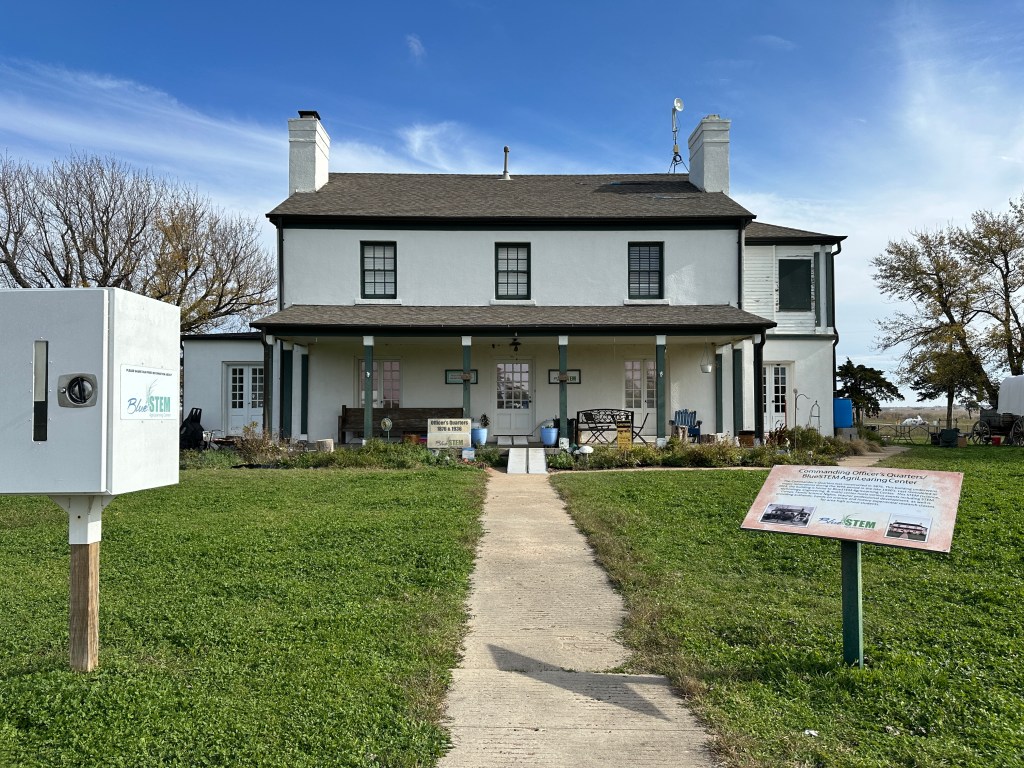
Commanding Officer’s Quarters/BlueSTEM AgriLearning Center
“The Commander’s Quarters was constructed in 1876. This building underwent major renovations during the WPA period in the late 1930’s. Last remodeled in 2014, the building is home to BlueSTEM AgriLearning Center. This STEM (science, technology, engineering, & math) center hosts various events including STEM Camps, Family Science Nights, teacher professional development, as well is providing authentic, hands-on science and history experimental research classes for area high school students.”
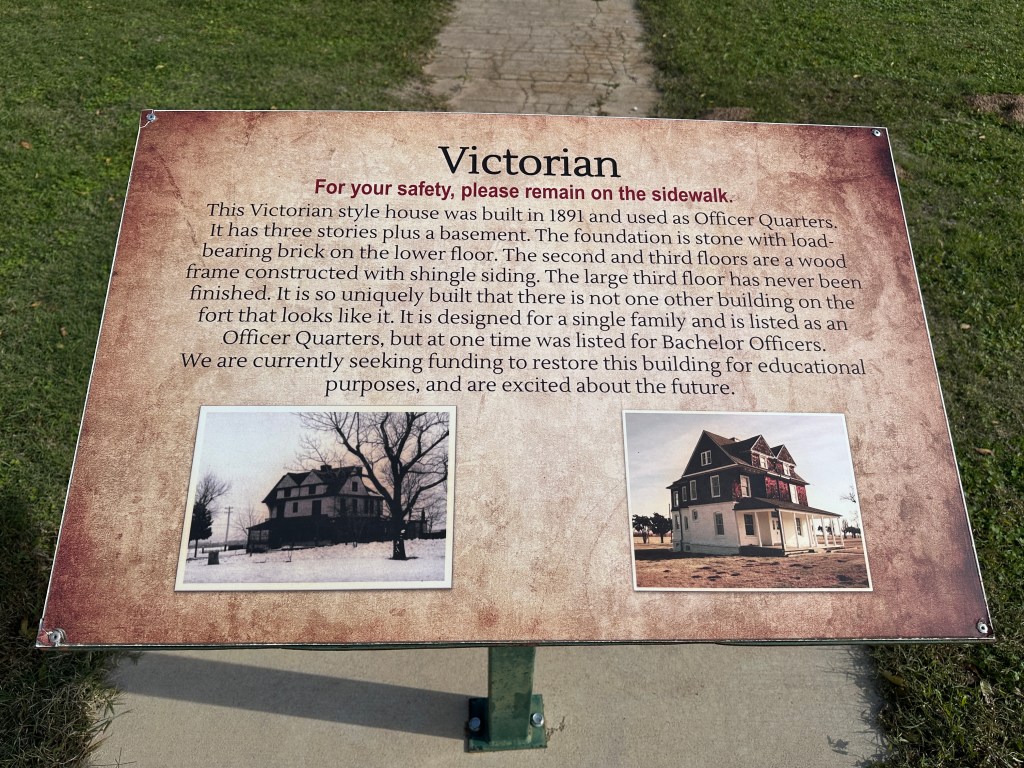
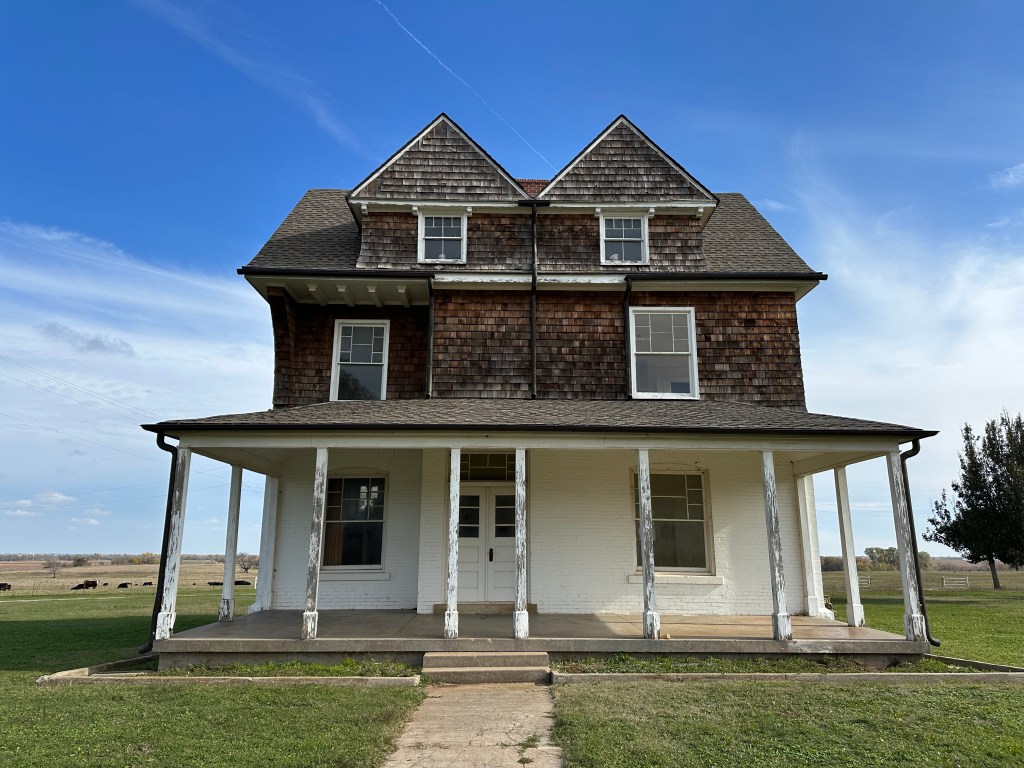
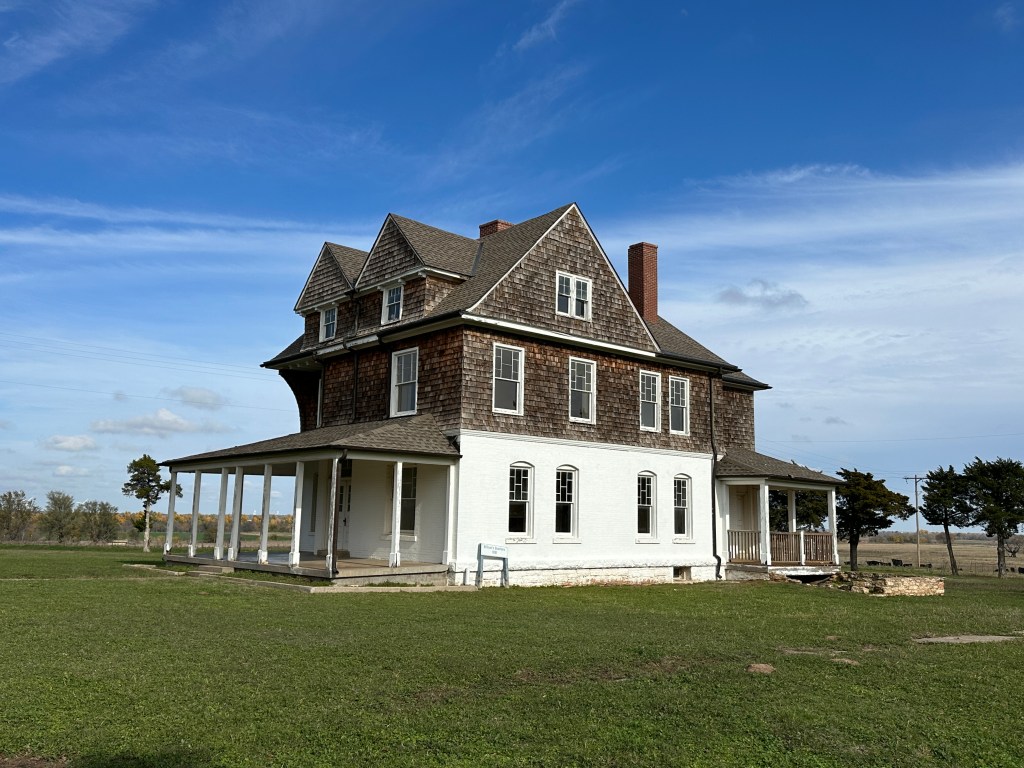
Victorian
“This Victorian style house was built in 1891 and used as Officer Quarters. It has three stories plus a basement. The foundation is stone with load-bearing brick on the lower floor. The second and third floors are wood frame constructed with shingle siding. The large third floor has never been finished. It is so uniquely built there is not one other building on the fort that looks like it. It is designed for a single family and is listed as an Officer Quarters, but at one time was listed for Bachelor Officers. We are currently seeking funding to restore this building for educational purposes, and are excited about the future.”
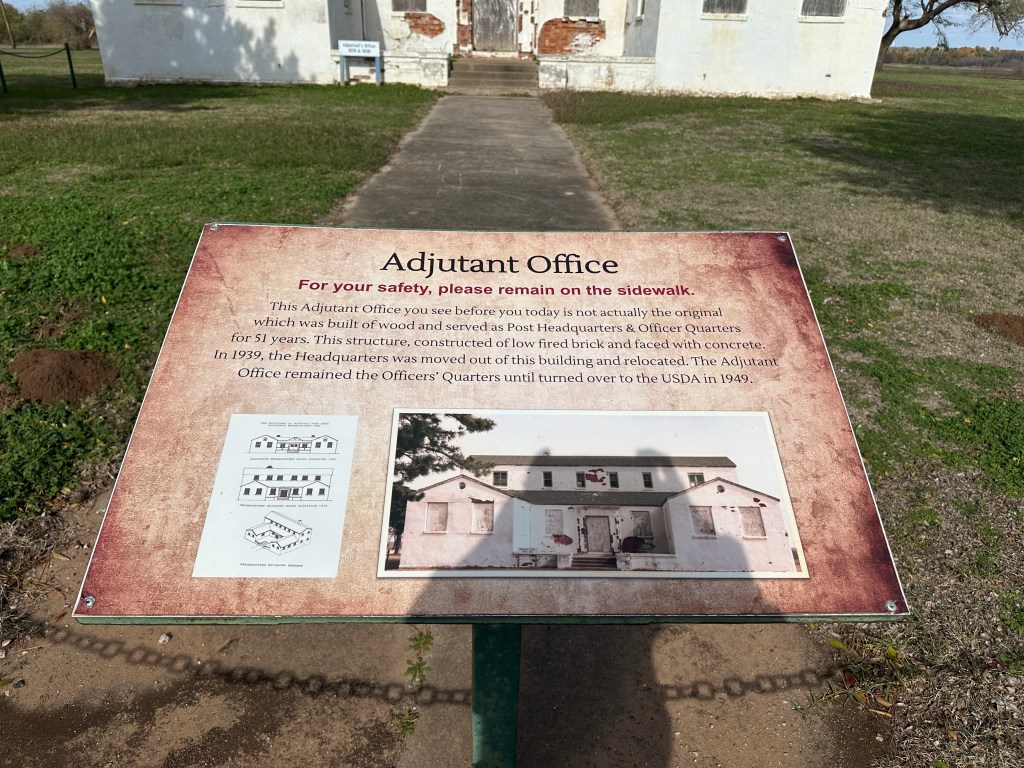
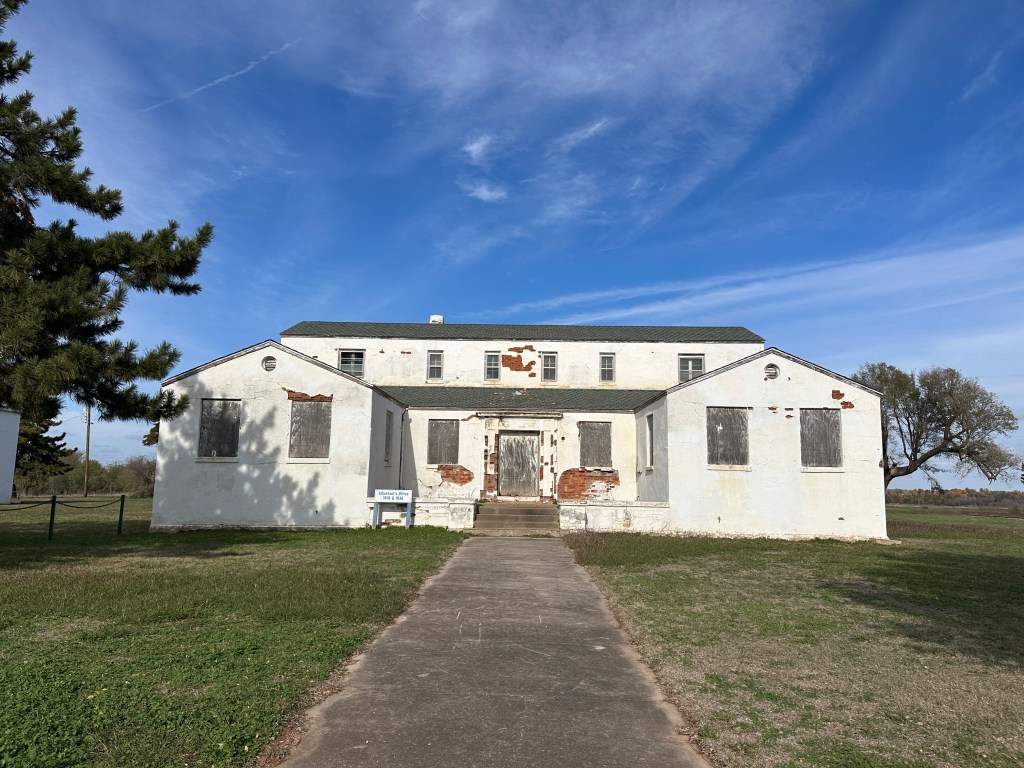
Adjutant Office
“This Adjutant Office you see before you today is not actually the originally which was built of wood and served as Post Headquarters & Officer Quarters for 51 years. This structure, constructed of low fired brick and faced with concrete. In 1939, the Headquarters was moved out of this building and relocated. The Adjutant Office remained the Officers’ Quarters until turned over to the USDA in 1949.”
Chapel
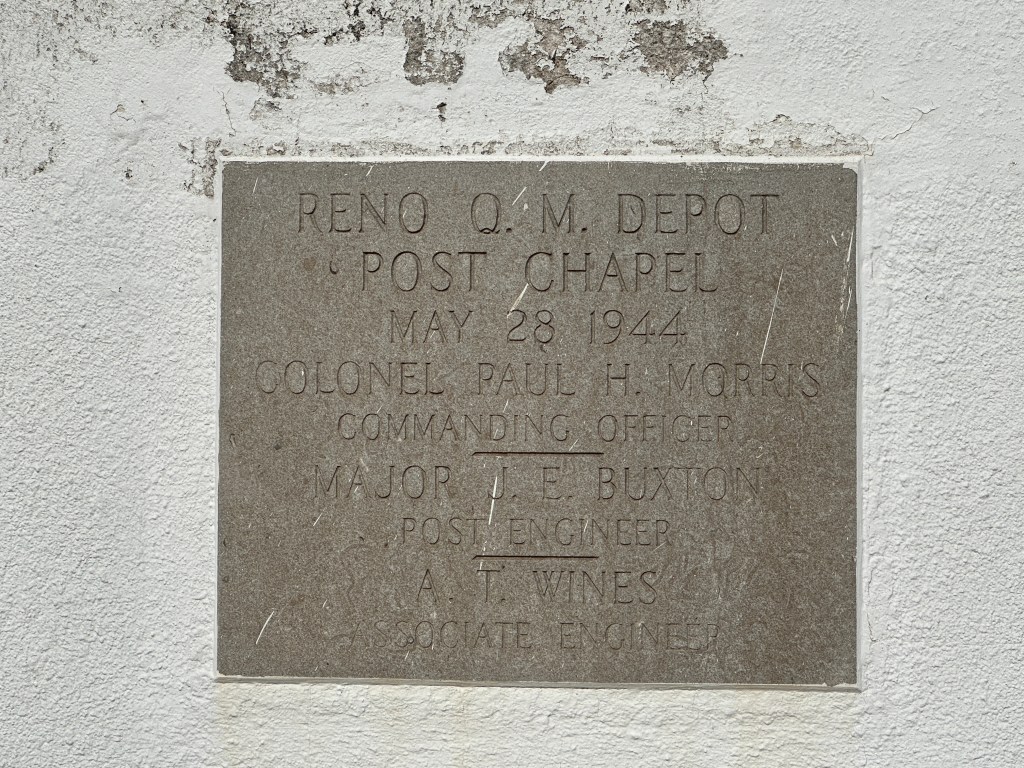
“During World War II, an eastern portion of the Fort Reno lands served as an internment work camp for German & Italian Prisoners of War. Mostly from Gen. Rommel’s Afrikakorp, captured in North Africa, over 1,300 Germans were brought to Fort Reno by rail. While imprisoned here, the German POW’s were hired as laborers for local farmers, and in 1944 built this Chapel. Today the chapel is used for various activities such as weddings, a yearly German and Italian memorial service, and Christmas Guns.”
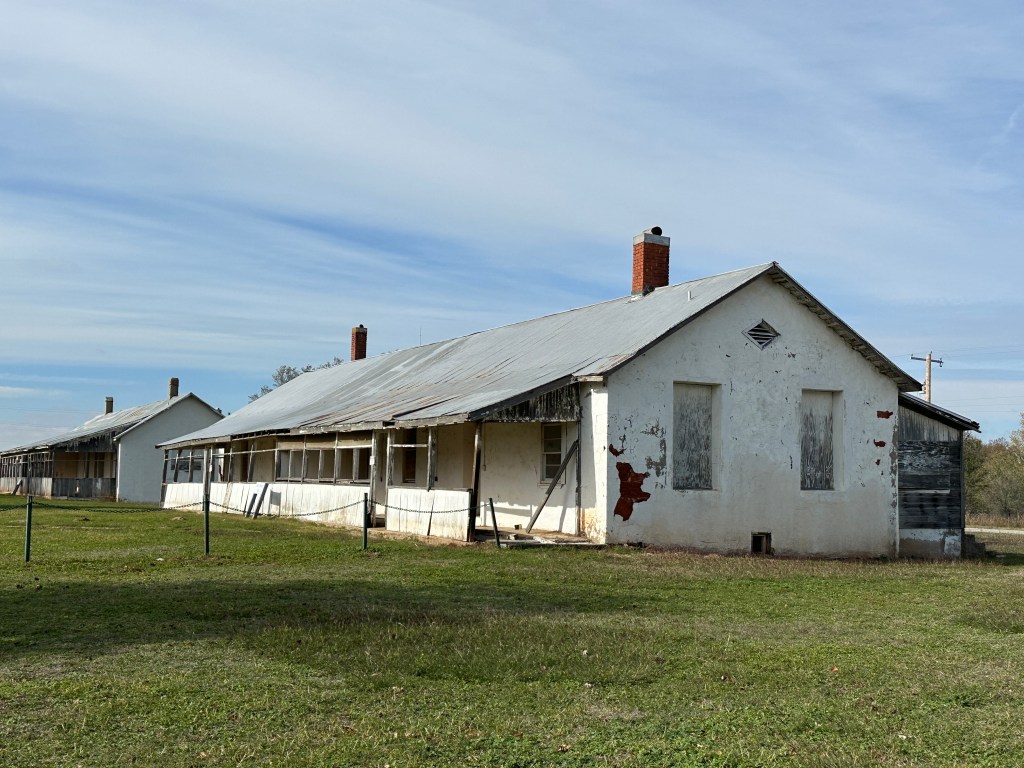
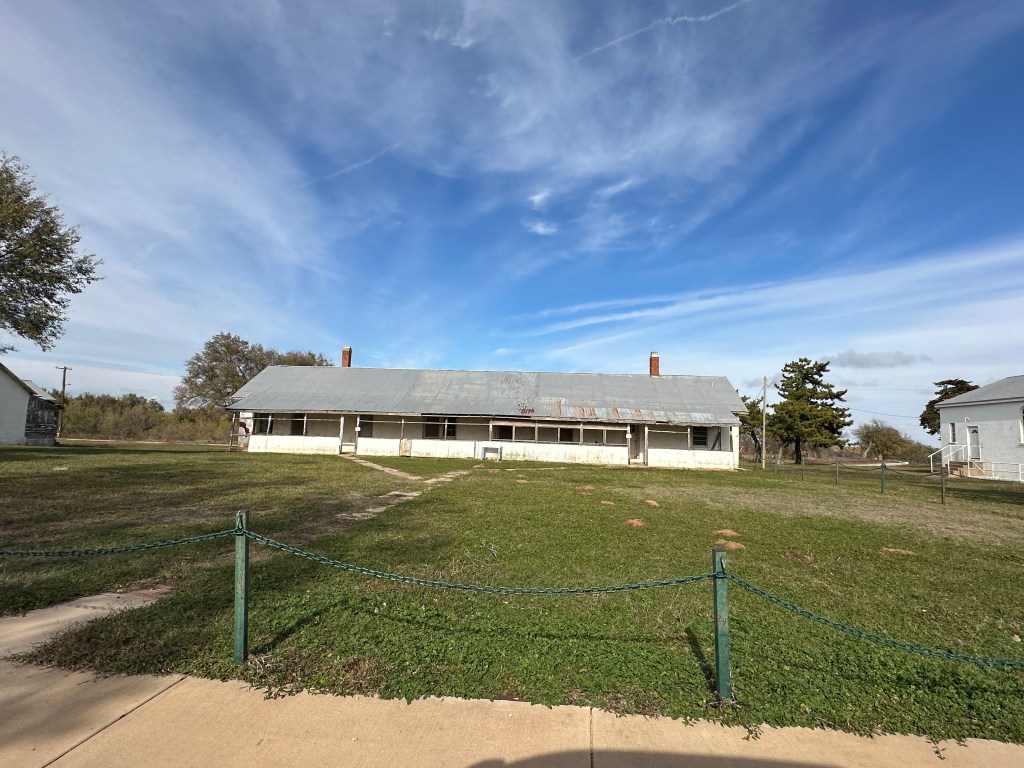
*There was not a plaque in front of this building.
Guard House/Post Office
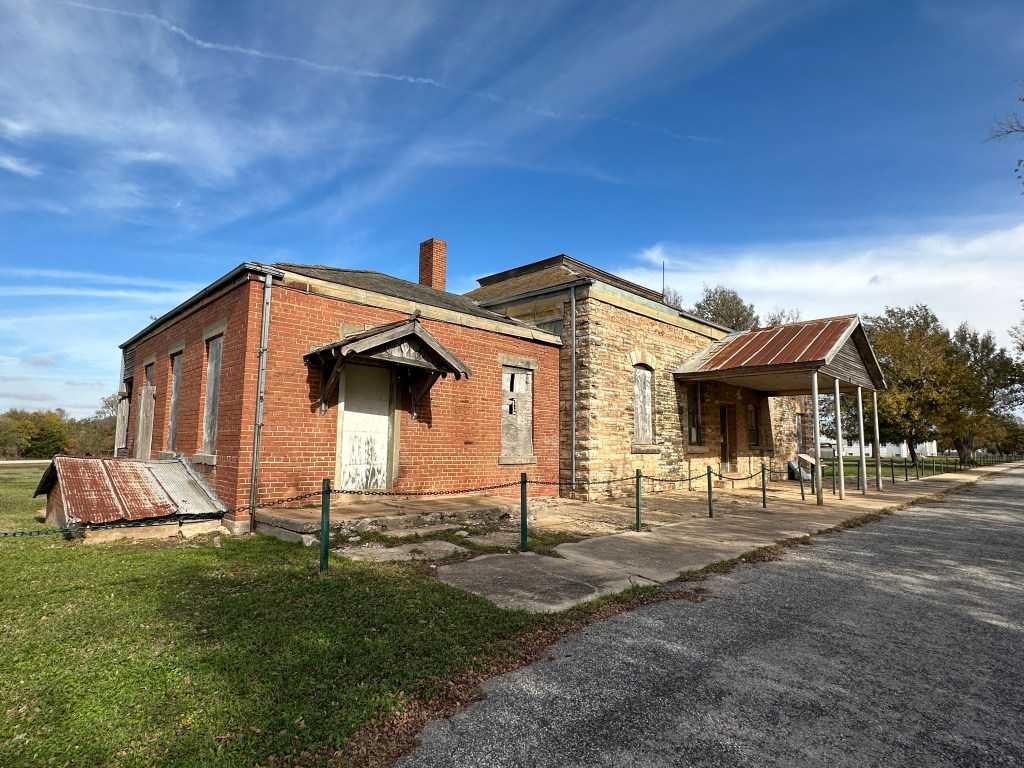
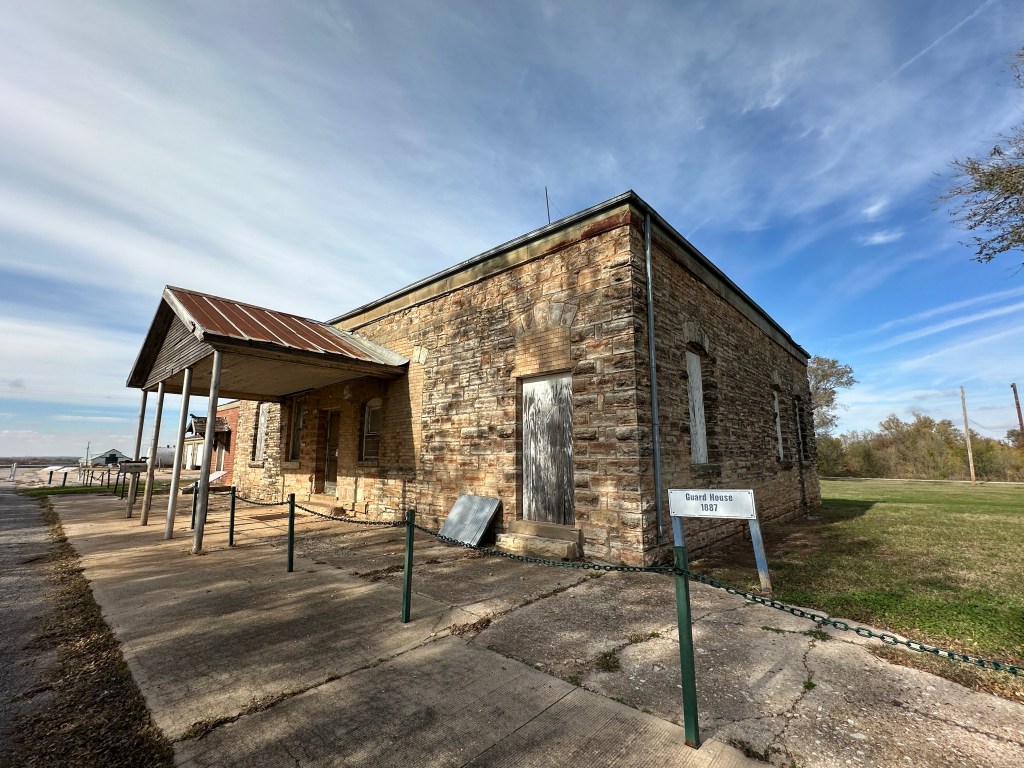
“The Guard House, also known as a jail, was constructed in 1888 of native stone from a local quarry located about 6 miles west of here. Many windows still have the bolts imbedded where iron bars were held in place. An annex was added to the west side of the structure at the turn of the 20th century to serve as a post office. This facility housed David Payne and his Boomers who were often arrested by Fort Reno soldiers and Cheyenne and Arapaho Indian scouts for establishing settlements in the Unassigned Lands.”
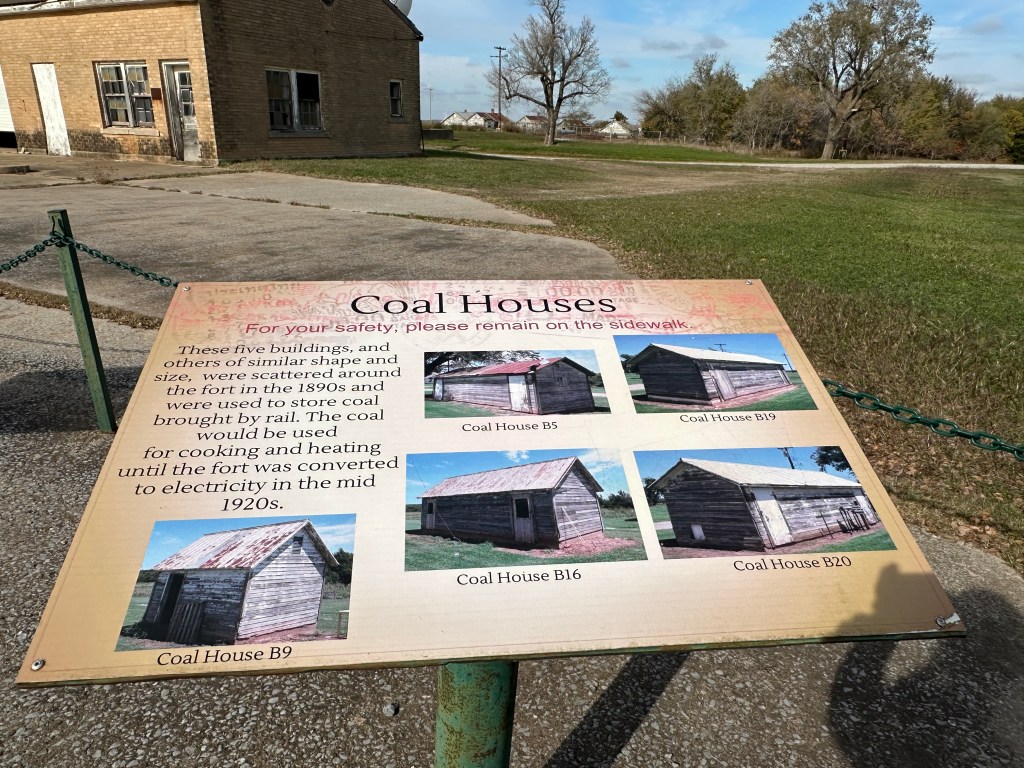
Coal House
“These five buildings, and others of similar shape and size, were scattered around the fort in the 1890s and were used to store coal brought by rail. The coal would be used for cooking and heating until the fort was converted to electricity in the mid 1920s.”
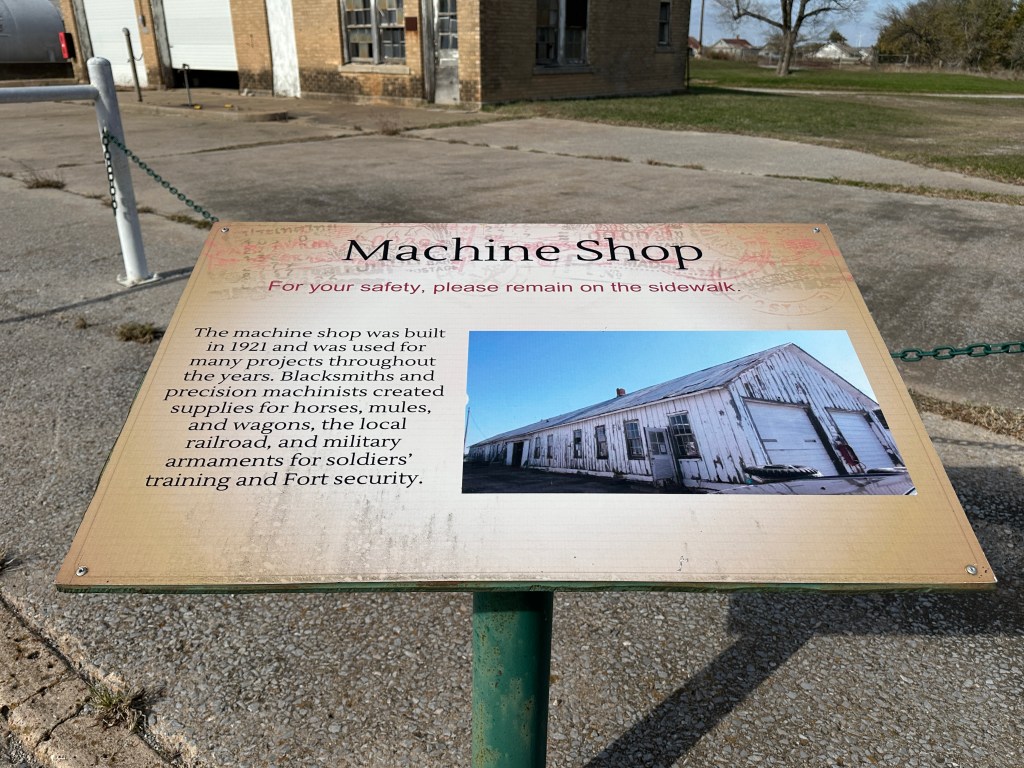
Machine Shop
“The machine shop was built in 1921 and was used for many projects throughout the years. Blacksmiths and precision machinists created supplies for horses, mules, and wagons, the local railroad, and military armaments for soldiers’ training and Fort security.”
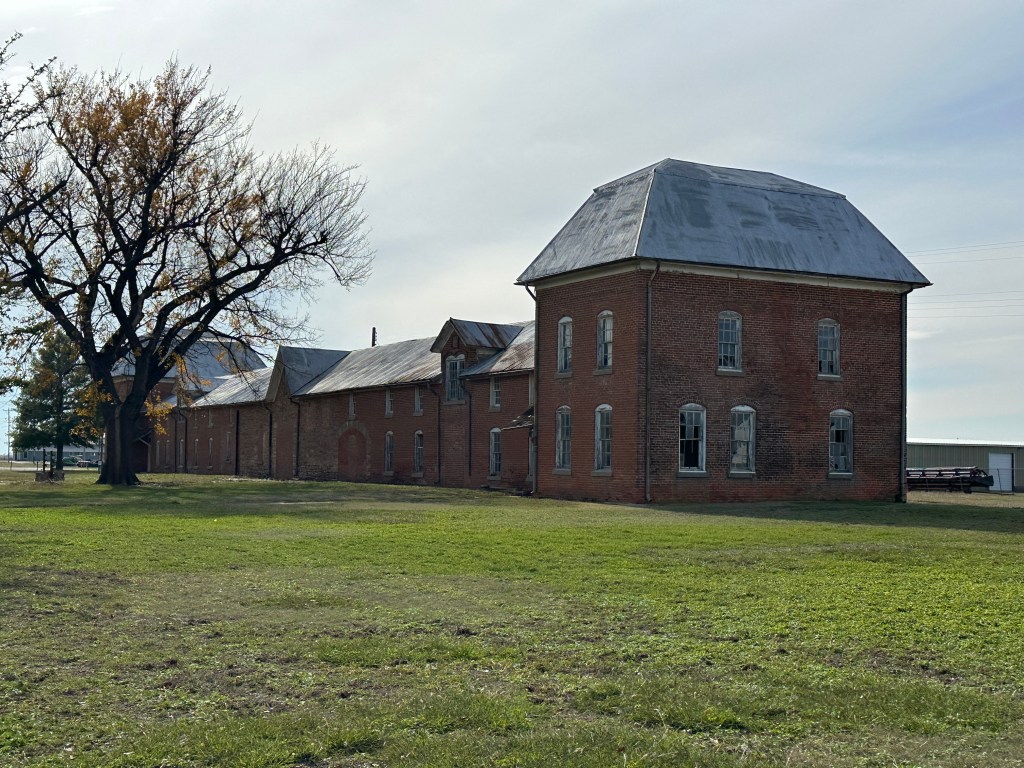
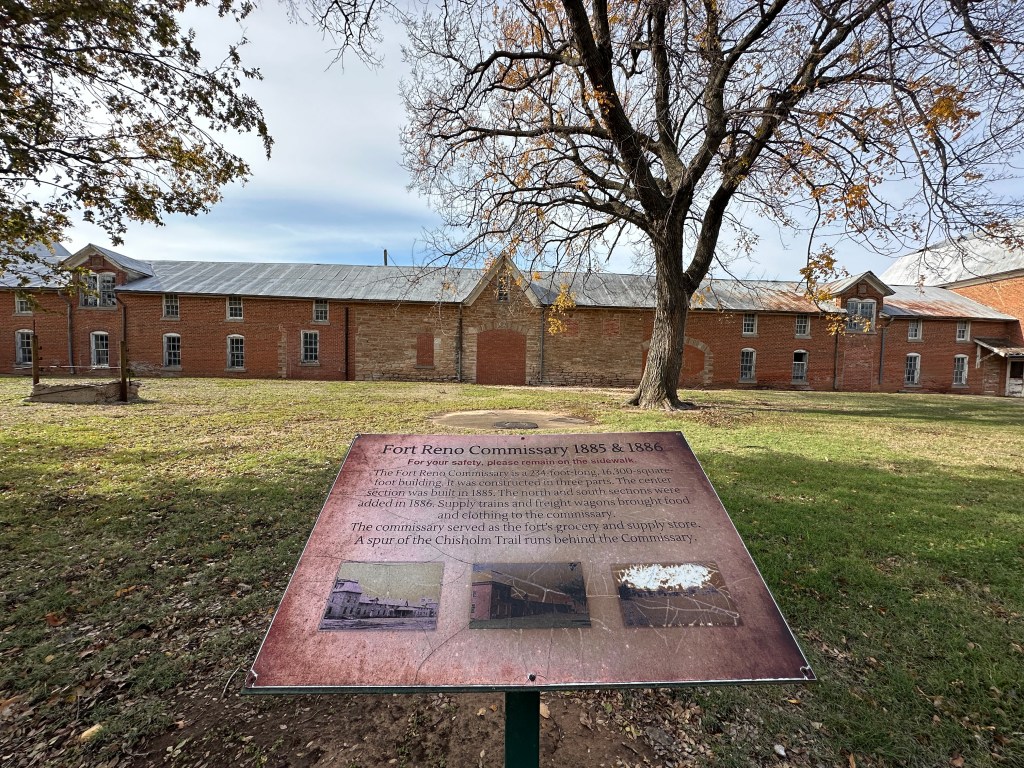
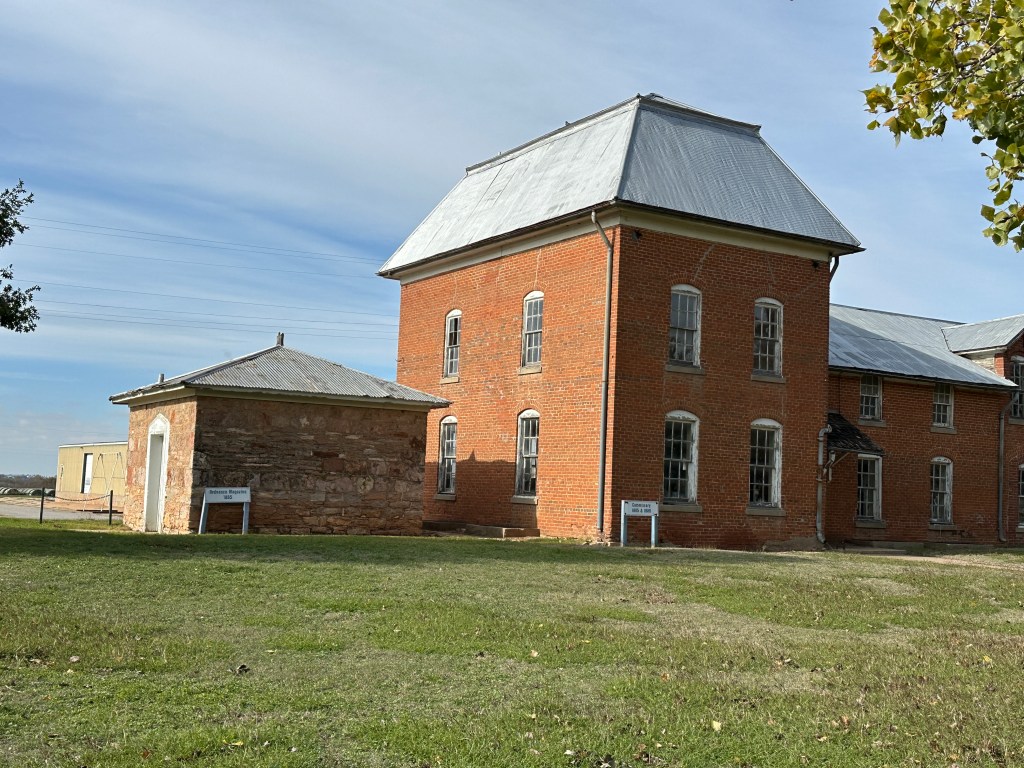
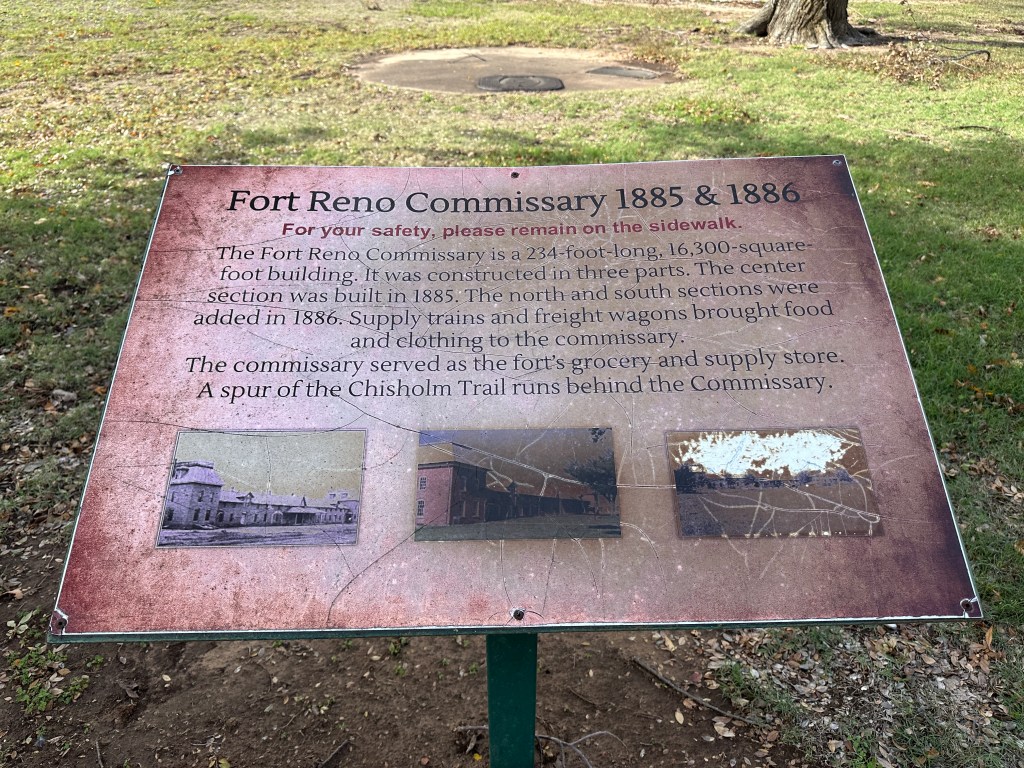
Fort Reno Commissary 1885 & 1886
“The Fort Reno Commissary is a 234-foot-long, 16,300-square-foot building. It was constructed in three parts. The center section was built in 1885. The north and south sections were added in 1886. Supply trains and freight wagons brought food and clothing to the commissary. The commissary served as the fort’s grocery and supply store. A spur of the Chisholm Trail runs behind the commissary.”
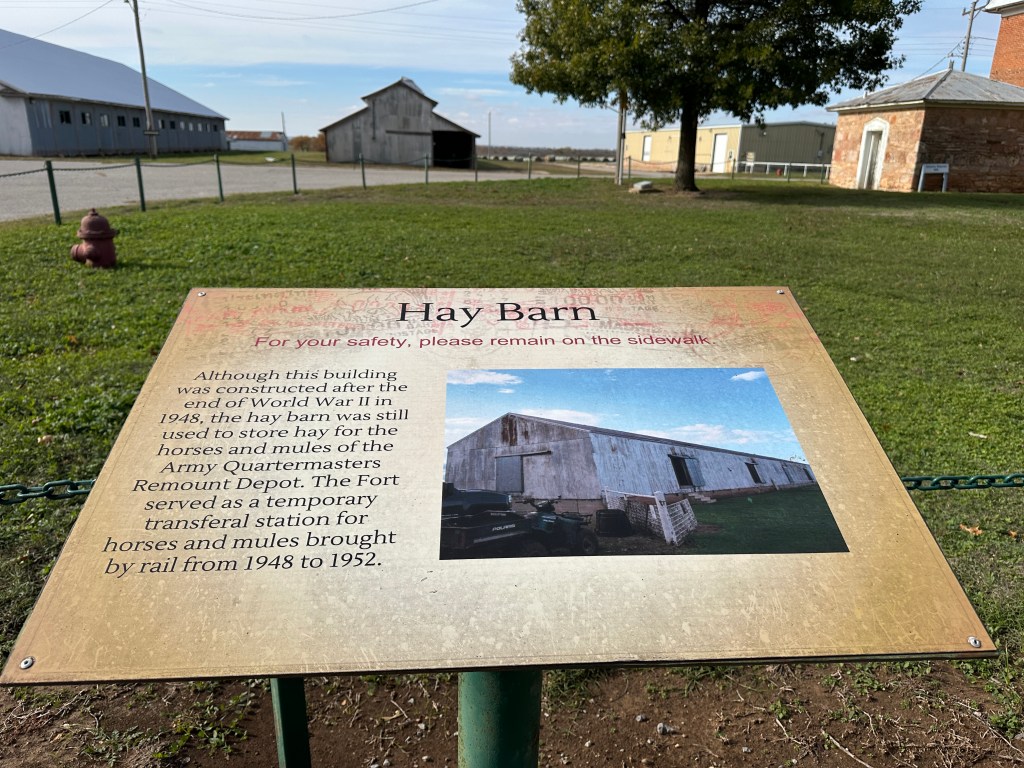
Hay Barn
“Although this building was constructed after the end of World War II in 1948, the hay barn was still used to store hay for the horses and mules of the Army Quartermasters Remount Depot. The Fort served as a temporary transferal station for horses and mules brought by rail from 1948 to 1952.”
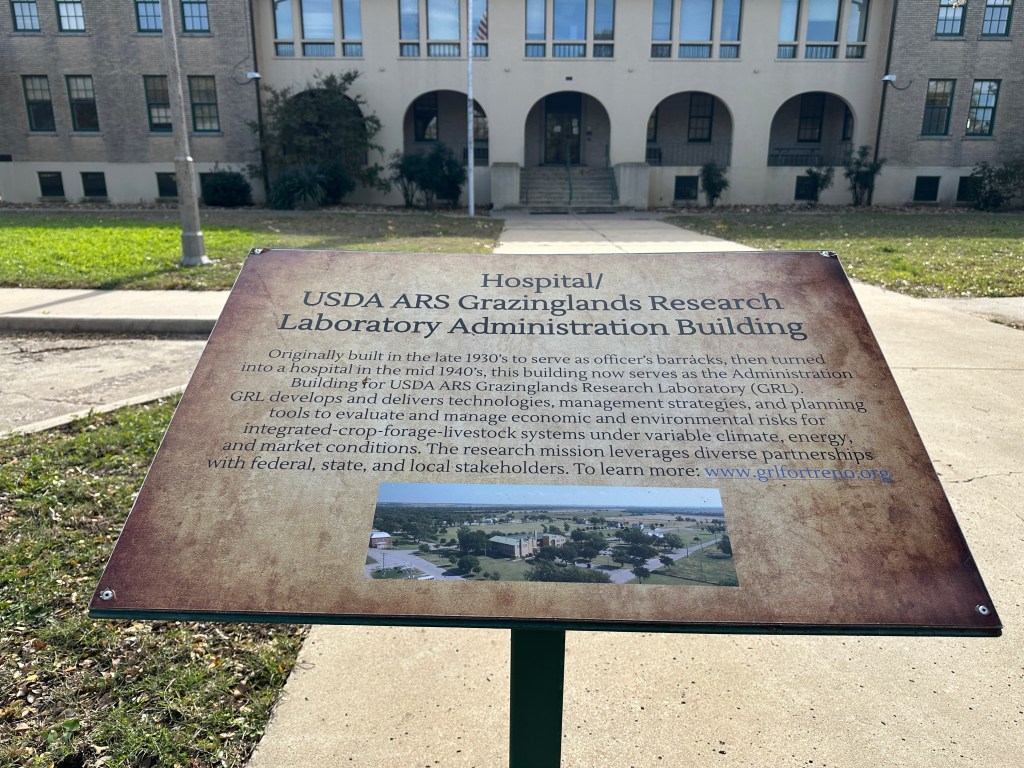
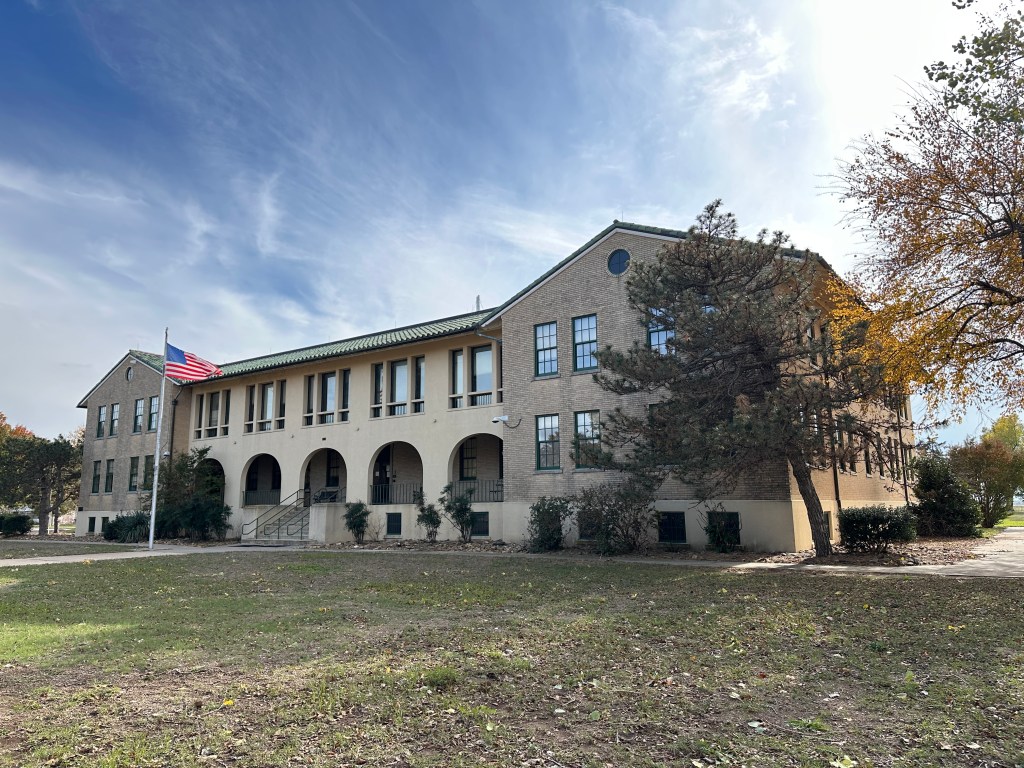
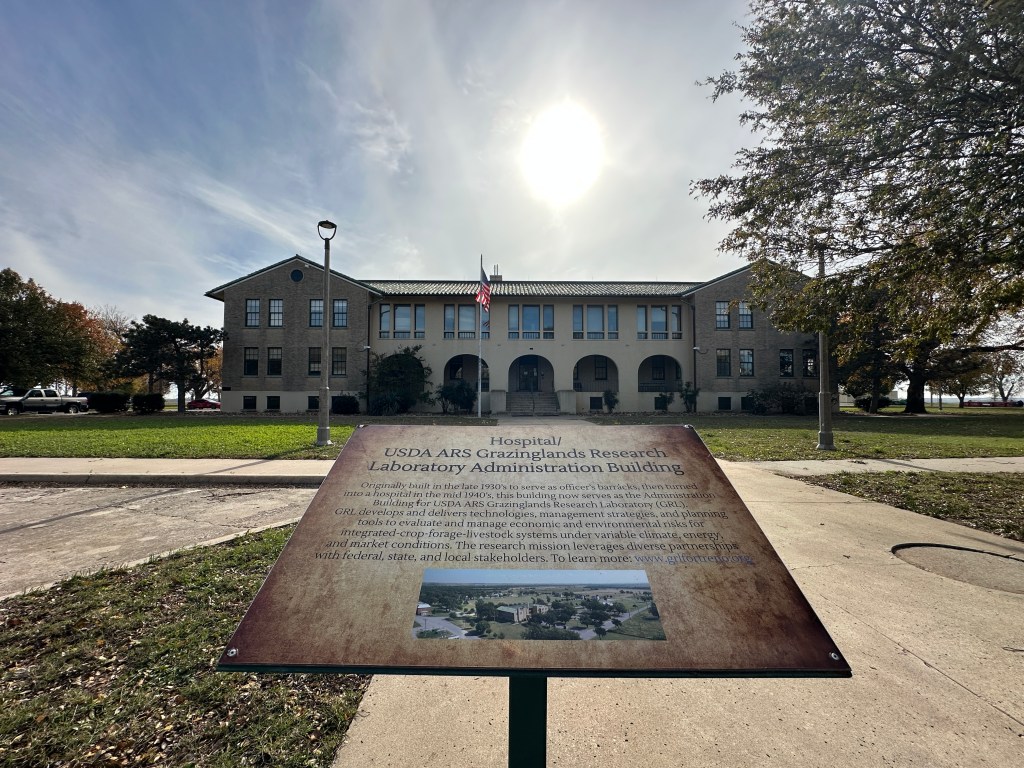
Hospital/USDA ARS Grazinglands Research Laboratory Administration Building
“Originally built in the late 1930’s to serve as officer’s barracks, then turned into a hospital in the mid 1940’s, this building now serves as the Administration Building for USDA ARS Grazinglands Research Laboratory (GRL). GRL develops and delivers technologies, management strategies, and planning tools to evaluate and manage economic and environmental risks for integrated-crop-forage-livestock systems under variable climate, energy, and market conditions. The research mission leverages diverse partnerships with federal, state, and local stakeholders. To learn more: http://www.grlfortreno.org.”
Concluding Thoughts
Sometimes I walk around historic sites and you can just feel the energy from the site. At Fort Reno, you could feel the suffering that took place here and it broke my heart. May we never forget what happened here and learn from the past.
Visit
7107 W Cheyenne Street
El Reno, OK 73036
TRAVEL TIP 1: There is another museum on the property besides the Fort Reno Visitor’s Center, but it is operated by the US Cavalry Association and they have different operating hours. So, I wasn’t able to go inside the US Cavalry Association Museum when I visited.
TRAVEL TIP 2: The gates to Fort Reno close at 4:30 PM to the public.
Sources
Historic Marker Plaques around Fort Reno.
“Fort Reno.” National Register of Historic Places. Inventory – Nomination Form. NR70000529.
“Oklahoma: Fort Reno.” National Park Service. Website.
“Fort Reno History.” Historic Fort Reno, Inc. Website.
Stan Hoig. “Fort Reno.” The Encyclopedia of Oklahoma History and Culture. Oklahoma Historical Society.


Leave a Reply